Key Highlights
- Payroll involves paying employees, managing deductions, issuing payslips, and staying compliant with HMRC rules.
- Important payroll terms include PAYE, RTI, payroll number, HMRC payroll, and payroll software.
- Businesses can run payroll manually, use payroll software, or outsource it depending on their size and needs.
- Outsourcing payroll saves time, reduces errors, cuts costs, and ensures compliance with regulations.
- Small businesses benefit from clear payroll systems, accurate tracking of hours, deductions, and staying up to date with legal requirements.
Managing payroll can be a major headache for business owners. Small mistakes, like miscalculating overtime or missing deadlines, can lead to fines, unhappy staff, and disrupted cash flow, adding stress, especially during busy seasons.
From calculating wages and deductions to handling statutory payments and pension contributions, payroll involves multiple moving parts. Keeping up with changing HMRC rules and submitting accurate Real Time Information (RTI) reports adds another layer of complexity, especially for small or growing teams.
This guide will walk you through payroll in the UK, simplifying the process step by step. We’ll cover everything from calculating wages, handling deductions, understanding holiday pay, ensuring compliance with HMRC rules, and managing seasonal staff. With clear explanations and practical tips, you’ll be equipped to run payroll smoothly, stay compliant, and ensure your employees are paid accurately every time.
What Is Payroll?
Payroll definition goes beyond just cutting checks, it’s the foundation of your business operations. It ensures your employees are paid accurately and on time, while also keeping your business compliant with legal requirements. Beyond wages, payroll manages overtime, bonuses, benefits, and ensures everything aligns with HMRC regulations. Proper payroll management ensures smooth operations, builds employee trust, and protects your business from costly fines or legal issues.
Payroll also involves accurate record-keeping, managing payroll deductions, and handling statutory payments. Done right, it keeps your team happy, your finances in order, and your business running smoothly.
What Do These Common Payroll Terms Actually Mean?
Understanding them makes the process far less intimidating and much easier to manage. Here are some key terms and core components you’ll come across when learning about payroll:
1. Essential Payroll Components
- Gross pay: The total amount an employee earns before any deductions.
- Net pay: The amount an employee takes home after taxes and deductions.
- Deductions: Mandatory or voluntary amounts taken from an employee’s pay, such as tax, National Insurance, pension contributions, or student loans.
- PAYE (Pay As You Earn): The system used to collect income tax and National Insurance from employee wages.
- Real Time Information (RTI): The process of reporting payroll information to HMRC every time employees are paid.
2. Key Payroll Terms
- Payroll number: A unique ID assigned to each employee for tracking and record purposes.
- HMRC payroll: A payroll system that meets HM Revenue & Customs regulations, including RTI submissions.
- Payroll methods: The different ways payroll can be processed, such as manually, by using payroll software, or through outsourcing to a payroll provider.
- Payroll applications: Tools or software that automate payroll calculations, filings, and employee payments.
Understanding these terms will help you navigate payroll with ease and confidence.
How Do You Do Payroll in the UK?
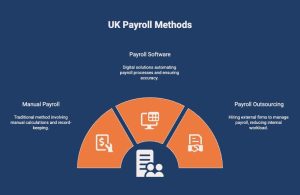
The right payroll method depends on your business size, expertise, and how much support you need to stay compliant.
Here’s how the three most common approaches stack up:
1. Manual Payroll
Many small businesses still manage payroll the old-fashioned way, using spreadsheets or basic tools to track hours, calculate gross pay, and handle deductions. While this method might seem simple at first, it can quickly become overwhelming as your team grows. For example, imagine calculating overtime manually every pay period. As errors pile up and compliance becomes trickier, it’s easy to make mistakes, leading to fines or unhappy employees.
2. Payroll Software
Switching to payroll software is like having a personal assistant for your payroll. It automates everything from calculations to payslips, ensuring net pay, deductions, and tax filings are accurate. For example, if your employees work varying hours and receive overtime, payroll software can automatically calculate the extra pay and statutory deductions, saving you the headache of doing it all manually. This tool scales as your business grows, taking care of the complexities of holiday pay and pensions without you lifting a finger.
3. Payroll Outsourcing
Outsourcing payroll has become a game-changer for businesses looking to free up time and reduce risk. According to a 2023 survey, 27% more UK businesses outsourced payroll compared to the previous year. When you outsource, you’re handing over the responsibility for gross-to-net calculations, tax deductions, HMRC reporting, and secure payslips to the experts. Imagine having a team of specialists handling everything for you, ensuring compliance and accuracy, while you focus on growing your business. It’s a time-saver and a risk reducer, particularly when navigating complex payroll regulations.
These examples illustrate the real-world benefits of each payroll method, highlighting the growing trend of outsourcing as businesses look for accuracy, efficiency, and less administrative burden.
What Are the Benefits of Payroll Outsourcing?
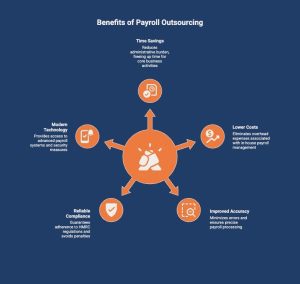
Payroll can be a huge drain on time, energy, and headspace, especially as your business grows or compliance demands increase. Outsourcing it to experts not only lightens the load but also brings peace of mind.
Here’s why more UK businesses are choosing this approach:
1. Time Savings and Reduced Admin
Imagine freeing yourself from repetitive monthly tasks like calculating pay, deductions, and HMRC deadlines.
Outsourcing payroll hands all of this to specialists, giving you more time to focus on customers, business growth, and the work that actually drives results.
2. Lower Costs and Fewer Overheads
Running payroll in-house can be expensive; think software, training, and hiring experienced staff.
Outsourcing replaces these hidden costs with a simple, predictable service fee. It’s a cost-effective way to get professional results without the financial commitment of an internal team.
3. Improved Accuracy and Fewer Errors
Payroll mistakes can cause frustration for staff and create compliance issues.
By outsourcing, you put calculations, deductions, and payslips in the hands of specialists who do this every day. That means fewer errors, less stress, and employees confident in their pay.
4. Reliable HMRC Compliance
HMRC rules are constantly changing, and keeping up can be overwhelming.
Outsourced providers manage RTI submissions, statutory payments, and tax updates, ensuring everything is correct and on time, so you never worry about fines or missed deadlines.
5. Access to Modern Technology and Better Security
Outsourced teams use secure, up-to-date payroll systems that many small businesses couldn’t afford alone.
You benefit from encrypted data handling, smooth processes, and reliable storage, without installing or managing software yourself.
By outsourcing payroll, you can simplify processes, reduce costs, improve accuracy, and ensure compliance, allowing you to focus on growing your business with peace of mind.
What Does Payroll Management Involve for UK Employers?
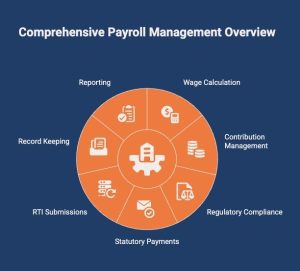
Managing payroll in the UK isn’t just about getting paychecks out on time. It’s about getting it right every single time. When you’re handling wages, taxes, deductions, and benefits, one small mistake can have big consequences. Unfortunately, the pressure is real—especially when compliance risks and error rates are on the rise.
According to a 2023 survey, millions of small businesses face payroll fines due to persistent errors. This highlights the importance of getting payroll right to avoid costly mistakes and penalties. Here’s what you need to get right:
1. Calculating Employee Wages and Statutory Deductions
The first step is figuring out each employee’s gross pay, hours worked, overtime, and bonuses included. Then, subtracting statutory deductions like tax and National Insurance. It sounds straightforward, but getting these calculations wrong can cause serious headaches. Accuracy is everything here, as it helps keep trust in the payroll process and ensures everyone is paid correctly.
2. Managing PAYE, National Insurance, and Pension Contributions
PAYE isn’t just a payroll task; it’s a legal requirement. Along with National Insurance contributions, pensions also need to be managed accurately. Not getting these right can affect your employee’s benefits, your business’s compliance, and potentially lead to fines. It’s essential to make sure everything is deducted and paid on time, every time.
3. Staying Compliant With HMRC Payroll Regulations
HMRC rules are constantly changing, tax codes, reporting requirements, statutory updates. Staying compliant is a full-time job in itself. If you miss a change or fall behind, you risk penalties or delays in processing payroll. Keeping up with these updates is critical to avoid fines and ensure your payroll stays legal and accurate.
4. Processing Statutory Payments Such as SSP and SMP
It’s not just about paying employees for the hours they work. Statutory Sick Pay (SSP) and Statutory Maternity Pay (SMP) are also part of the payroll equation. Calculating and issuing these payments correctly ensures your employees receive the support they need during times of illness or maternity leave, and it helps ensure your business gets any necessary reimbursements from HMRC.
5. Managing Real Time Information (RTI) Submissions to HMRC
Real-Time Information (RTI) submissions are mandatory for every payroll cycle. You need to submit employee pay, tax, and National Insurance details to HMRC right when you pay your staff. Miss a submission or file it late, and you’ll face penalties. It’s essential to stay on top of RTI deadlines and ensure everything is reported correctly and on time.
6. Maintaining Accurate Payroll and Employee Records
Every paycheck, deduction, leave day, and statutory payment must be documented. This means detailed and secure record-keeping for at least three years. Whether it’s for a routine audit or a quick HMRC review, keeping everything organized and accessible is a key part of staying compliant and avoiding penalties.
7. Issuing Payslips and End-of-Year Payroll Reports
Payslips might seem like a small thing, but they’re vital for transparency and employee trust. Each pay period, you’re responsible for providing clear payslips, along with end-of-year reports like P60s and P11Ds. These documents help employees manage their tax obligations, track their earnings, and ensure your business is on the up-and-up with HMRC.
Payroll can feel overwhelming at times, but breaking it down into these key components makes it a lot more manageable. With the right processes, you’ll be able to keep everything running smoothly, without the stress and the risk of penalties.
Does Payroll Work for Small Businesses?
Running payroll as a small business can feel overwhelming, especially when you’re juggling staff, cash flow, and compliance. Payroll mistakes are surprisingly common: according to Startups.co.uk, 48% of UK small businesses report incorrect wage calculations, 38% report late or missing payments, and 36% report errors in hours worked.
Payroll mistakes can result in more than just fines. They can harm employee trust, disrupt cash flow, and even lead to audits. Here’s how to ensure your payroll runs smoothly:
1) Setting Up a Payroll System for the First Time
Registering with HMRC, collecting employee information, and choosing a payroll method lay the foundation for smooth operations and reduce mistakes. Starting on the right foot ensures compliance, avoids errors, and keeps the payroll process organized from the get-go.
2) Choosing Between Manual Payroll and Payroll Software
Manual payroll may work for small teams, but it’s error-prone and time-consuming. Payroll software, on the other hand, automates calculations, deductions, and payslips, making compliance easier and faster. With automation, businesses can reduce the chances of human error and improve accuracy.
3) Calculating Wages, Deductions, and Contributions
Gross pay, tax, National Insurance, pensions, and statutory pay must all be calculated correctly. Mistakes in these areas are the most common reason for fines, and can lead to delays or even employee dissatisfaction. Getting these numbers right the first time is critical for maintaining compliance and avoiding costly mistakes.
4) Managing PAYE and HMRC Reporting Requirements
Submitting Real Time Information (RTI) each pay period is mandatory. Accurate reporting ensures that tax and National Insurance contributions are sent to HMRC on time, avoiding penalties and ensuring that your business remains compliant. Misreporting or missing deadlines can lead to unnecessary fines and potential audits.
5) Tracking Employee Hours and Attendance
Accurate time tracking is essential to ensure that wages, overtime, and holiday pay are correct. Without reliable systems in place, disputes over hours worked and incorrect payments can quickly arise. Using automated tools to track employee hours helps prevent costly errors and protects your business from compliance issues.
6) Handling Payslips, Record Keeping, and Payment Schedules
Providing timely payslips and keeping secure records of pay, deductions, and employee information are vital for both employee trust and compliance. Proper record-keeping not only makes it easier during HMRC audits but also helps avoid potential disputes with employees about their pay.
7) Understanding Statutory Payments and Compliance
Even small employers must manage statutory payments like Statutory Sick Pay (SSP), Statutory Maternity Pay (SMP), pensions, and minimum wage compliance to avoid penalties. Incorrect payments or failure to meet statutory requirements can result in legal action, fines, or disgruntled employees. Proper systems for managing these payments are essential to avoid mistakes and stay compliant.
Why Should You Simplify Payroll with Direct Payroll Services?
Running payroll shouldn’t be stressful or time-consuming.
If you’re tired of juggling spreadsheets, worrying about HMRC deadlines, or correcting payroll mistakes, Direct Payroll Services is here to make payroll effortless.
We take care of the entire process, accurately and on time, every time.
As one of the UK’s most trusted payroll providers, we support businesses of all sizes with automated calculations, HMRC-compliant filings, secure employee portals, and real-time reporting. Everything is handled efficiently, so you can focus on growing your business instead of wrestling with payroll.
Join hundreds of UK businesses that rely on Direct Payroll Services to pay their teams correctly and on schedule, every month.
Call us today and let us simplify your payroll.
Conclusion
Payroll is far more than just issuing salaries; it’s a core business function that directly impacts compliance, employee satisfaction, and financial accuracy. Even small mistakes, like miscalculating hours or deductions, can lead to fines, unhappy staff, and disrupted cash flow.
Staying on top of payroll requires a structured approach: accurate tracking of wages, overtime, statutory payments, and deductions, coupled with up-to-date knowledge of HMRC regulations and employment law. Regularly reviewing processes, maintaining detailed records, and using the right tools or systems can prevent costly errors and streamline operations.
By taking payroll seriously and keeping it organised, businesses can ensure their teams are paid correctly and on time while safeguarding compliance, efficiency, and trust.
Frequently Asked Questions
What are the key steps involved in payroll processing?
Payroll processing includes calculating an employee’s gross income, overtime pay, and annual leave, deducting tax, National Insurance, and voluntary deductions. Employers submit a full payment submission, maintain accurate employee data, and issue payslips on a monthly basis or per the employee’s first payday.
What is the difference between payroll and payroll software?
Payroll is the complete process of paying employees, managing employment laws and retirement plans, and keeping accurate records of their pay. Payroll software automates calculations, submissions, employee’s paycheck generation, and reporting, reducing human error and improving accuracy for small business owners and human resources departments.
What information do I need to run payroll for my employees?
You need employee data including tax code, employee’s national insurance, national insurance category letter, employment status, bank account, employment contract, number of employees, hourly rate or annual salary, and any benefits or deductions to ensure compliant payroll for tax purposes.
How do I choose the right payroll software for my business?
Consider software solutions that handle automated calculations, full payment submission, employer payment summary, integration with your human resources department, reporting for the end of the tax year, and record-keeping for cash flow, total pay, and employee’s paycheck accuracy.
How does payroll work for small businesses in the UK?
Payroll for small business involves calculating total hours, minimum wage or national minimum wage, total pay, deductions, and pensions. Small business owners can use software or outsource payroll to simplify processes, maintain employment laws compliance, and manage tax year reporting efficiently.
Are there any legal requirements for payroll in the UK?
UK employers must follow employment laws, operate PAYE, deduct tax and employee’s national insurance, provide accurate records for tax purposes, and submit the employer payment summary. Payroll qualifications or a qualified accountant can help reduce human error and ensure compliance.