Key Highlights
- UK employers can recover accidental overpayments, but incorrect handling can lead to disputes, HMRC issues, and legal risks.
- Employee accidental overpayment salary issues often point to payroll errors, weak controls, or system gaps.
- Employers should follow a structured process: verify, calculate, assess risk, communicate, recover, and document.
- Poor handling can trigger audit concerns, employee grievances, and reputational damage.
- Recovery must align with UK law and employment contracts, with fair repayment terms agreed.
- Strong documentation and audit trails are essential for compliance and dispute protection.
- Recovery is more complex after an employee leaves and may require formal or legal action.
Employee accidental overpayment salary issues can quickly turn a routine payroll process into a legal, financial, and compliance risk for employers. When an employee is paid more than they should have received, the issue often extends beyond a single mistake. Repeated overpayments can disrupt payroll accuracy, create audit risks, and increase the likelihood of disputes or legal escalation if not handled correctly. Employers must act carefully, as improper recovery can damage employee trust and expose the business to compliance challenges.
Resolving it requires a structured approach that not only recovers the overpaid amount but also strengthens payroll controls to prevent recurring errors and ensure accurate reporting across the organisation.
This guide explains how employers should manage employee accidental overpayment salary situations, including the legal position in the UK, common causes, and practical steps to recover overpaid wages while maintaining compliance, reducing payroll risk, and protecting employee relationships.
What Should Employers Know About Employee Salary Overpayment in the UK?
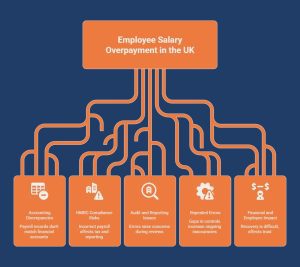
Employee accidental overpayment salary issues can create financial loss, compliance risks, and payroll discrepancies for employers. Businesses must identify the cause quickly, correct errors, and manage recovery carefully to avoid HMRC issues, audit concerns, and disputes with employees.
- Accounting Discrepancies: Overpayments can create mismatches between payroll records and financial accounts, making reconciliation more complex and increasing the risk of reporting inaccuracies.
- HMRC Compliance Risks: Incorrect payroll figures may affect PAYE, National Insurance, and statutory reporting. If not corrected promptly, this can lead to HMRC queries, adjustments, or penalties.
- Audit and Reporting Issues: Repeated errors or unresolved overpayments can raise concerns during internal reviews or external audits, requiring additional checks and corrections.
- Repeated Errors and Process Weaknesses: Frequent overpayments often indicate gaps in payroll controls or system errors, increasing the likelihood of ongoing inaccuracies across pay cycles.
- Financial and Employee Impact: Employees may spend overpaid wages in good faith, making recovery difficult. Repayment requests can cause financial pressure and affect trust within the workplace.
Promptly and accurately managing salary overpayments helps employers maintain compliance, protect financial records, and minimise disruption to both business operations and employee relationships.
What Does UK Law Say About Employee Salary Overpayments?
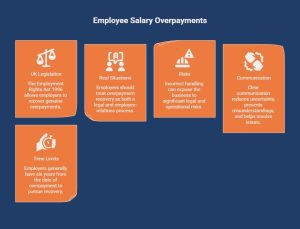
UK employment law allows employers to recover overpayments, but handling them requires care. Employers must balance recovery rights with fair communication, reasonable repayment plans, and avoiding disputes or financial hardship.
1. UK Legislation That Allows Employers to Recover Wage Overpayments
In the UK, employers can legally recover accidental wage overpayments under the Employment Rights Act 1996. The law allows employers to make deductions from an employee’s wages to reclaim a genuine overpayment without treating the deduction as unlawful.
However, this legal right does not remove the need for fair and reasonable handling. In practice, disputes often arise when deductions are made without explanation or when employees are not given the opportunity to discuss repayment.
Although employee consent is not legally required, employers should still communicate openly and agree on a repayment plan to seek legal advice. This reduces the risk of disputes and helps maintain trust.
Here’s a simple breakdown of the legal position:
| Legal Aspect | Employer’s Position |
|---|---|
| Right to Recover | The Employment Rights Act 1996 allows employers to deduct genuine overpayments from wages |
| Employee Consent | Not legally required, but agreeing on repayment is recommended |
| Unlawful Deduction Claims | Recovering a genuine overpayment is not considered unlawful |
| Legal Action | Employers may pursue a civil claim if an employee refuses to repay |
2. How Should Employers Apply the Law in Real Situations?
While the law provides a clear right to recover overpayments, applying it correctly in real workplace situations requires a structured approach.
In practice, issues often arise when employers act too quickly, such as deducting large amounts without prior discussion or failing to explain how the error occurred.
To stay compliant and avoid escalation, employers should treat overpayment recovery as both a legal and employee-relations process.
A practical approach includes:
- Inform the employee as soon as the error is identified
- Provide a clear breakdown of how the overpayment occurred
- Agree on a reasonable repayment plan rather than enforcing immediate deductions
- Consider financial impact before setting repayment terms
- Document all communication for compliance and audit purposes
This approach not only ensures compliance but also reduces the likelihood of disputes and maintains a professional working relationship.
3. What Are the Risks If Overpayments Are Handled Incorrectly?
Although employers have the legal right to recover overpayments, incorrect handling can expose the business to significant legal and operational risks.
In many cases, disputes arise not because recovery is unlawful, but because the process is perceived as unfair or poorly managed.
Key risks include:
- Unlawful deduction claims if the payment is not a genuine overpayment
- Employment tribunal disputes where deductions are considered unreasonable
- Employee grievances due to a lack of communication or transparency
- Reputational damage affecting employee trust and retention
- Increased administrative and legal costs if disputes escalate
These risks increase in more complex situations, such as delayed discovery of overpayments or where employees have already used the funds for essential living expenses.
4. Why Communication Matters as Much as Compliance
Beyond legal compliance, communication plays a critical role in preventing disputes.
One of the most common causes of escalation is when employees are informed after deductions have already been made. Even if the deduction is legally valid, poor communication can lead to frustration and formal complaints.
A structured communication approach helps ensure:
- Employees clearly understand the situation
- Repayment expectations are agreed in advance
- Financial impact is manageable
Clear communication reduces uncertainty, prevents misunderstandings, and helps resolve issues before they escalate.
5. Salary Recovery Time Limits
In addition to handling recovery correctly, employers must also be aware of the legal timeframe for reclaiming overpayments.
In most cases, employers have up to six years to take legal action to recover overpaid wages. However, delaying action can increase the risk of disputes and reduce the likelihood of successful recovery.
Key points to understand:
- Six-year legal limit – Employers generally have six years from the date of overpayment to pursue recovery
- Applies to historical errors – Older overpayments can still be recovered within this timeframe
- Recovery becomes harder over time – Delays may lead to disputes, especially if the employee has left
- Early action is recommended – Prompt action improves recovery outcomes and reduces compliance risk
Employers who address overpayments early are more likely to resolve issues efficiently and avoid unnecessary legal complications.
Confused about common payroll mistakes and misconceptions? Explore our guide on What Are the 10 Most Common Payroll Myths and Facts? to understand how payroll errors occur and how businesses can avoid them.
What Should Employers Do After Discovering a Salary Overpayment?
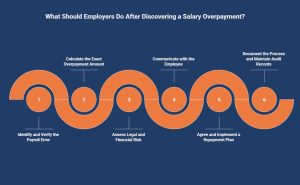
Once a salary overpayment is identified, employers should follow a structured process. Rushed deductions without verification or communication can lead to disputes. A clear workflow ensures accurate handling, legal compliance, and fair resolution.
1. Identify and Verify the Payroll Error
Start by confirming that an overpayment has actually occurred. Review payroll records, payslips, and system data to confirm the issue is genuine and not due to timing differences or reporting errors.
This stage should include:
- Checking payroll calculations and pay elements
- Verifying tax, National Insurance, and deductions
- Reviewing employee contract terms and pay structure
Errors at this stage can lead to incorrect recovery, which increases the risk of disputes or unlawful deduction claims.
2. Calculate the Exact Overpayment Amount
Once confirmed, calculate the precise overpaid amount. This should include a full breakdown of:
- Gross vs net overpayment
- Tax and National Insurance adjustments
- Any impact on benefits or deductions
Providing an accurate and transparent calculation reduces the likelihood of disagreement later in the process.
3. Assess Legal and Financial Risk
Before taking action, assess whether recovery could create risk for the business.
For example:
- Has the overpayment been ongoing for several months?
- Has the employee already relied on the money for essential expenses?
- Would immediate recovery cause financial hardship?
In more complex cases, involving HR or finance teams can help ensure decisions align with employment contracts and company policy.
4. Communicate with the Employee
Once the facts are confirmed, inform the employee in a clear and professional manner.
Best practices include:
- Start with a direct conversation
- Provide written confirmation of the overpayment
- Explain how the error occurred
- Share a detailed breakdown of calculations
- Discuss and agree on repayment options
Handling communication carefully helps prevent escalation and maintains trust.
5. Agree and Implement a Repayment Plan
Rather than enforcing immediate deductions, employers should agree on a reasonable repayment schedule.
This should:
- Reflect the employee’s financial situation
- Avoid causing financial hardship
- Be clearly documented and confirmed in writing
Unreasonable deductions are one of the most common causes of payroll disputes.
6. Document the Process and Maintain Audit Records
Finally, maintain a clear audit trail of the entire process.
This should include:
- Internal investigation findings
- Payroll calculations and adjustments
- Employee communication records
- Agreed repayment terms
Maintaining proper documentation protects the business in case of disputes, audits, or legal challenges.
Following a structured and transparent approach ensures overpayments are handled fairly, reduces the risk of disputes, and helps employers maintain compliance with payroll and employment regulations.
What Happens if the Employee Has Already Left the Company?
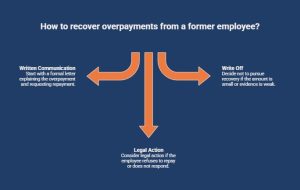
Recovering overpayments from former employees is more complex, as payroll deductions are no longer possible. Employers must rely on formal communication, clear documentation, and, if needed, legal action, while assessing costs, evidence strength, and dispute risks before proceeding.
1. How Can Employers Recover Overpayments After an Employee Leaves?
Start by contacting the former employee in writing. Clearly explain the overpayment, include a breakdown, and request repayment.
Include:
- Overpayment amount and calculation
- Payslips or payroll records
- Reference to employment terms
- A reasonable repayment deadline
Providing complete documentation at this stage reduces the likelihood of disputes.
If the employee agrees, confirm the repayment plan in writing. If they refuse or do not respond, employers may consider legal action through the civil courts. This typically involves issuing a formal repayment request and, if unresolved, progressing through the small claims process.
However, legal action should only be pursued where the amount justifies the time, cost, and effort involved. It may include court fees, administrative burden, and the risk of unsuccessful recovery if the evidence is insufficient.
2. What Should Employers Do If a Dispute Arises?
Disputes often occur when calculations are unclear or unsupported, or when the employee challenges the repayment request.
Employers should:
- Recheck and clearly explain calculations
- Share payroll records and written communication
- Ensure recovery aligns with employment contract terms
In some cases, employees may argue the payment was received in good faith, particularly where the error was not immediately identified. Strong and well-organised documentation is essential, as weak or incomplete evidence can reduce the likelihood of successful recovery.
3. When Is Legal Action Not Worth Pursuing?
Legal recovery may not be practical where:
- The amount is small
- Evidence is limited or unclear
- Costs outweigh the potential recovery
- The dispute is likely to be prolonged
In these situations, employers may decide to write off the overpayment as a business cost rather than pursue recovery.
Handling overpayments after an employee leaves requires careful judgment, clear communication, and strong documentation, helping employers balance recovery efforts with cost, risk, and practicality.
Why Choose Direct Payroll Services to Handle Employee Salary Overpayments?
Managing salary overpayments requires accurate calculations, compliant recovery, and clear communication. Direct Payroll Services helps employers handle the process efficiently while reducing risk and administrative burden.
How Direct Payroll Services Supports Employers:
- Verify payroll data and identify overpayment errors
- Ensure recovery aligns with UK employment law and company policies
- Manage employee communication to prevent disputes
- Implement structured and fair repayment plans
- Maintain accurate payroll records and audit trails
With a structured and compliant approach, Direct Payroll Services helps businesses resolve overpayments quickly, reduce risk, and maintain payroll accuracy.
Looking to improve payroll accuracy and avoid costly errors? Contact Direct Payroll Services today for reliable payroll support.
Conclusion
Employee salary overpayments can happen even in well-managed payroll systems, but handling them correctly is essential. By identifying the error quickly, communicating clearly with the employee, and agreeing on a fair repayment plan that considers the amount of overpayment, employers can resolve the issue while staying compliant with UK employment law.
A transparent and structured approach helps protect the business financially and maintain employee trust. Strengthening payroll processes, regular checks, and professional payroll support can also reduce the risk of overpayment errors while ensuring accurate employee wages.
Frequently Asked Questions
Is there a time limit for UK employers to request repayment of wage overpayments?
Yes. In the UK, employers generally have up to six years from the date of the overpayment to start legal action to recover the national minimum wage money. Acting sooner is recommended, as delays can make recovery more difficult.
Are there risks for employers if they overpay an employee and don’t recover the money?
Yes. If employers do not recover an overpayment, especially in SMEs, they may face financial loss, payroll record inaccuracies, and possible tax or reporting complications. It can also set a precedent that makes managing future payroll errors more difficult.
What is the 2-year rule for employees?
The 2-year rule in UK employment law means most employees must complete two years of continuous service before they can claim ordinary unfair dismissal. However, claims involving discrimination, whistleblowing, or certain statutory rights can be made without this qualifying period.
How long does an employer have to correct a payroll mistake in the UK?
In the UK, employers can usually correct a payroll mistake and seek repayment of an overpayment within six years from the date the error occurred. However, it is best practice to correct payroll errors as soon as they are discovered, especially if the mistakes have lasted for a long period of time.
What are the HMRC implications of correcting an overpayment?
Correcting an overpayment may require updating PAYE submissions to HMRC. Employers must adjust payroll records, tax, and National Insurance figures so the corrected pay is accurately reported in payroll reports and employee payslips.
Where can employees find advice about wage overpayments and employer recovery procedures?
Employees can seek advice from Acas (Advisory, Conciliation and Arbitration Service), trade unions, or employment law advisors. These sources provide guidance on wage overpayments, employee rights, and how it is usually considered good practice for employers to handle repayment and payroll deductions.