Key Highlights
- The 2026 UK minimum wage increase takes effect on 1 April 2026, requiring employers to update payroll systems and pay structures.
- Minimum wage rates vary by age group and apprenticeship status, including the National Living Wage for workers aged 21 and over.
- Employers must review employee wages and ensure all eligible staff are paid the correct statutory rate.
- Underpaying workers can result in HMRC penalties, wage repayments, and reputational damage.
- Higher wages may improve household income for workers but increase labour costs for businesses.
- The UK minimum wage applies nationally, with the same rates across England, Scotland, Wales, and Northern Ireland.
Even small errors in wage calculations can lead to compliance issues. Underpaying staff may trigger investigations from HMRC, financial penalties, and reputational damage for employers. Each year, the government evaluates wage levels to ensure workers receive fair compensation while maintaining economic stability for employers.
The minimum wage increase expected in April 2026 will affect payroll calculations, employee earnings, and compliance responsibilities across many industries. Employers must ensure that wage records, payroll systems, and pay structures align with the updated statutory requirements.
This guide explains the 2026 minimum wage increase, including updated rates, eligibility rules, implementation timelines, and the steps employers should take to ensure compliance with UK wage legislation.
What Is the National Minimum Wage in the UK?
The National Minimum Wage (NMW) is the statutory minimum hourly pay that most workers in the UK are legally entitled to receive. It establishes a baseline wage to protect employees from unfairly low pay and ensure employers meet legal pay obligations.
The rates are set by the UK government and reviewed annually. They apply to most workers aged 16 and over, with different minimum pay levels depending on age and whether the worker is an apprentice.
Who qualifies for the National Minimum Wage?
Most workers in the UK are entitled to the statutory minimum wage, but your eligibility and the rate of pay you receive depend on your age and whether you are an apprentice. It’s a key part of your employee rights, and ensuring wage compliance is a legal duty for all employers.
The main groups of eligible workers who must be paid at least the regular minimum wage include:
- Full-time employees
- Part-time workers
- Agency workers
- Workers on zero-hour contracts
However, certain individuals may not qualify, such as self-employed contractors, volunteers, and family members working informally in family businesses.
If you’re unsure how these arrangements work, read our guide on What is a Zero Hour Contract?
What Is the Difference Between the National Minimum Wage and the National Living Wage in 2026?
The National Minimum Wage and the National Living Wage are both statutory wage rates set by the UK government. The primary difference lies in which workers each rate applies to.
| Wage Type | Applies To | Purpose |
| National Minimum Wage | Workers aged 16–20 and some apprentices | Provides statutory wage protection for younger workers, ensuring compliance with the National Wage Rate. |
| National Living Wage | Workers aged 21 and over | Higher statutory rate for adult employees |
Employers must apply the correct wage category based on a worker’s age and employment status to remain compliant with UK wage legislation.
What Are the Updated UK Minimum Wage Rates for April 2026?
Minimum wage rates are typically updated each year in April to reflect changes in the economy and labour market conditions, including adjustments to the National Minimum Wage. The new wage levels expected for April 2026 will apply to several worker categories.
1. New Hourly Rates by Worker Category
Each worker category receives a different statutory wage rate. Adult workers aged 21 and over qualify for the National Living Wage, which is typically the highest minimum pay band. Younger workers and apprentices fall under separate minimum wage categories.
| Worker Category | Rate from April 2026 |
| National Living Wage (21 and over) | £12.71 |
| 18-20 Year Old Rate | £10.85 |
| 16-17 Year Old Rate | £8.00 |
| Apprentice Rate | £8.00 |
Employers must ensure that employees move to the correct wage category as soon as they reach the relevant age threshold.
2. Percentage Increase Compared With 2025 Rates
The annual wage increase varies depending on economic conditions. Factors such as inflation, labour shortages, and productivity trends influence the level of adjustment recommended by the Low Pay Commission.
Here’s a look at the percentage increase from the 2025 rates:
- National Living Wage (21 and over): A rise of 4.1%.
- 16-17 Year Old Rate: An increase of youth rates by 6.0%.
- 16-17 Year Old Rate: An increase of 6.0%.
- Apprentice Rate: Also rising by 6.0%.
Employers should review the percentage increase carefully, as even small wage adjustments can affect overall payroll costs.
When Will the 2026 Minimum Wage Increase Take Effect?
Minimum wage changes usually take effect at the start of the UK tax year. From this point, employers must update payroll systems and ensure all eligible workers receive at least the new statutory hourly wage rates.
1. Official implementation date of the new wage rates
The new minimum wage rates will officially come into force on 1 April 2026. This consistent implementation schedule allows employers to prepare payroll systems and ensure wage adjustments are applied correctly across all eligible employees.
To remain compliant, employers should understand how the new rates must be applied from this date:
- Any hours worked on or after 1 April must be paid at the new rate
- Payroll systems must be updated before the first pay run after the change to ensure accurate wage calculations.
- Employees working on or after the implementation date must receive the updated wage rate.
- Businesses must check payroll reports and employee pay records to confirm the correct rate has been applied.
- Failure to apply the new rates may lead to underpayment, which can trigger HMRC penalties and compliance investigations.
Ensuring payroll systems are updated in advance helps businesses apply the new wage rates smoothly and maintain full compliance with UK minimum wage legislation.
2. How Payroll Cycles Apply the New Wage Rates
Payroll systems must apply the correct wage rates during the relevant pay reference period. If an employee performs work after the implementation date, the new higher minimum wage must be applied to those hours worked, even if the pay period began before the rate change.
To ensure wage compliance for your entire workforce, you should:
- Identify the first pay reference period that starts on or after 1 April 2026.
- Apply the new minimum wage rates from the beginning of that period.
- Update your payroll software to automatically calculate the correct pay.
- Inform your employees about how their pay will be calculated during the transition.
Businesses that operate weekly or monthly payroll cycles should confirm that payroll software reflects the updated wage rates before the first pay run after the increase.
For a clearer understanding of payroll-related tax adjustments, see Understanding Payroll Tax Exemption: What You Need to Know?
Which Workers Are Eligible for the 2026 Minimum Wage Rates?
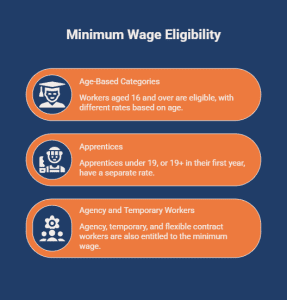
From April 2026, most workers aged school-leaving age and above must be paid at least the statutory minimum wage for their age group. Employers must ensure that eligible staff receive the correct rate when the updated wage levels take effect.
1. Age-Based Worker Categories
Minimum wage rates apply to employees aged 16 and over, with different rates depending on age. Workers aged 21 and over qualify for the National Living Wage, while younger workers receive the relevant National Minimum Wage band.
For employers, this means payroll systems must correctly place employees into the appropriate wage category as they reach new age thresholds.
2. Apprentices
Apprentices qualify for a separate minimum wage rate if they are under 19, or aged 19 or over and in the first year of their apprenticeship. After the first year, apprentices aged 19 or over must be paid the minimum wage rate for their age group.
Employers should monitor apprenticeship start dates and training periods to ensure payroll applies the correct wage band when eligibility changes.
3. Agency and Temporary Workers
Agency workers, temporary staff, and workers on flexible contracts are also entitled to the statutory minimum wage. These protections apply even when the worker is employed through an agency or short-term contract.
In most cases, the organisation responsible for paying the worker, often the employment agency, must ensure the correct minimum wage rate is applied.
If you want to understand how flexible work arrangements operate, read our guide on What Is a Zero-Hour Contract? Your Rights as a Worker.
What Actions Should Employers Take Before the Minimum Wage Increase?
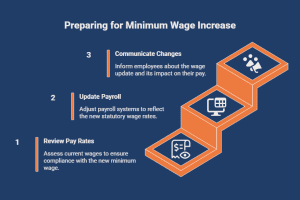
Preparing early for minimum wage changes helps businesses review employee pay rates, update payroll systems, and apply the correct statutory wage rates. Taking action in advance ensures the new minimum wage is implemented accurately when it takes effect.
1. Review Employee Pay Rates
Employers should review current pay rates to ensure all workers will receive at least the updated minimum wage.
Key checks include:
- Reviewing wages across the workforce
- Identifying employees moving into a higher age band
- Confirming correct wage categories in payroll records
2. Update Payroll Systems
Payroll software must reflect the new statutory wage rates before the first pay run after the change.
Employers should:
- Update wage rates in payroll systems
- Verify automated pay calculations
- Check age-based pay band settings
- Test payroll reports for accuracy
3. Communicate Wage Changes
Employers should inform employees about the wage update and how it affects their pay.
Communication should:
- Explain the new wage rates and the effective date
- Clarify how the change appears on payslips
- Provide a contact point for payroll questions
Taking these steps early ensures payroll updates are accurate, compliant, and implemented smoothly without last-minute errors or disruptions.
What Happens If Employers Pay Below the Minimum Wage?
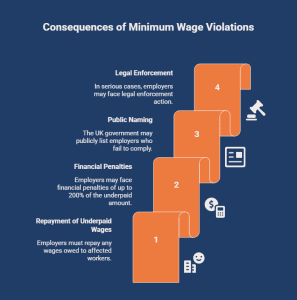
Paying workers less than the statutory minimum wage is a breach of UK employment law. When underpayment occurs, HMRC can investigate and apply several enforcement measures designed to recover unpaid wages and ensure future compliance.
1. Repayment of Underpaid Wages
Employers must repay any wages owed to affected workers. HMRC issues a Notice of Underpayment that outlines the total amount owed and requires businesses to repay the difference to both current and former employees.
2. Financial Penalties
In addition to repaying wages, employers may face financial penalties of up to 200% of the underpaid amount, capped at £20,000 per worker. These penalties are intended to discourage wage underpayment and encourage employers to maintain accurate payroll practices.
3. Public Naming by the Government
The UK government may publicly list employers who fail to comply with minimum wage laws. This public disclosure policy highlights businesses that have underpaid workers and can affect employer reputation and public trust.
4. Legal Enforcement
In more serious cases, employers who deliberately breach minimum wage laws may face legal enforcement action. This can include prosecution or additional sanctions if the business repeatedly fails to comply with statutory wage requirements.
These consequences highlight the importance of accurate payroll management, as even small underpayments can lead to significant financial, legal, and reputational risks for employers.
To avoid common misconceptions that can lead to costly payroll errors, read What Are the 10 Most Common Payroll Myths and Facts?.
What Are the Economic and Business Impacts of the 2026 Minimum Wage Increase?
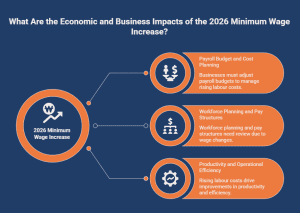
The 2026 minimum wage increase will affect both employees and businesses across the UK economy. While higher wages can increase workers’ household incomes, employers may need to adjust their payroll budgets and strategies to manage rising labour costs to ensure they remain competitive with the minimum wage.
1. Payroll Budget and Cost Planning
Higher statutory wage rates will increase payroll expenses for businesses employing workers at or near the minimum wage. Employers should review payroll budgets and assess how the new rates will affect overall labour costs.
Key considerations include:
- Calculating the total increase in wage costs across the workforce
- Reviewing pay structures for roles slightly above the minimum wage
- Adjusting payroll forecasts for the upcoming financial year
Planning these adjustments early helps businesses manage wage increases without unexpected payroll pressure.
2. Workforce Planning and Pay Structures
Minimum wage increases can affect how businesses structure their workforce and pay bands. Employers may need to review job roles, shift patterns, or staffing levels to ensure labour costs remain sustainable.
Businesses may consider:
- Reviewing staffing levels and scheduling practices
- Adjusting pay differentials between entry-level and senior roles
- Evaluating the impact of wage changes on overtime and shift pay
Clear workforce planning helps organisations adapt to higher wage requirements while maintaining operational efficiency.
3. Productivity and Operational Efficiency
Rising labour costs often encourage businesses to improve productivity and operational processes. Employers may review workflows, training programmes, or technology investments that help teams work more efficiently.
Common responses include:
- Investing in employee training and skills development
- Improving operational processes to increase output per employee
- Introducing technology or automation to support productivity
These adjustments can help businesses offset higher wage costs while supporting long-term growth.
Taking a proactive approach to cost planning, workforce structure, and productivity ensures businesses can absorb wage increases effectively while maintaining profitability and long-term stability.
Are There Regional Differences in Minimum Wage Across the UK?
The UK follows a national minimum wage system, meaning the statutory wage rates apply uniformly across all regions of the country. There are no government-mandated regional wage differences for the National Minimum Wage or the National Living Wage.
Key points to understand include:
- Minimum wage rates are the same across the UK, including England, Scotland, Wales, and Northern Ireland.
- All employers must follow the same statutory wage rules, regardless of business location.
- Some employers voluntarily pay the Real Living Wage, which is higher than the legal minimum.
- The Living Wage Foundation also calculates a higher London Living Wage to reflect the capital’s increased cost of living.
While voluntary wage initiatives exist, the only legal requirement for employers is to pay the national statutory minimum wage.
Why Choose Direct Payroll Services for Minimum Wage Compliance?
Managing minimum wage compliance requires accurate payroll systems, up-to-date statutory knowledge, and consistent monitoring of employee pay rates.
Direct Payroll Services supports UK businesses by ensuring payroll processes remain aligned with current minimum wage regulations and reporting requirements.
Their services help employers:
- Maintain accurate wage calculations in line with statutory minimum rates
- Update payroll systems to reflect annual wage changes
- Monitor employee pay to prevent underpayment risks
- Ensure compliant payroll reporting and HMRC submissions
- Reduce administrative workload for HR and finance teams
Businesses employing workers across different pay bands or age groups benefit from payroll systems that automatically apply the correct wage rates and reduce compliance risks.
Need support managing minimum wage compliance? Direct Payroll Services helps UK employers maintain accurate payroll, meet legal requirements, and avoid costly penalties. Get in touch with our payroll experts today to keep your payroll compliant and stress-free.
Final Thoughts
The 2026 minimum wage increase will require UK employers to review pay rates, update payroll systems, and ensure employees are paid the correct statutory wage from the implementation date. By preparing early, businesses can apply the updated rates accurately, maintain compliance with minimum wage regulations, and avoid underpayment risks.
Careful payroll planning and workforce adjustments will help organisations manage rising labour costs while ensuring employees receive the pay they are legally entitled to across all sectors.
Frequently Asked Questions
Will everyone in the UK benefit from the 2026 minimum wage increase?
Not everyone will benefit directly from the 2026 minimum wage increase. The change mainly affects workers earning the statutory minimum wage or slightly above it, while employees already earning higher wages may not see an immediate pay adjustment.
What should employers do if they’re unsure about the correct rate?
If employers are unsure about the correct minimum wage rate, they should check official UK government guidance or consult payroll professionals. Using reliable payroll software or payroll services can also help ensure wage calculations remain accurate and compliant.
Will the minimum wage increase in 2026 apply to all states or regions in the US and UK?
No. In the UK, the minimum wage is set nationally and applies across all regions. In the US, minimum wage laws vary by state, with places like California, Florida, Georgia, Alaska, Utah, Colorado, Idaho, Oklahoma, Hawaii, Kansas, Arizona, Texas, Virginia, Tennessee, Pennsylvania, Michigan, Iowa, Kentucky, Maine, and New York City setting their own rates.
What are the new employer duties regarding minimum wage changes in 2026?
Employers must update payroll systems, review employee pay rates, and ensure all eligible workers receive at least the new statutory minimum wage from 1 April 2026. They must also maintain accurate wage records to demonstrate compliance with UK minimum wage regulations.
Where can I find the official 2026 minimum wage rates?
The official 2026 UK minimum wage rates are published on the GOV.UK website. They are announced by the government following recommendations from the Low Pay Commission and apply nationwide from 1 April 2026.
Are there any exemptions or special cases for minimum wage increases in 2026?
Yes. Some individuals are exempt, including self-employed contractors, volunteers, company directors without employment contracts, and certain family workers in family businesses. However, most workers aged 16 and over must still receive the statutory minimum wage.
What will the minimum wage rates be in 2026 for the UK?
From 1 April 2026, the UK minimum wage rates are expected to be £12.71 for workers aged 21+, £10.85 for workers aged 18–20, and £8.00 for workers aged 16–17 and apprentices. These rates apply nationwide across the UK.