Key Highlights
- BACS payroll is the UK system used to send employee salaries directly into bank accounts.
- It separates payroll calculation from payment transmission through a secure banking network.
- Most UK employers use BACS for payroll because it is reliable, predictable, and built for bulk payments.
- A BACS payroll bureau manages files, submissions, and payment oversight on behalf of employers.
- Handling BACS internally brings timing pressure, security responsibility, and failure risk.
- A professional BACS payroll service improves accuracy, control, and payment reliability.
- Direct Payroll manages BACS submissions securely so employers avoid banking complexity.
Payroll rarely feels stressful when you are calculating pay. The real pressure starts when money actually has to move. If your payday is Friday, your BACS payroll file usually needs to be submitted by Wednesday. Miss that window, and salaries do not arrive on Friday. They move to the next working day. For employees, that delay is personal. For employers, it is reputational.
This is where many UK employers feel the shift. Payroll stops being just an HR or finance task and becomes a time-sensitive payment process governed by banking cycles, submission cut-off times, and security protocols. BACS payroll is the system that powers most UK salary payments.
When you understand how the three-day processing cycle works, what submission deadlines apply, and how approval controls operate, the process becomes predictable rather than stressful. In this guide, you will get clear, practical insight into how BACS payroll works, why it is the standard for UK salary payments, and what you need to manage it confidently and correctly.
What is BACS for Payroll?
BACS stands for Bankers’ Automated Clearing Services, the UK electronic payment network used to transfer money between bank accounts. In payroll, employers use BACS Direct Credit to send salaries directly into employees’ accounts.
It is the standard method of wage payment in the UK, with over 90 per cent of employees paid this way. The system is built for bulk transactions and processes billions of payments each year.
Unlike Direct Debit, which collects money, Direct Credit sends funds out. This makes BACS suitable for regular payments such as wages, pensions, and supplier invoices.
To use BACS for payroll, employers need accurate employee bank details, correct payment amounts, and a compliant submission process through the banking system.
How Does BACS Payroll Work?
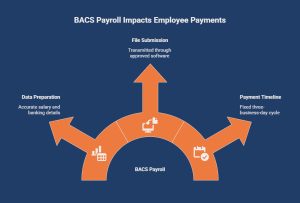
BACS payroll connects your payroll calculations to the UK banking network through a structured, time-bound process. While the technology behind it is regulated and secure, the workflow itself follows a clear sequence. It moves from accurate data preparation to authorised submission and then through a fixed processing cycle that determines when employees are paid.
1. Payroll Data Preparation
Every BACS payment starts with validated payroll information. Before submission, salary figures and banking details must be correct, complete, and formatted to system standards.
This stage involves:
- Finalising net pay after tax, National Insurance, and deductions
- Verifying employee account numbers and sort codes
- Applying adjustments such as bonuses or statutory payments
- Structuring the data into a compliant BACS file
That file becomes the official payment instruction. It defines payment amounts, recipients, and timing. Accuracy here is essential because incorrect data leads directly to rejected or delayed payments.
2. BACS File Submission
Once the payment file is ready, it must be transmitted through approved BACS software or a licensed payroll provider. This step links your payroll data to the banking system and formally initiates the payment run.
Direct submission requires:
- Secure authentication credentials
- Access to BACS-compliant software
- A registered Service User Number
Because of these technical requirements, many employers choose a payroll service or BACS bureau to handle submission securely and reduce internal workload.
3. BACS Processing Timeline: The Three-Day Cycle
After submission, payments follow BACS’s fixed three-business-day cycle. The schedule is consistent, which allows employers to plan pay dates with precision.
| Day | Stage | Outcome |
|---|---|---|
| Day 1 | Submission | File enters the BACS system |
| Day 2 | Processing | Instructions sent to receiving banks |
| Day 3 | Payment | Funds leave the employer account and reach employees |
Since timing is fixed, payroll teams must work backwards from the intended pay date. Missing a submission deadline shifts the entire payment schedule.
At its core, BACS payroll is reliable when managed correctly. The system is stable. The determining factor is disciplined preparation, accurate data, and timely submission.
Why Do Employers Use BACS Payroll Payments?
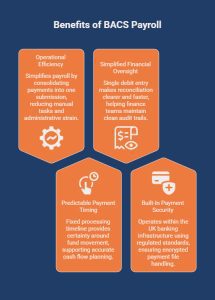
Across the UK, BACS has become the standard salary payment method because it combines scale, predictability, and financial control. For employers, it replaces multiple transactions with a single structured process, making payroll distribution easier to manage and monitor.
1. Operational Efficiency for Payroll Teams
Paying staff individually through manual transfers is time-intensive and increases the chance of mistakes. BACS simplifies this by consolidating payments into one submission.
This provides:
- Bulk payment capability for entire workforces
- Reduced manual banking tasks
- Standardised payment execution
- Lower administrative strain
For organisations running regular payroll cycles, this consistency improves workflow efficiency.
2. Predictable Payment Timing
BACS operates on a fixed processing timeline, which gives finance teams certainty around when funds will leave the business account and reach employees.
This supports:
- Accurate cash flow planning
- Coordinated payroll scheduling
- Reduced risk of timing errors
Predictability is one of the main reasons businesses rely on BACS for recurring salary payments.
3. Simplified Financial Oversight
Each payroll run appears as a single debit entry in the company accounts. This structure makes reconciliation clearer and faster.
It helps finance teams:
- Match payroll records quickly
- Maintain clean audit trails
- Reduce time spent reviewing transactions
Clear records support compliance, reporting, and financial control.
4. Built-In Payment Security
BACS operates within the established UK banking infrastructure using regulated transmission standards. Payments move through secure channels rather than manual transfers.
For employers, this means:
- Encrypted payment file handling
- Controlled authorisation processes
- Lower exposure to transfer errors
BACS is widely trusted because it combines reliability with structured safeguards. When payroll data is prepared correctly and submitted on time, it provides a dependable method for paying employees accurately and consistently.
Think payroll is just data entry and payslips? Discover the truth behind common assumptions in this eye-opening guide to payroll myths.
What Is a BACS Payroll Bureau?
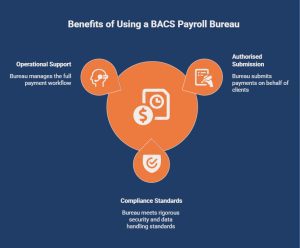
When employers want the efficiency of BACS without managing banking systems themselves, they often rely on a bureau. A BACS payroll bureau acts as a secure intermediary that submits salary instructions through the UK payments infrastructure, allowing businesses to process wages without handling technical banking requirements directly.
1. Authorised Submission on Your Behalf
A bureau is approved to transmit BACS Direct Credit payments into the banking network for client organisations. Instead of your team interacting with financial institutions, uploading files, or managing submission protocols, the bureau handles the process using compliant systems connected to individual banks and building societies.
2. Compliance and Accreditation Standards
Operating as a bureau requires passing rigorous audits covering data handling, encryption, and payment security. These standards ensure salary files, employee account details, and payment credentials are protected to the same level expected for any regulated payment service provider.
3. Operational Support Beyond Submission
A professional bureau manages the full payment workflow, not just file transmission. This typically includes:
- Formatting payroll data into compliant direct credit payment files
- Scheduling submissions aligned with pay dates
- Validating an employee’s current account or building society account details
- Monitoring payment status after submission
This structure means employers can access BACS payment capability without purchasing software, dealing with banking integration, or maintaining secure submission systems internally.
In effect, a BACS payroll bureau allows businesses to run payroll through established banking channels while avoiding the operational burden of managing those channels themselves.
What Challenges Do Employers Face With BACS Payroll Processing?
The BACS network is designed for stability and scale, but running it internally requires precision. Payment timing, data accuracy, compliance requirements, and security controls all sit with the employer. When these elements are handled manually, the risk of disruption increases.
1. Technical Banking Requirements
Direct access to BACS often requires bank approval and a Service User Number. Not every organisation qualifies, especially smaller businesses. Even when access is granted, companies must maintain compatible software and infrastructure that aligns with banking standards set by financial providers.
Costs also come into play. Setup expenses, licensing, and maintenance can make direct processing less practical than outsourcing, particularly when compared with alternatives such as Faster Payments Service, CHAPS payments, or standard bank transfer methods, each of which has different speed, cost, and processing rules.
2. Submission Timing Pressure
BACS operates on a fixed processing cycle, which means payroll must be submitted in advance of payday. Employers must plan around:
- Cut off deadlines
- Payroll adjustments close to the pay date
- Non-processing days, such as bank holidays
Unlike instant credit payments, BACS requires structured scheduling. Missing a submission window can delay wages, creating avoidable stress for both the employer and employees.
3. Payment Failure Risks
Payment failures usually result from preparation issues rather than system faults. Typical causes include:
- Incorrect account details
- Insufficient funds in the business’s current account
- Formatting errors within payment files
- Duplicate or rejected entries
Each failed transaction increases administration time and can generate additional transaction fees or banking charges, depending on the provider.
4. Security Responsibilities
Processing payroll means safeguarding sensitive financial data. Employers must protect employee details, payment files, and system access credentials. This includes implementing encryption, access controls, and audit procedures to prevent fraud or unauthorised activity.
Understanding related payment frameworks is also important. For example, BACS Direct Debit operates differently from salary payments and involves a Direct Debit mandate and the Direct Debit Guarantee, which protects payers. Payroll relies on Direct Credit instead, so the employer carries responsibility for accuracy and security.
These challenges do not make BACS difficult. They highlight how much operational discipline is required to run payroll payments reliably without specialist support.
Want to streamline client payroll without increasing workload? Discover how payroll outsourcing helps accountants save time, reduce risk, and scale services confidently.
How Does a BACS Payroll Service Improve Payment Reliability?
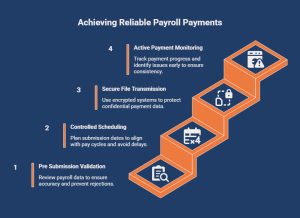
When payroll payments are managed through structured systems and specialist oversight, reliability improves immediately. A professional payments service strengthens each stage of processing by combining banking expertise with controlled workflows that reduce errors and delays.
1. Pre Submission Validation
Specialist providers review payroll data before files are sent. They confirm formatting, verify account details, and check values against expected totals. This prevents rejected transactions and protects against avoidable corrections after submission.
2. Controlled Scheduling
Because BACS follows a strict timetable, timing must be precise. A payroll service plans submission dates around pay cycles and ensures files are transmitted within the correct window. This structured approach avoids last minute processing and reduces dependency on manual reminders.
3. Secure File Transmission
Payment files contain confidential data, so transmission must meet security standards used by regulated financial providers. Established payroll services use encrypted systems, restricted access environments, and monitored submission channels to protect information throughout the process.
4. Active Payment Monitoring
Reliability extends beyond sending files. Providers track payment progress, confirm completion, and identify issues early. This visibility allows corrective action before employees are affected, ensuring payroll remains consistent and predictable.
In practical terms, using a BACS payroll service transforms salary processing from a deadline-sensitive administrative task into a controlled financial operation. Employers gain accuracy, reduced risk, and measurable cost savings while employees receive payments on time without disruption.
How Does Direct Payroll Services Simplify BACS Payroll for Employers?
Managing BACS submissions internally means handling banking protocols, deadlines, and security controls alongside payroll. Direct Payroll Services removes that complexity by managing both payroll processing and BACS payment submission within one structured system.
What Direct Payroll Handles?
- Payroll calculations and validation
- BACS file preparation
- Secure submission to the banking network
- Payment monitoring and confirmation
This eliminates the need for internal software, banking access setup, or submission management.
Why Employers Choose Direct Payroll?
- Reduces administrative workload
- Ensures on-time salary payments
- Strengthens data security controls
- Minimises payment errors
With Direct Payroll Services, you keep payroll oversight while they manage the technical payment process, giving you reliable BACS payroll without operational strain.
Ready to simplify your BACS payroll and avoid submission risks? Contact Direct Payroll Services today to ensure your employee payments run securely, accurately, and on time every pay cycle.
Final Thoughts
BACS payroll remains the backbone of salary payments for UK employers because it combines reliability, structure, and financial control. However, managing submissions internally demands precision, security discipline, and strict timing.
By using a specialist provider like Direct Payroll Services, businesses can remove that operational burden while keeping full confidence that wages are processed accurately, securely, and on schedule. If you want payroll payments handled without risk or complexity, outsourcing BACS processing is a practical next step toward smoother payroll operations.
Frequently Asked Questions
Is BACS payroll secure and reliable for regular payments?
Yes. BACS uses regulated UK banking infrastructure, encrypted transmission, and controlled authentication protocols. Its long track record and structured processing cycle make it one of the most dependable methods for routine payroll payments when files are prepared and submitted correctly.
How do BACS payments compare to Faster Payments for payroll processing?
BACS takes three business days and is designed for scheduled bulk payments. Faster Payments are near instant but usually better suited to individual transfers. For payroll runs, BACS is typically more cost-efficient and predictable.
What is a BACS bureau?
A BACS bureau is an approved provider authorised to submit payment files to the BACS network for businesses. It manages formatting, validation, and transmission, allowing employers to run payroll payments without maintaining direct system access or specialist software.
What is a BACS payment service?
A BACS payment service is a system that enables organisations to send electronic payments between UK bank accounts. Businesses use it for payroll, supplier payments, and recurring transactions through secure, structured processing that usually completes within three working days.
What is a BACS payment for payroll?
A BACS payroll payment is a Direct Credit transfer that deposits wages into employees’ bank accounts. Employers submit a payment file through the BACS network, which processes and delivers salaries on a scheduled pay date.
What steps do I need to follow to set up BACS payroll for my business?
You need bank approval, a Service User Number, compliant submission software, employee banking details, and a structured payroll schedule. Many businesses simplify setup by using a payroll provider that manages BACS submission and compliance requirements.