PAYE (Pay As You Earn) tax codes tell your employer how much income tax to deduct from your wages before you’re paid. Issued by HMRC, they’re meant to simplify tax collection—but they’re not always accurate. Around 15% of people on PAYE may be paying the wrong amount of tax each year. That’s why it’s crucial to check your tax code to ensure you have the correct code. The wrong code could mean you’re overpaying and missing out on a refund, or underpaying and facing a surprise tax bill. If something looks off, contact HMRC as soon as possible to ensure you’re not paying the wrong amount of tax.
PAYE Tax Codes Explained: What They Mean and How They Affect Your Pay

In the UK, the Pay As You Earn (PAYE) system is used by HMRC to collect income tax and National Insurance from employees. Central to this PAYE system is the PAYE code, a combination of numbers and letters that tells employers how much tax to deduct from an employee’s earnings. Understanding the structure of PAYE tax codes is essential for employees, employers, and payroll professionals alike.
What Are PAYE Tax Codes?
A PAYE tax code helps ensure that the correct amount of tax is deducted from an individual’s salary. It reflects personal tax-free allowances and any adjustments required due to underpayments, benefits, or multiple incomes, including a negative tax code if applicable.
A typical tax code looks something like 1257L or BR, and each element of the code serves a specific purpose.
1. Components of a Standard PAYE Tax Code
A PAYE tax code is typically made up of numbers and a letter. Here’s what each component represents:
The Numbers in a Tax Code
The number usually represents the amount of tax-free income you’re entitled to in a tax year, divided by 10. For example:
- 1257L: The number 1257 indicates a tax-free personal allowance of £12,570 (1257 × 10).
-
- Unpaid tax from previous years
- Job expenses
- Taxable benefits (e.g. company car)
This figure is based on the standard personal allowance set by HMRC for the tax year. It may be higher or lower depending on circumstances such as:
2. The Letters in a Tax Code
The letter at the end of the tax code tells your employer how to adjust your tax-free allowance. Common letters include:
- L – You’re entitled to the standard tax-free personal allowance.
N – This letter indicates that you’ve used the marriage allowance to transfer 10% of your personal allowance to your spouse or civil partner. - M – You’ve received 10% of your partner’s Personal Allowance through the Marriage Allowance, which may also be impacted by the married couples allowance.
- N – You’ve transferred 10% of your Personal Allowance to your partner.
- T – Your tax code includes other calculations to work out your allowance.
- 0T – No personal allowance is given, possibly because you’ve used all your allowance or didn’t provide a P45 when changing jobs.
3. Common Non-Standard Tax Codes
Some tax codes don’t follow the usual number-letter format and are used in special circumstances. These include:
- BR – Basic rate tax is applied to all income. Common for second jobs or pensions.
- D0 – All income is taxed at the higher rate (40%).
- D1 – All income is taxed at the additional rate (45%).
- NT – No tax is deducted. Used in limited situations, such as for certain non-residents or special exemptions.
4. Emergency Tax Codes
HMRC may use an emergency tax code if they don’t have enough information to assign a regular standard pay period one. These typically end in W1, M1 (monthly pay), or X, indicating the tax is calculated on a week 1 or month 1 basis—ignoring previous earnings.
Example: 1257L W1 or 1257L M1
This means you are only getting part of your personal allowance and may pay too much tax until your record is updated.
How to Check and Correct Your Tax Code?
It’s important to check your tax code on your payslip or via your personal tax account online. If it’s wrong, you could overpay or underpay tax. Contact HMRC if:
- You think you’re on the wrong code
- You’ve changed jobs or started receiving a pension
- You’ve received a P800 tax calculation
Also read: A Comprehensive Guide to the Different Types of Tax UK
Find Out How Your PAYE Tax Code Is Set—And What to Do If It’s Wrong

PAYE tax codes are assigned by HM Revenue and Customs (HMRC) based on the information they have about your income, benefits, and allowances. The goal is to ensure the correct amount of tax is deducted automatically from your wages or pension throughout the tax year.
1. Initial Assignment of a Tax Code
When you start a new job or receive a new source of income (like a pension), HMRC calculates your tax code using details from:
- Your P45 or P46 (now part of the ‘Starter Checklist’) from your previous job
- Information from your new employer or pension provider
- Your previous year’s earnings and benefits
- Your personal tax account or self-assessment return, if applicable
If HMRC does not have complete information, they may temporarily assign an emergency tax code, which typically leads to higher deductions until your details are confirmed.
2. Factors That Influence Your Tax Code
Several variables affect how your tax code number is determined:
- Personal Allowance: The basic tax-free income you’re entitled to, including any untaxed income. For most people, this is £12,570.
- Taxable Benefits: Benefits like a company car or medical insurance reduce your tax-free allowance.
- Job Expenses: Work-related expenses and employment expenses you claim can increase your allowance, including potential tax relief.
- Unpaid Tax: If you owe tax from a previous year, HMRC may collect it by reducing your allowance.
- Marriage Allowance: If you or your spouse transfer part of your allowance, HMRC adjusts both tax codes accordingly.
- Multiple Jobs or Pensions: If you have more than one source of income, your allowance may be split or only applied to one job.
3. When Your Tax Code Changes
Tax codes can change during the previous tax year if your circumstances change. Common reasons include:
- Switching jobs
- Receiving a new benefit from your employer
- Starting or stopping a pension
- Updating your personal details with HMRC
- Filing a self-assessment tax return
When HMRC updates your tax code, both you and your employer will be notified. You should receive a PAYE Coding Notice (form P2) explaining the new code and how it was calculated.
4. How to Find Your Tax Code
You can check your current tax code by:
- Looking at your most recent payslip
- Logging into your Personal Tax Account on the HMRC website
- Reviewing any coding notices HMRC sends you by post or online
5. If You Think Your Tax Code Is Wrong
If you believe your tax code is incorrect, you should:
- Check the explanation on your coding notice.
- Compare it to your current income and benefits.
- Contact HMRC directly to request a review or correction.
Keeping your tax code accurate helps avoid underpaying or overpaying tax, which can lead to future bills or refunds.
PAYE Coding Notices Explained: How to Read and Understand Yours

A PAYE Coding Notice is a formal document issued by HMRC to explain how your tax code has been calculated. Also known as Form P2, this notice is sent to employees and pensioners when their tax code changes or at the start of a new tax year.
Understanding your PAYE coding notice can help you verify whether you’re being taxed correctly and take timely action if something seems off.
What Is a PAYE Coding Notice?
A PAYE Coding Notice outlines:
- Any adjustments HMRC has made to your personal allowance, including the basic code
- How your tax-free income is calculated
- Any adjustments HMRC has made to your personal allowance
- The sources of income HMRC is taxing through PAYE
- Details of taxable benefits, job expenses, or underpayments carried over
You might receive a new coding notice when:
- You start a new job or pension
- Your benefits or income change
- You’ve underpaid or overpaid tax in previous years
- Your personal allowance is affected by other factors (e.g. Marriage Allowance)
How to Access Your Coding Notice
You may receive your coding notice:
- By post to your home address
- Digitally, if you’re signed up for HMRC’s Personal Tax Account
- Not at all, in some cases, if HMRC believes your code hasn’t changed significantly
It’s important to review your coding notice when you receive one, as it affects how much tax is taken from your salary or pension.
Key Sections of the PAYE Coding Notice
Understanding your PAYE Coding Notice is essential—it tells you how much tax you’ll pay and why. Here’s how to interpret each section:
Your Tax Code
This is prominently displayed and may look like 1257L, BR, or D0. It reflects your personal tax situation and determines how much of your income is tax-free.
Breakdown of Tax-Free Allowances
This section shows the total personal allowance you are entitled to (e.g. £12,570) and any additions, such as:
- Job expenses
- Blind person’s allowance
- Marriage Allowance transferred from a partner
Deductions from Allowance
Here, HMRC lists any reductions to your personal allowance, including:
- Company benefits (e.g. car or fuel)
- State pension
- Other income not taxed through PAYE
- Underpaid tax from previous years
Income Being Taxed
This section identifies each source of income HMRC is taxing through PAYE, such as your main job, a second job, or a pension.
Tax You Owe or Are Owed
If there’s a balance of tax from a previous year, HMRC may adjust your code to recover it. For example, reducing your allowance by £500 to collect an underpayment over 12 months.
How to Interpret and Respond to Your PAYE Coding Notice?
- Check for accuracy: Make sure the income sources and benefits listed are correct.
- Compare with your payslip: Your employer should be using the tax code shown.
- Contact HMRC if something’s wrong: Mistakes can lead to over- or under-taxation.
- Update your Personal Tax Account: You can report changes or query discrepancies online.
Why It Matters
Incorrect tax codes or unnoticed changes in your PAYE Coding Notice can result in:
- Overpaying tax and needing to claim a refund
- Underpaying tax and receiving an unexpected bill
- Delays in receiving benefits or allowances you’re entitled to
By understanding how to read your coding notice, you can stay in control of your tax affairs and avoid surprises at the end of the tax year.
Wrong Tax Code? Here’s How It Can Impact Your Pay and Tax Bill
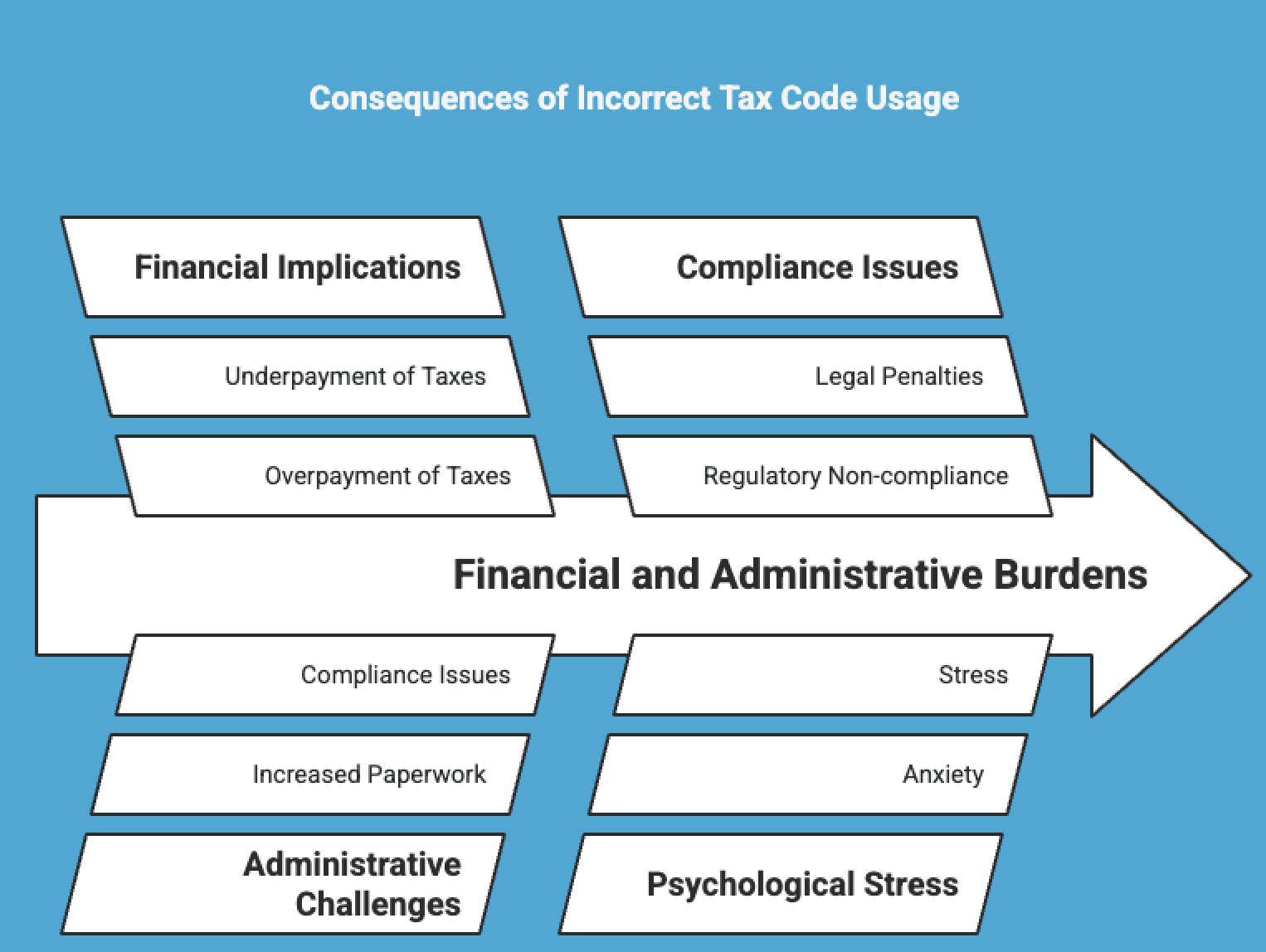
Using an incorrect PAYE tax code can lead to serious financial consequences—either for the individual or HMRC. Since your tax code determines how much income tax is deducted from your salary or pension, even small errors can result in incorrect tax payments over time.
1. Overpaying Tax
If your tax code reduces your personal allowance more than it should, or removes it entirely (e.g. using 0T instead of 1257L), your employer will deduct more tax than necessary.
Effects of overpaying:
- Lower take-home pay than you’re entitled to
- Temporary financial strain or budgeting issues
- You may not notice until year-end or when you review your payslips
- HMRC may issue a refund—but only after you or they identify the error
Example: If your tax code assumes you have additional income or benefits you don’t actually receive, your tax allowance may be reduced in error.
2. Underpaying Tax
If your tax code overestimates your tax-free allowance or misses taxable benefits, you could underpay tax during the year. This might feel like extra income short term, but there are consequences later.
Effects of underpaying:
- A tax bill at the end of the tax year (via a P800 or Simple Assessment)
- Possible penalties or interest on the underpaid amount
- HMRC may recover the shortfall through a reduced tax code the following year
Example: If you start a second job and your employer applies the full personal allowance again, you’ll be undertaxed on that second income.
3. Delay in Tax Refunds or Adjustments
A wrong tax code can delay legitimate refunds—especially if:
- HMRC doesn’t realise the mistake until the tax year ends
- You don’t check your coding notice or payslips regularly, not even electronic payslips.
- You move jobs and the wrong code is carried over
You may need to submit a claim, call HMRC, or wait for them to issue a correction notice, which can take weeks or months.
4. Impact on State Benefits or Credits
Over- or underreporting of income due to the wrong tax code may affect:
- Universal Credit
- Child Tax Credit
- Student Loan repayments
- Pension contributions
Since these calculations are often based on your post-tax income or annual earnings, errors in taxation can skew the reported figures.
5. Stress and Admin Burden
Even if the financial consequences are minor, discovering an incorrect tax code often causes stress and requires time to resolve.
You might need to:
- Gather payslips and coding notices
- Contact HMRC
- Explain the issue to your employer or payroll team
- Wait for the updated tax code and back payments
How to Avoid the Effects of a Wrong Tax Code
- Always check your tax code on new payslips or job changes
- Review your PAYE Coding Notice (P2) from HMRC
- Use your Personal Tax Account online to verify code accuracy
- Contact HMRC immediately if anything looks wrong
A single tax code error can impact months of earnings. Being proactive is the best way to avoid unnecessary tax payments or unexpected bills.
Simplify Payroll. Stay Compliant. Grow Confidently — with Direct Payroll
At Direct Payroll, we take the guesswork out of paying your team. Whether you have 5 employees or 500, our all-in-one payroll solution ensures accurate, on-time payments and full HMRC compliance—every single pay run.
No jargon. No missed deadlines. Just expert support, real-time reporting, and peace of mind.
Why businesses choose Direct Payroll:
- HMRC-compliant payroll with automatic tax code updates and real-time submissions (RTI)
- Auto-enrolment & pension management made easy in the United Kingdom.
- Employee self-service portals for payslips, P60s, and personal details
- Scalable pricing for startups, growing teams, and large enterprises
- Dedicated UK-based support when you need it
Join hundreds of UK businesses who trust Direct Payroll to keep payroll simple, secure, and stress-free.
Direct Payroll. Direct Results. Get an instant quote now.
Conclusion
Your PAYE tax code directly affects how much tax you pay. If it’s wrong, you could be overpaying or underpaying—leading to refunds or surprise bills. Check your coding notice regularly, update HMRC with life changes, and use their correct tax code tool to stay on track. A quick review now can save you a financial headache later.
Frequently Asked Questions
How do I find my current tax code?
Check your latest payslip or an official letter from HMRC to find your current tax code for the current year tax year. If unable to locate there, contact your employer or log into your Personal Tax Account on the HMRC website.
What should I do if my tax code changes?
If your tax code changes, compare the new one with the old to identify the differences. If corrections are needed or you don’t understand the changes, contact HMRC to ensure you pay the right amount of tax for clarification or correction assistance regarding your tax position.
When should I contact HMRC regarding my tax code?
Contact HMRC whenever you believe there’s a discrepancy in your tax code, when your financial or personal situations alter significantly, or if you need clarification about your tax code and how it’s calculated.
Can tax codes vary from one job to another?
Yes, if you have multiple jobs, each job might have different tax codes reflecting the individual income, benefits, and allowances for each position. It’s best to check each tax code separately.