Key Highlights
- Electronic payslips UK systems improve payroll accessibility for employees.
- Digital payslips help businesses reduce printing and distribution costs.
- Secure electronic payslip solutions support safer payroll management.
- Electronic payslip services help businesses manage growing workforces more efficiently.
- Payroll automation improves payroll speed, visibility, and record management by integrating compliance checks.
- Direct Payroll Services provides secure and scalable electronic payslip solutions for UK businesses.
Payroll pressure rarely comes from salary calculations alone. For many UK businesses, the bigger challenge is managing payroll administration efficiently as teams grow, compliance requirements increase, and employees expect faster access to payroll information. Paper payslips often create avoidable delays, filing issues, distribution problems, and unnecessary administrative workload.
As payroll operations become more complex, manual payslip processes can slow down payroll teams and increase the risk of errors, misplaced records, and employee payroll queries. Businesses managing remote, hybrid, or multi-location teams often face even greater difficulties when relying on traditional paper-based payroll systems.
This guide explains the benefits of electronic payslips, how electronic payslips UK systems improve payroll operations, what businesses should evaluate before switching, and why electronic payslip solutions are becoming a key part of modern payroll management.
What Are Electronic Payslips?
Electronic payslips are digital versions of employee payslips that allow businesses to provide payroll information, including pay information, electronically rather than through printed paper documents. They contain the same information as traditional payslips, including gross pay, deductions, tax contributions, pension payments, and net pay, but are delivered and stored digitally.
As businesses continue to modernise payroll operations, electronic payslips have become a widely adopted alternative to paper-based payroll records, helping organisations manage payroll information more efficiently.
How Do Electronic Payslips Work?
Electronic payslips are typically generated automatically once payroll processing has been completed. Rather than printing and distributing paper documents, payroll information is delivered digitally through secure systems that employees can access when needed.
Most electronic payslip solutions work by:
- Generating payslips automatically after payroll has been processed
- Delivering payroll information through secure digital platforms
- Providing employees with access to current and historical payslips
- Storing payroll records electronically for easier management and retrieval
- Reducing the need for manual printing, filing, and document distribution
This approach helps businesses streamline payroll administration while giving employees a more convenient way to access and manage their payroll information.
Can Payslips Be Issued Electronic in the UK?
Yes, electronic payslips are legally valid in the UK. Under the Employment Rights Act 1996, employers must provide employees with an itemised pay statement, but the law does not require payslips to be issued in paper format.
Businesses can issue electronic payslips as long as employees can access, read, and store their payroll information securely. Employers are also responsible for protecting employee payroll data through secure electronic payslip systems that maintain confidentiality and comply with GDPR and payroll data protection requirements.
Because of their accessibility, security, and operational efficiency, electronic payslip services are now widely used across UK businesses managing both office-based and remote workforces.
What Information Must Electronic Payslips Include Under UK Payroll Law?
Electronic payslips must contain the same legally required payroll information as paper payslips to remain compliant with UK employment law. Employers must provide employees with a clear breakdown of earnings, deductions, and net pay for each payroll period.
Key payroll information typically includes:
- Employee name
- National Insurance number
- Gross pay before deductions
- Net pay after deductions
- Income tax deductions
- National Insurance contributions
- Pension contributions
- Variable deductions where applicable
- Payment date
- Hours worked where legally required
Providing accurate payroll information helps businesses maintain payroll transparency, reduce employee payroll disputes, and support payroll compliance requirements.
What Are the Real Operational Benefits of Electronic Payslips?
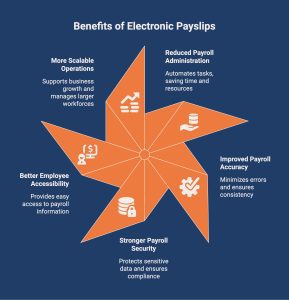
Electronic payslips improve far more than payroll convenience. For many businesses, they help reduce payroll administration, improve payroll accuracy, strengthen payroll security, and support more scalable payroll operations while making payroll access faster and easier for employees.
1. Reduced Payroll Administration
Electronic payslip solutions automate payslip generation, distribution, and payroll record management, reducing the need for printing, filing, envelope preparation, and manual payroll handling. This helps payroll teams spend less time on repetitive administrative work while improving payroll processing efficiency.
2. Improved Payroll Accuracy
Manual payroll distribution often increases the risk of misplaced payslips, payroll delays, and document handling errors. Electronic payslips reduce these risks through automated payroll delivery systems that improve payroll consistency and reduce avoidable payroll mistakes.
3. Stronger Payroll Security and GDPR Compliance
Paper payslips are more vulnerable to loss, unauthorised access, and improper disposal. Modern electronic payslip services use encrypted access, password protection, and secure payroll portals to help businesses protect sensitive employee payroll information and strengthen GDPR compliance.
4. Better Employee Payroll Accessibility
Electronic payslips UK systems allow employees to access payroll records anytime through secure portals, mobile apps, or digital payroll platforms. Employees can quickly view, download, and store payslips without depending on HR teams for document access or replacements.
5. More Scalable Payroll Operations
As businesses grow, manual payroll administration becomes harder to manage efficiently. Electronic payslip solutions support payroll scalability by simplifying payroll distribution, improving payroll record management, and helping businesses manage larger or multi-location workforces more effectively.
Electronic payslip solutions help businesses create more organised and accountable payroll processes as compliance expectations continue evolving. Alongside payroll efficiency, the benefits of electronic payslips also support stronger payroll governance, better payroll visibility, and more structured payroll management across growing businesses.
Are Electronic Payslips Better for GDPR and Payroll Compliance?
Electronic payslips do not automatically make a business compliant with GDPR or payroll regulations. However, they can support stronger payroll governance by improving how payroll records are stored, accessed, monitored, and retained.
| Area | How Electronic Payslips Help |
|---|---|
| Record Retention | Store payroll records in a structured digital environment, making documents easier to organise, retrieve, and retain. |
| Audit Trails | Maintain records of payroll activity, document distribution, and user access to improve payroll visibility and accountability. |
| Access Controls | Use login credentials, user permissions, and secure access controls to help manage who can view payroll information. |
| Document Management | Reduce reliance on paper-based filing systems and simplify payroll record organisation and maintenance. |
| Payroll Record Retrieval | Enable faster access to historical payslips for employee requests, internal reviews, and payroll enquiries. |
While electronic payslip solutions can support record retention, access management, auditability, and document control, businesses must still ensure their wider payroll processes and data handling practices comply with applicable legal and regulatory requirements.
How Do Employees Access and View Electronic Payslips?
Electronic payslips are typically accessed through secure payroll portals, employee self-service platforms, mobile applications, or integrated HR systems. Instead of waiting for printed documents, employees can view their payroll information online whenever they need it.
For employees, this creates a more convenient payroll experience by providing:
- Access to current and historical payslips from a single location
- Availability across desktops, tablets, and mobile devices
- Faster access to payroll information without relying on HR teams
- Easier retrieval of payslips for mortgage applications, rental agreements, and financial documentation
- Greater visibility into earnings, deductions, tax contributions, and pension payments
By giving employees direct access to their payroll records, electronic payslip solutions help reduce payroll queries while creating a more accessible and self-service payroll experience.
Electronic Payslips vs Paper Payslips: Which Is Operationally Better?
The benefits of electronic payslips include creating a more efficient, scalable, and manageable payroll process compared to traditional paper payroll systems. As payroll operations become more complex, businesses are increasingly adopting electronic payslip solutions to improve payroll accessibility, reduce operational delays, and simplify payroll management.
| Area | Electronic Payslips | Paper Payslips |
|---|---|---|
| Payroll Distribution | Delivered instantly through payroll systems or employee portals | Requires manual printing and physical distribution |
| Administrative Workload | Automated payroll handling reduces manual tasks | Higher workload due to printing, sorting, and filing |
| Payroll Accessibility | Employees can access payslips anytime online | Access depends on physical document delivery |
| Record Management | Digital payroll records are easier to organise and retrieve | Physical records require storage and manual filing |
| Operational Scalability | Easier to manage growing or remote workforces | Becomes harder to manage as employee numbers increase |
| Payroll Processing Speed | Faster payroll completion and distribution | Slower due to manual payroll handling |
| Payroll Visibility | Centralised payroll systems improve tracking and monitoring | Limited visibility across physical payroll records |
| Storage Requirements | Cloud or digital storage reduces physical space needs | Requires physical storage and document management |
| Remote Workforce Support | Accessible across locations and devices | Difficult to distribute consistently to remote staff |
| Long-Term Payroll Efficiency | Supports streamlined payroll operations | Creates ongoing administrative dependency |
Electronic payslips are increasingly becoming the more practical operational choice for businesses managing workforce growth, payroll accessibility, and administrative efficiency. Digital payroll systems help businesses create faster, more organised, and more scalable payroll operations without relying on manual document processes.
What Challenges Do Businesses Face When Switching to Electronic Payslips?
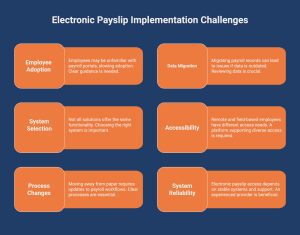
Switching to electronic payslips can improve payroll operations significantly, but businesses should prepare for several common implementation challenges. Addressing these issues early helps ensure a smoother transition and minimises disruption to payroll processes.
1. Employee Adoption and Digital Familiarity
Some employees may be unfamiliar with payroll portals or mobile payroll applications, which can slow adoption during the initial rollout. Providing clear guidance and simple access instructions can help employees become comfortable with the new system more quickly.
2. Payroll Data Migration and Record Accuracy
Migrating payroll records from existing systems can lead to issues if employee information is outdated or incomplete. Reviewing and validating payroll data before implementation helps reduce the risk of errors and delivery problems.
3. Selecting a Suitable Payroll System
Not all electronic payslip solutions offer the same level of functionality, flexibility, or support. Choosing a system that aligns with current requirements and future business growth can help avoid operational limitations later.
4. Accessibility Across Different Workforce Types
Employees working remotely, across multiple locations, or in field-based roles may have different access requirements. Selecting a platform that supports secure access across devices and locations helps maintain payroll accessibility.
5. Changes to Internal Payroll Processes
Moving away from paper payslips often requires updates to payroll workflows, approvals, and employee communication procedures. Establishing clear processes before implementation can help reduce disruption during the transition.
6. System Reliability and Ongoing Support
Electronic payslip access depends on stable systems and dependable provider support. Working with an experienced payroll provider helps businesses maintain continuity and resolve issues quickly if they arise.
Businesses that plan for these challenges are better positioned to maximise the benefits of electronic payslips while maintaining a smooth and reliable payroll operation.
What Features Should Businesses Prioritise in Electronic Payslip Solutions?
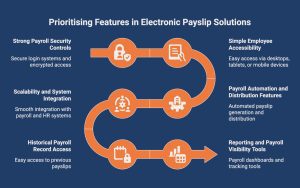
Choosing the right electronic payslip solution directly affects the benefits of electronic payslips for businesses, including payroll efficiency, employee accessibility, payroll management, and long-term operational scalability. Businesses should prioritise features that improve payroll control, simplify administration, support workforce needs, and maintain reliable payroll operations as business requirements evolve.
1. Strong Payroll Security Controls
Electronic payslip solutions should include secure login systems, encrypted payroll access, user permission controls, and protected payroll storage. Strong payroll security features help businesses safeguard sensitive employee payroll information while maintaining controlled access across payroll systems.
2. Simple Employee Accessibility
Employees should be able to access electronic payslips easily through desktops, tablets, or mobile devices without complicated navigation. User-friendly payroll platforms improve employee adoption, reduce payroll support requests, and create a smoother payroll experience across different workforce groups.
3. Payroll Automation and Distribution Features
Businesses should prioritise electronic payslip services that automate payslip generation, payroll distribution, and payroll notifications. Automated payroll workflows reduce repetitive payroll administration while helping businesses maintain more consistent payroll processing.
4. Scalability and System Integration
Electronic payslip solutions should integrate smoothly with payroll software, HR systems, and wider business operations. Scalable payroll systems help businesses manage workforce growth, changing payroll demands, and expanding payroll processes without requiring major operational changes later.
5. Historical Payroll Record Access
Businesses should prioritise electronic payslip solutions that allow employees and payroll teams to access historical payroll records easily. Quick access to previous payslips helps support payroll queries, employee documentation requests, internal payroll reviews, and long-term payroll record management without relying on physical archives.
6. Reporting and Payroll Visibility Tools
Advanced electronic payslip services often include payroll dashboards, distribution tracking, and reporting tools that help payroll teams monitor payroll activity more efficiently. Better payroll visibility helps businesses identify distribution issues, monitor payroll completion, and maintain stronger operational oversight.
Businesses selecting electronic payslip solutions should focus on operational reliability rather than basic digital functionality alone. Payroll systems that combine security, accessibility, automation, scalability, and payroll visibility usually provide stronger long-term value as payroll operations continue evolving.
Electronic Payslip Solution Checklist
When evaluating electronic payslip solutions, look for:
- Strong security controls
- Employee self-service portal
- Mobile access
- Payroll and HR system integration
- Automated payslip distribution
- Historical record access
- Reporting and visibility tools
- Scalability for future growth
Why Choose Direct Payroll Services for Electronic Payslips and Payroll Management?
Electronic payslips work best when backed by a payroll provider that can manage the wider payroll process accurately and consistently. Direct Payroll Services combines secure electronic payslip delivery with fully managed payroll support, helping businesses reduce administrative burden while maintaining confidence in their payroll operations.
Here’s Why Businesses Partner With Direct Payroll Services:
- Dedicated Payroll Specialists: Access experienced payroll professionals who manage payroll on your behalf.
- Fully Managed Payroll Service: From payroll processing and payslip generation to HMRC submissions and reporting.
- Secure Employee Access: Enable employees to view current and historical electronic payslips through secure payroll systems.
- Compliance Support: Stay aligned with payroll legislation, statutory requirements, and workplace pension obligations.
- Scalable Payroll Solutions: Support growing workforces without increasing internal payroll complexity.
- Personalised Service: Receive tailored payroll support rather than a one-size-fits-all solution.
By combining technology with hands-on payroll expertise, Direct Payroll Services helps businesses streamline payroll management while delivering a secure and professional electronic payslip experience for employees.
Contact us today to simplify payroll management with secure electronic payslip solutions built for growing UK businesses.
Conclusion
Electronic payslips offer more than a paperless way to distribute payroll information. They help create a payroll process that is easier to manage, more transparent for employees, and better aligned with the demands of a modern workforce.
As payroll requirements continue to evolve, businesses that adopt electronic payslips can simplify day-to-day payroll operations while providing employees with convenient access to important payroll records.
For organisations looking to modernise payroll management, electronic payslips represent a practical and sustainable long-term solution.
Frequently Asked Questions
Are electronic payslips legally valid in the UK?
Yes, electronic payslips are legally valid in the UK if they include all required payroll details and employees can access them securely. The benefits of electronic payslips also include improved payroll accessibility and easier payroll management.
How quickly can a company switch to electronic payslips?
Many businesses can switch to electronic payslips within a few weeks, depending on payroll complexity and system setup. The benefits of electronic payslips include cost savings, faster payroll distribution, and reduced payroll administration.
Do Employees Need Special Training to Use Electronic Payslip Platforms?
No, most electronic payslip systems are simple to use and designed for easy employee access. One of the key benefits of electronic payslips is improving payroll accessibility without requiring extensive payroll training.
How to View Electronic Payslips Securely?
Employees can usually view electronic payslips through secure payroll portals, HR systems, or mobile payroll apps using login credentials. The benefits of electronic payslips include faster and more convenient payroll access.
What Is the Main Advantage of Electronic Payslips?
One major advantage of electronic payslips is reducing manual payroll administration while improving payroll accessibility, payroll security, and payroll efficiency for both businesses and employees.