Without registering, contractors are legally required to deduct 30% from your payments instead of the standard 20%, which means less cash in your pocket and more hassle claiming it back later.
On top of that, many new subcontractors struggle with:
- Confusing HMRC forms
- Long wait times on the CIS helpline
- Mistakes on self-assessment that delay tax refunds
- Missing out on gross payment status, which lets you get paid without any tax deducted at all
This guide walks you through the CIS registration process step by step—what documents you need, how to register, and how to avoid common errors that lead to delays or deductions.
Whether it’s your first time dealing with HMRC or you’re looking to upgrade your status, we’ll help you get set up right, so your tax year ends with a refund, not a surprise bill.
What is CIS Registration, and Who Needs It?
CIS stands for the Construction Industry Scheme, introduced by HMRC to regulate how subcontractors in construction get taxed. Suppose you’re a self-employed worker or run a limited company that gets paid for building work, civil engineering, or related jobs on construction sites. In that case, you’ll likely need to register under CIS.
CIS registration means HMRC knows how to handle your payments:
- If you’re registered, contractors will deduct 20% tax from your pay and send it to HMRC.
- If you’re not registered, they’ll deduct a painful 30%.
- If you have a gross payment status, you get paid in full and sort your tax through your self-assessment.
Whether you need CIS registration depends on what you do and how you get paid:
You must register for CIS if you’re a subcontractor (sole trader, partnership, or company) working for a contractor on any of the following:
- General building work (bricklaying, plastering, roofing)
- Site preparation or demolition
- Decorating and refurbishing
- Civil engineering work, like road construction
- Installation work (heating, lighting, security systems)
Contractors (businesses that pay subcontractors) also need to register for CIS and file monthly returns, detailing the amount paid and the tax deducted.
If you’re running a limited company, you’ll need CIS company registration to ensure deductions and payments are correctly tied to your business, not to you as an individual.
Why Register for CIS?
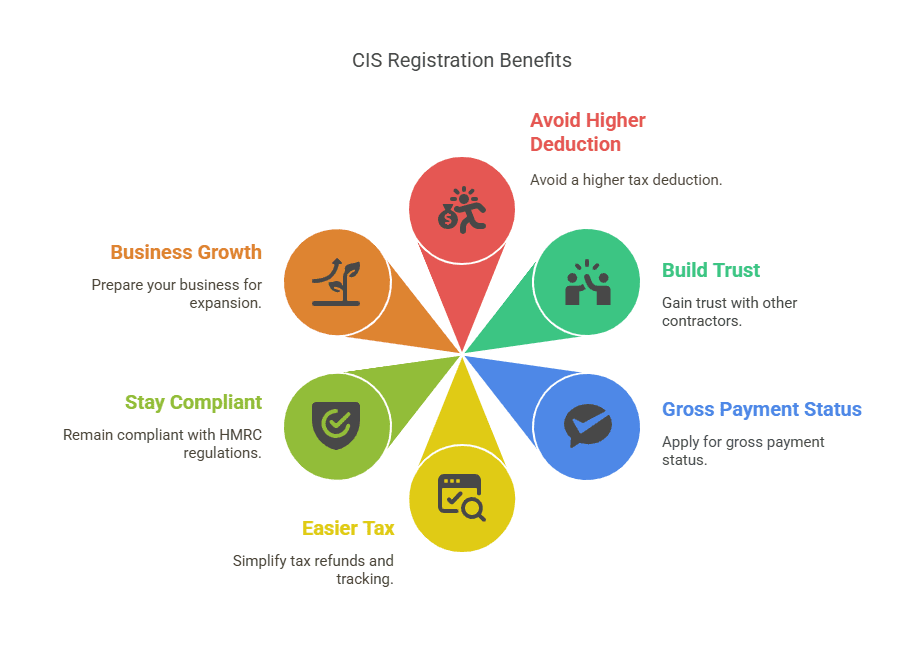
If you’re working in construction and haven’t sorted your CIS registration yet, you could be losing more money than you think. Whether you’re laying bricks, managing a team on-site, or running a one-person limited company, registering under the HMRC CIS registration scheme is essential for staying compliant and financially savvy.
Let’s break down why CIS registration is worth it, without the technical overwhelm.
1. Avoid the Higher 30% Deduction
Without CIS registration, HMRC instructs contractors to deduct 30% of their pay. That’s nearly a third of your income gone, before you even see it.
But once you complete CIS registration, that rate drops to 20%. For every £1,000 earned, you keep an extra £100 just by registering. That’s a no-brainer, right?
2. Build Trust with Contractors
Most contractors now expect CIS-registered subcontractors. If you’re not registered, they may hesitate to hire you, or worse, give the job to someone else.
Running a CIS company registration as a limited company or sole trader demonstrates your seriousness, compliance, and readiness to work by the book.
3. Apply for Gross Payment Status
Once you’re fully registered, you can apply for gross payment status, meaning you receive 100% of your earnings without any deductions, and pay tax later via Self Assessment.
To qualify, you’ll need to meet certain conditions, like having a good tax history and meeting turnover thresholds. However, if you’re approved, it gives you full control over your tax payments and enhances your business’s cash flow.
4. Easier Tax Refunds & Tracking
Every CIS deduction you face goes toward your final income tax bill. When you submit your tax return, those amounts are already credited.
Being registered helps you:
- Claim CIS tax refunds faster
- Track your CIS deductions cleanly
- Submit a smoother Self-Assessment
It’s also easier to check your status with an occasional CIS registration check or by logging into your HMRC CIS registration dashboard online.
5. Stay Compliant with HMRC
Let’s not forget: HMRC requires CIS registration for both subcontractors and contractors in the construction industry. Ignoring it can trigger fines, penalties, or late payment issues.
Whether you’re handling building work, civil engineering, or working across construction sites, being registered shows you’re meeting your legal obligations.
6. Set Up for Business Growth
As your business grows, you may need to take on subcontractors. Having already obtained your CIS company registration in place makes it much easier to handle monthly returns, tax compliance, and hiring others under the same scheme.
Think of it as future-proofing your construction business.
Get Ready for CIS Registration: What You’ll Need?
So you’ve decided to get your CIS registration sorted, smart move. But before you start the process, it’s important to know exactly what HMRC expects from you. Whether you’re registering as a sole trader, a limited company, or a contractor, being prepared will save you time and reduce the chances of errors or delays.
Here’s your complete guide to the documents, eligibility criteria, and key steps to start your HMRC CIS registration with confidence.
Essential Documents and Information for CIS Registration
To complete your CIS registration, you’ll need to have some specific details ready. These vary slightly depending on whether you’re registering as a subcontractor, contractor, or a CIS-registered company.
Here’s what you’ll typically need:
For Individuals/Sole Traders:
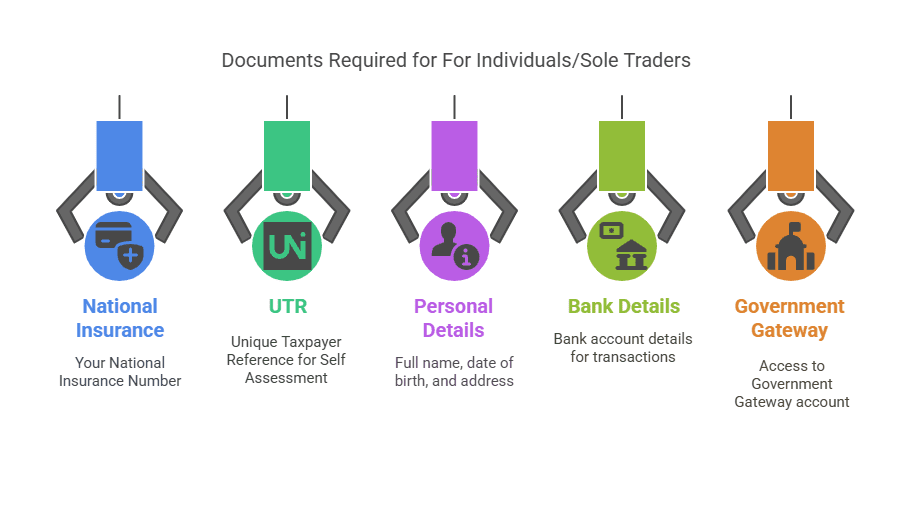
- Your National Insurance Number
- Your UTR (Unique Taxpayer Reference) – issued after you register for Self Assessment
- Full name, date of birth, and home address
- Bank account details for payments and deductions
- Access to your Government Gateway account (or create one)
For CIS Company Registration (Limited Company):

- Company name and company registration number
- Company’s UTR
- Director’s personal details, including National Insurance number
- Bank account details
- Government Gateway login for the company
Tip: Before applying, it’s helpful to run a CIS registration check to confirm you haven’t already registered under a different business structure.
Step-by-Step Guide to CIS Registration
Ready to get started with your CIS registration? Whether you’re a sole trader, a limited company, or paying subcontractors yourself, registering with HMRC is crucial for staying compliant and avoiding unnecessary tax deductions.
Here’s a simple, step-by-step guide to help you complete your HMRC CIS registration smoothly, without the confusion.
Step 1: Register for Self Assessment (If You Haven’t Already)
You’ll need to be set up for Self Assessment before registering for CIS. If you’re not already registered, register via HMRC’s website and wait for your UTR to arrive by post.
Once that’s in hand, you’re good to go with your CIS registration.
Step 2: Complete the CIS Registration Online
Visit the official HMRC site and log in to your Government Gateway account.
- If you’re a subcontractor, select the option to register for CIS as a sole trader or company.
- If you’re a contractor, choose the contractor path (you can register for both roles if needed).
You’ll be asked for:
- Business structure (individual, partnership, or company)
- UTR and NI number
- Trading name and business address
- Bank account details
- Contact info
This is your official HMRC CIS registration, and it only takes approximately 20–30 minutes if you’ve your information ready.
Step 3: Wait for Confirmation
Once submitted, HMRC will process your CIS registration and send you a confirmation letter. This may take a few working days.
If you’re applying for gross payment status, HMRC may contact you for more details or to check your payment/tax history.
Step 4: Start Using Your CIS Registration
You’re now officially part of the Construction Industry Scheme. Here’s what happens next:
- Subcontractors: Give your UTR to any contractor you work with so they can verify your CIS status. This ensures you only get the 20% deduction (not 30%).
- Contractors: You’ll need to start filing monthly returns with HMRC, showing who you have paid and the tax you have deducted.
You can manage all of this through your HMRC online account.
The Risks of CIS Registration You Need to Be Aware Of
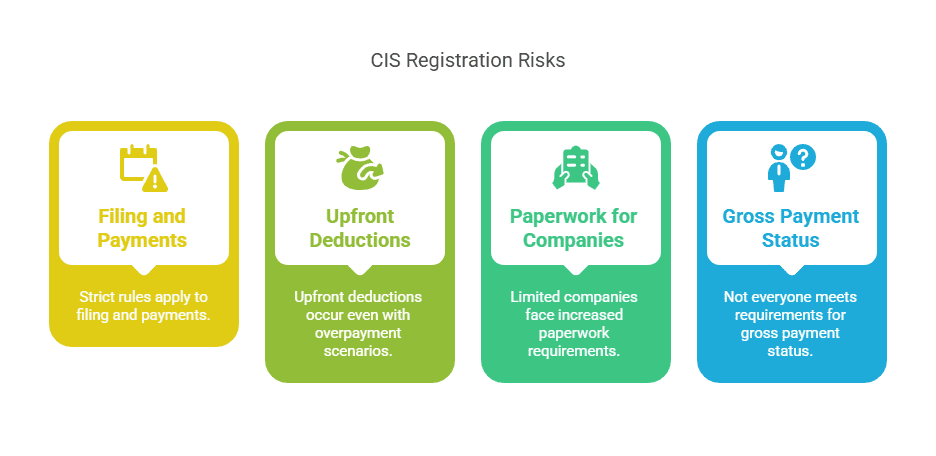
Before you dive into CIS registration, it’s worth taking a moment to understand what you’re signing up for. Whether you’re a solo tradesperson, subcontractor, or setting up your CIS company registration, there are several risks to consider.
1. Strict Rules for Filing and Payments
Once you’ve completed your CIS registration, you’re responsible for keeping your tax affairs in order. Contractors are required to submit monthly returns, and all individuals must file accurate tax returns. Missing deadlines can lead to HMRC penalties.
2. Upfront Deductions Even if You Overpay
Even though 20% is less than 30%, it’s still an upfront deduction, regardless of what you actually owe in tax. This can sometimes lead to overpaying, especially if you have a lot of business expenses. The good news? You can claim it back, but only after you have completed your tax return.
3. More Paperwork for Limited Companies
If you’re managing a CIS company registration, expect more admin work. You’ll need to maintain records of all payments and deductions, and you may also consider hiring a bookkeeper or accountant to ensure everything is in order.
4. Not Everyone Qualifies for Gross Payment Status
To get gross payment status, you’ll need a clean tax record and meet turnover requirements. If you’re new to trading or have missed past tax deadlines, your application might be rejected, at least initially.
Let Direct Payroll Services Handle Your CIS Headaches
At Direct Payroll Services, we assist businesses in the construction sector with navigating the CIS registration process from start to finish. Whether you’re registering for the first time or managing ongoing CIS compliance, we take care of the required information, submissions through the HMRC website, and monthly tax deduction rate reports so that you can focus on the job site, not the tax forms.
Don’t let the admin hold your business back. With Direct Payroll Services, you’ll get expert support and a clear CIS guide tailored to your business, so you can stay compliant, get paid faster, and grow confidently.
Visit directpayrollservices.co.uk today to simplify your CIS, payroll, and tax filings, without lifting a finger.
Conclusion
Whether you’re a subcontractor laying foundations or a CIS contractor managing large construction teams, getting your CIS registration process right is crucial. It helps you avoid unnecessary tax deductions, stay compliant with HMRC rules, and unlock benefits like net payment status, faster advance payments, and easier self-assessment tax return filing at the end of the year.
However, as you’ve seen, CIS comes with its own set of rules, ranging from deduction statements and tax obligations to understanding the distinction between CIS payment status and gross payment status. Add in factors such as capital gains tax, VAT reverse charge, and domestic reverse charge, and things can become overwhelming quickly.
Frequently Asked Questions
Who needs to register as cis?
Contractors who bring in subcontractors or manage large construction projects with an annual value exceeding £3 million must register for CIS. If you are a subcontractor providing construction work, whether you work as a sole trader or through a limited company, you should also register. This helps you receive a lower tax rate, which most people prefer.
Is CIS registration the same as UTR?
CIS registration is not the same as having a Unique Taxpayer Reference (UTR). The Construction Industry Scheme, often referred to as CIS, is designed for individuals working in the construction industry. You need to sign up to ensure the correct tax deductions are made from your pay. A UTR, which stands for Unique Taxpayer Reference, is a number given by HMRC. It helps to find and keep track of people in the UK tax system. Both are important, but they serve different purposes. Each one has its own job.
What is a CIS license?
A CIS license is the official permission from HMRC. It allows contractors to deduct tax from the money they pay to subcontractors under Construction Industry Scheme (CIS) regulations. This is for construction work. It helps contractors and subcontractors work efficiently and follow all applicable rules.
How to register for CIS as an employee?
Most people who work for a contractor are paid through the PAYE system. They are not on CIS. However, if you are self-employed and wish to move to CIS, you must first register. To do this, you will need a Government Gateway ID. You will also need to get your National Insurance information ready. After that, you can use the online service from HMRC to set up your account and make sure your national insurance contributions are sorted.