
Key Highlights
- The best payroll service should match your business size, workforce structure, compliance requirements, and growth plans.
- Compare providers based on features, security, customer support, integrations, scalability, and total cost rather than price alone.
- Request a full breakdown of fees to avoid unexpected costs for setup, tax filing, reporting, or additional services.
- Ask providers about compliance responsibilities, support availability, onboarding processes, and software integrations before signing a contract.
- Watch for warning signs such as hidden fees, poor customer reviews, limited support, weak compliance assistance, and restricted scalability.
- If you’re switching providers, transfer payroll records carefully, verify tax settings, and test the system before running live payroll.
- Direct Payroll Services provides fully managed payroll solutions, compliance support, payroll outsourcing, and flexible services tailored to businesses of different sizes.
Managing payroll in the UK involves more than simply paying employees on time. Businesses must stay compliant with HMRC requirements, pension obligations, statutory payments, and changing employment regulations.
That’s why many organisations turn to payroll service providers for support. However, choosing the wrong provider can lead to payroll errors, compliance issues, unnecessary costs, and frustrated employees.
Whether you’re outsourcing payroll for the first time or looking to switch providers, knowing what to look for can help you make the right choice. In this guide, we’ll cover the key factors to consider, essential features to prioritise, and common mistakes to avoid when selecting a payroll service.
What Is a Payroll Service?
A payroll service is a solution that helps businesses manage employee pay, tax deductions, pension contributions, and payroll compliance. Depending on the provider, this may involve payroll software that automates payroll tasks, a fully managed payroll service where payroll specialists handle the process on your behalf, or a combination of both.
Payroll services can support a wide range of responsibilities, including calculating employee wages, processing payroll, managing PAYE obligations, handling statutory payments, submitting reports to HMRC, and maintaining accurate payroll records.
Many providers also offer additional features such as employee self-service access, benefits administration, HR integrations, and dedicated payroll support. The right solution depends on your business size, internal resources, and the level of payroll management you want to outsource.
Why Your Business May Need a Payroll Service

As your business grows, payroll becomes more complex. Managing employee pay, pensions, statutory payments, and HMRC reporting can take significant time and resources while increasing compliance risks.
A payroll service helps reduce administrative burdens, improve accuracy, and ensure payroll responsibilities are managed efficiently.
Here are some key benefits of using a payroll service:
- Reduced risk of HMRC penalties by ensuring payroll calculations, tax deductions, and submissions are completed accurately and on time.
- More time for finance and HR teams by removing repetitive payroll administration tasks and allowing staff to focus on higher-value business activities.
- Improved employee confidence through accurate, timely payments and fewer payroll-related issues or queries.
- Better audit readiness with organised payroll records, reporting, and documentation that can be accessed when required.
- Ongoing compliance support to help your business keep pace with changing payroll regulations and reporting requirements.
- Simplified management of pensions, PAYE, and statutory payments without adding pressure to internal teams.
- Scalable payroll processes that can adapt as your workforce grows or payroll requirements become more complex.
- Access to payroll expertise without the cost and responsibility of building a larger in-house payroll function.
For many businesses, a payroll service delivers more than convenience. It helps improve operational efficiency, strengthen compliance, and provide confidence that payroll is being managed correctly.
Keeping up with payroll regulations is an ongoing responsibility. If you’re preparing for future payroll changes, learn how the upcoming minimum wage increase in 2026 may affect employee pay rates and payroll processing.
How to Choose a Payroll Service? 6 Key Factors to Consider
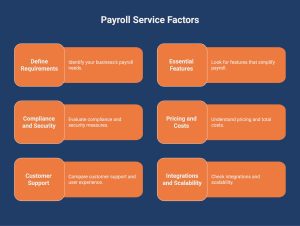
Choosing a payroll service isn’t just about finding the most affordable option. The right provider should simplify payroll, help you stay compliant, support your employees, and scale with your business as it grows.
To make an informed decision, evaluate payroll providers based on the six factors below. These considerations will help you compare your options and choose a solution that meets your current and future business needs.
1. Define Your Payroll Requirements
Before comparing payroll providers, identify your business’s payroll needs. Requirements can vary significantly depending on your industry, workforce, and operational structure.
For example, construction businesses may require CIS payroll support, recruitment agencies often need to manage payroll for temporary workers, and multi-location businesses may have different pay schedules and reporting requirements.
Consider:
- Business size and growth plans
- Workforce type (employees, contractors, or both)
- Payroll complexity, including overtime, bonuses, and multiple pay schedules
- Industry-specific compliance requirements
- Additional services such as pensions administration, HR support, or time tracking
Understanding your requirements will make it easier to identify a payroll provider that fits your business.
2. Look for Essential Payroll Features
The right features can simplify payroll, reduce manual work, and improve accuracy. While your requirements may vary, most businesses should look for:
- Automated payroll processing to streamline calculations and payments
- Payroll tax filing to support compliance and reporting
- Direct deposit for faster employee payments
- Employee self-service portals for easy access to pay stubs and tax forms
- Time tracking integration to reduce manual data entry
- Benefits administration to manage deductions and contributions
- Reporting tools to track payroll costs and workforce expenses
Focus on features that solve your current challenges and support your business as it grows.
3. Evaluate Compliance and Security
Payroll compliance involves much more than paying employees on time. Your provider should be able to manage key obligations such as PAYE deductions, National Insurance contributions, HMRC Real Time Information (RTI) submissions, and workplace pension auto-enrolment requirements.
For example, late or inaccurate RTI submissions can result in HMRC penalties, while errors in pension contributions may create additional administrative work and compliance risks. A reliable payroll provider should have processes in place to minimise these risks and keep your payroll records accurate.
When evaluating payroll services, look for:
- Experience managing PAYE, National Insurance, and statutory payments
- Accurate and timely HMRC RTI submissions
- Workplace pension and auto-enrolment support
- Processes for monitoring payroll legislation changes
- GDPR-compliant payroll data handling and security measures
- Support with payroll audits, reporting, and compliance queries
A payroll service should not only process payroll accurately but also help your business stay compliant and reduce the risk of costly errors.
4. Understand Pricing and Total Costs
Price is important, but it shouldn’t be the only factor in your decision. A low-cost provider may charge extra for features, support, or tax filing services that your business needs.
When comparing providers, pay attention to:
- Monthly subscription fees
- Per-employee charges
- Setup and implementation costs
- Tax filing and year-end form fees
- Add-on costs for HR, benefits, or time tracking features
- Cancellation or contract termination fees
Look beyond the advertised price and evaluate the total cost of ownership to avoid unexpected expenses later.
5. Compare Customer Support and User Experience
Even the best payroll software can’t prevent every issue. When payroll questions or errors arise, responsive customer support can make a significant difference.
As you compare providers, consider:
- Support channels such as phone, email, and live chat
- Support availability during payroll processing periods
- Dedicated account managers for personalised assistance
- Onboarding and implementation support for a smooth setup
- Ease of use for administrators and employees
- Customer reviews that highlight support quality and reliability
A payroll service should simplify your workload, not create new frustrations. Strong support and an intuitive user experience can save valuable time when it matters most.
6. Check Integrations and Scalability
The payroll service you choose today should be able to support your business tomorrow. While your payroll needs may be relatively simple now, they can quickly become more complex as your business grows.
You may hire more staff, open additional locations, introduce different payroll frequencies for various employee groups, or expand your contractor workforce. Choosing a provider that can accommodate these changes will help you avoid disruptions and costly migrations in the future.
When evaluating providers, look for:
- Accounting software integrations to streamline financial reporting
- HR and workforce management integrations to reduce manual data entry
- Time-tracking integrations for accurate payroll calculations
- Support for multiple locations, departments, or business entities
- Flexible payroll processing for different employee and contractor groups
- Scalable services that can adapt as your workforce and payroll requirements evolve
Considering these factors early can help you select a payroll provider that meets both your current and future business needs.
If your workforce includes contractors, seasonal staff, or short-term hires, it’s important to understand the additional payroll requirements involved. Learn more about managing temporary worker payroll and the compliance obligations that come with it.
What Questions Should You Ask Before Choosing a Payroll Service?
After evaluating features, pricing, and support options, it’s time to dig deeper. The right questions can help you identify potential issues before they become costly problems and ensure you’re investing in a solution that meets your business needs.
1. Questions About Pricing
Pricing is often one of the first factors businesses consider, but it’s important to look beyond the advertised monthly fee. Some providers charge additional fees for services such as onboarding, year-end reporting, pension administration, or specialist support.
Before making a decision, ask:
- What services are included in the base fee?
- Are there any setup, implementation, or cancellation charges?
- How will costs change as my employee count grows?
- Are there additional charges for HMRC reporting, workplace pension administration, or year-end submissions?
- What services are considered out of scope and billed separately?
- How are one-off payroll adjustments or special payroll runs charged?
2. Questions About Compliance
Payroll compliance can be complex, and mistakes can result in HMRC penalties, reporting issues, and administrative burdens. Understanding how a provider manages compliance can help reduce risk.
Consider asking:
- Who is responsible for HMRC submissions and payroll reporting?
- How do you stay up to date with changes to payroll legislation and compliance requirements?
- How do you support clients during HMRC audits or compliance reviews?
- What processes are in place to identify and correct payroll errors?
3. Questions About Customer Support and Reliability
Even the most reliable payroll systems can experience issues. Understanding how a provider responds to problems can help you assess service quality.
Ask providers:
- What support channels are available?
- What are your support hours during payroll processing periods?
- Will I have access to a dedicated account manager or payroll specialist?
- What is your payroll processing accuracy rate?
- What happens if a payroll submission fails or an employee is not paid on time?
4. Questions About Security and Business Continuity
Payroll data is highly sensitive, making security and operational resilience critical considerations.
Ask:
- How is payroll data protected and stored?
- What measures are in place to ensure GDPR compliance?
- What disaster recovery and business continuity procedures do you have?
- How quickly can payroll operations be restored in the event of a system outage or disruption?
The answers to these questions can help you compare providers more effectively and make a more informed decision. As part of your guide to select payroll service providers, it’s worth documenting these responses so you can evaluate each option side by side.
What Are the Red Flags to Watch for When Choosing a Payroll Service?
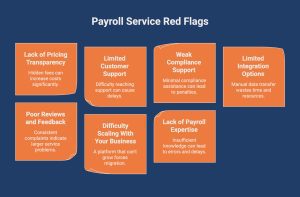
Not every payroll provider will be the right fit for your business. While evaluating your options, it’s important to recognize warning signs that could lead to higher costs, compliance issues, poor support, or operational challenges down the road. Here are some of the most common red flags to watch for when choosing a payroll service:
1. Lack of Pricing Transparency
Some providers advertise low starting prices but charge additional fees for tax filing, direct deposits, year-end forms, or customer support.
What to do: Request a complete pricing breakdown and ask for all potential fees in writing before signing a contract.
2. Limited Customer Support
Payroll issues can be time-sensitive. If support is difficult to reach, even a small problem can delay employee payments or create compliance concerns.
What to do: Review support hours, available channels, and response times. If possible, test the provider’s support team before committing.
3. Weak Compliance Support
Payroll regulations change frequently, and mistakes can lead to penalties or audits. A provider that offers minimal compliance assistance may leave your business exposed.
What to do: Choose a provider that handles payroll tax filings, monitors regulatory updates, and clearly outlines its compliance responsibilities.
4. Limited Integration Options
Without integrations, your team may spend hours manually transferring data between payroll, HR, and accounting systems.
What to do: Verify that the provider integrates with your existing software and supports any tools you plan to adopt in the future.
5. Poor Reviews and Customer Feedback
Consistent complaints about payroll errors, billing issues, or poor support can indicate larger service problems.
What to do: Look for patterns across multiple review platforms rather than focusing on individual reviews. Pay close attention to feedback about reliability and customer service.
6. Difficulty Scaling With Your Business
Switching payroll providers can be disruptive and time-consuming. Choosing a platform that can’t grow with your business may force you to migrate sooner than expected.
What to do: Ask providers about employee limits, advanced features, and support for multi-state payroll, remote teams, or future expansion plans.
7. Lack of Payroll Expertise
Not all payroll providers offer the same level of expertise. A lack of payroll knowledge can lead to errors, compliance issues, and delays in resolving payroll queries.
What to do: Ask about the provider’s payroll experience, industry expertise, and how they handle complex payroll requirements such as CIS, workplace pensions, and HMRC compliance.
Payroll misconceptions can lead to costly mistakes and compliance issues. Explore the most common payroll myths and learn what’s fact and what’s fiction.
What Criteria Should You Use to Compare Payroll Providers?
After narrowing down your options, it helps to evaluate providers using a consistent framework. Rather than focusing on a single factor like price or features, compare each provider based on the areas that will have the biggest impact on your business.
The following payroll service provider selection criteria can help you make a more objective decision:
| Criteria | Why It Matters |
|---|---|
| Compliance Support | Helps reduce the risk of tax and regulatory issues |
| Payroll Features | Ensures the platform can handle your payroll requirements |
| Pricing Transparency | Prevents unexpected costs and hidden fees |
| Customer Support | Provides assistance when payroll issues arise |
| Integrations | Improves efficiency by connecting payroll with other systems |
| Scalability | Supports future business growth without switching providers |
| Security | Protects sensitive employee and payroll data |
As you evaluate providers, consider assigning a score to each criterion. This can make it easier to identify the solution that best aligns with your business needs and long-term goals.
How Can You Switch Payroll Providers Successfully?
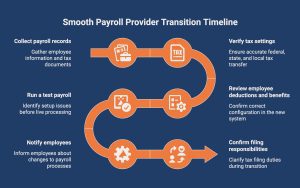
Switching payroll providers requires careful planning to avoid payroll errors, compliance issues, and disruptions to employee payments. Before migrating to a new provider, make sure you have a clear transition plan in place.
Key steps include:
- Collect payroll records, including employee information, tax documents, payroll reports, and year-to-date payroll data.
- Verify tax settings to ensure federal, state, and local tax information is transferred accurately.
- Review employee deductions and benefits to confirm they are configured correctly in the new system.
- Run a test payroll before processing live payroll to identify any setup issues.
- Notify employees of changes to payroll processes, payment methods, or employee self-service portals.
- Confirm filing responsibilities to avoid confusion about who will handle payroll taxes during the transition period.
Before signing with a new provider, ask about implementation timelines, onboarding assistance, and data migration support. A smooth transition process can reduce administrative work and help ensure payroll remains accurate from day one.
What Makes Direct Payroll Services Stand Out From Other Providers?
After learning how to choose a payroll service, the next step is finding a provider that meets your requirements for accuracy, compliance, support, and scalability. Direct Payroll Services offers a range of payroll solutions designed to simplify payroll management and reduce administrative workload.
Once you’ve identified the features, compliance support, and service levels you need, the next step is evaluating providers that can deliver them consistently.
Some of the features that set Direct Payroll Services apart include:
- Fully managed payroll services that help businesses save time and reduce manual payroll tasks
- Payroll outsourcing solutions tailored to businesses of different sizes and industries
- CIS payroll services for construction businesses and contractors
- Payroll bureau services for accountants and organisations managing multiple clients
- Cloud-based payroll systems that improve accessibility and efficiency
- Dedicated payroll expertise to help businesses stay compliant with payroll regulations
- Flexible service options that can adapt as payroll requirements change
If you’re looking for a payroll provider that can streamline payroll processes while helping you maintain compliance, contact Direct Payroll Services today.
Conclusion
Payroll affects every employee in your business, which makes it one of the few systems you simply can’t afford to get wrong. The right provider should do more than process payments. It should help you stay compliant, reduce administrative work, and give you confidence that payroll is handled accurately every pay cycle.
Take the time to evaluate your options carefully, ask the right questions, and look beyond pricing alone. The provider you choose today can have a lasting impact on your business operations for years to come.
Frequently Asked Questions
Where can I find approved payroll software providers for UK businesses?
UK business owners can find approved payroll software providers through HMRC’s recognised payroll software list. When evaluating payroll companies, review online reviews, due diligence requirements, system integration capabilities, and whether the provider meets your payroll needs and compliance obligations.
How to select a payroll service?
To determine the right payroll provider, assess your payroll needs, number of employees, budget, and specific requirements. Compare payroll pricing, support options, system integration capabilities, online reviews, and the provider’s reputation before making your final decision.
How much does a payroll service cost in the UK?
Payroll services costs in the UK vary depending on the size of the company, the number of employees, and the required features. Small companies may pay lower monthly fees, while outsourced payroll provider costs increase with compliance support, reporting requirements, and additional services.
What level of support should I expect from a good payroll provider?
When evaluating how to choose a payroll service, businesses should look for providers offering responsive support, payroll expertise, structured onboarding, and ongoing compliance assistance to maintain efficient payroll management.
How can I tell if a payroll service is suitable for my business size and industry?
A practical guide to select payroll service providers should help businesses assess scalability, industry experience, payroll complexity support, compliance management, and reporting capabilities to ensure the payroll service aligns with current operations and future business growth.