
Key Highlights
- RTI submissions require employers to report payroll information to HMRC every time employees are paid.
- Full Payment Submissions (FPS) and Employer Payment Summaries (EPS) are the main RTI reports businesses must manage.
- Missing RTI deadlines can create PAYE discrepancies, HMRC penalties, and employee payroll issues.
- Payroll software helps automate RTI submission online processes, reducing reporting errors and missed filings.
- Incorrect RTI reports can usually be corrected through updated FPS or EPS submissions during the tax year.
- Accurate payroll records and regular payroll reviews help businesses maintain long-term RTI compliance.
- Special payroll situations, including starters, leavers, and temporary staff, require additional RTI reporting checks.
Under HMRC’s Real Time Information system, employers must send PAYE details every time employees are paid. This includes pay, tax deductions, National Insurance contributions, and relevant employee changes.
Even small RTI mistakes can create wider payroll problems. Late submissions, incorrect employee records, or inaccurate PAYE reporting may trigger HMRC penalties, payroll discrepancies, and employee payment issues that take time to resolve. For businesses processing payroll regularly, RTI reporting has become an ongoing compliance responsibility rather than an occasional administrative task.
This guide explains how RTI submissions work, the different reports employers must manage, the deadlines HMRC expects businesses to meet, and the practical steps payroll teams can take to reduce reporting errors and maintain PAYE compliance.
What Is an RTI Submission and Why Does It Matter?
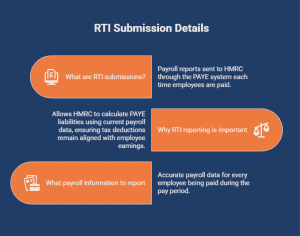
Real Time Information (RTI) is HMRC’s payroll reporting system that requires employers to submit PAYE data whenever employees are paid. Instead of reporting payroll information once at the end of the tax year, businesses must now send payroll updates during every pay cycle, including salaries, tax deductions, and National Insurance contributions.
This shift has made payroll reporting far more immediate. Employers are now expected to maintain accurate employee records, process payroll correctly, and submit RTI reports on time to avoid PAYE discrepancies and compliance issues. For businesses running weekly or monthly payroll, RTI reporting is now a routine operational requirement rather than a year-end administrative task.
What are RTI submissions?
RTI submissions are payroll reports sent to HMRC through the PAYE system each time employees are paid. These submissions give HMRC real-time visibility into employee earnings, tax deductions, National Insurance contributions, and statutory payments across the tax year.
Most employers submit RTI reports through HMRC-recognised payroll software, which automatically generates the required payroll data during each pay run. The two main RTI reports are:
- Full Payment Submission (FPS) for employee pay and deductions
- Employer Payment Summary (EPS) for adjustments, recoveries, or periods where no employees were paid
Accurate RTI reporting helps businesses maintain PAYE compliance while reducing the risk of payroll errors, reporting delays, and HMRC penalties.
Why RTI reporting is important for PAYE compliance
RTI reporting allows HMRC to calculate PAYE liabilities using current payroll data rather than relying on year-end submissions. This helps ensure tax deductions, National Insurance contributions, and statutory payments remain aligned with employee earnings throughout the tax year.
For employers, inaccurate RTI submissions can quickly create wider payroll issues. Incorrect employee records, missed filings, or reporting delays may result in PAYE mismatches, employee payment disputes, compliance reviews, or penalties from HMRC.
| Employer Benefits | Employee Benefits |
|---|---|
| More accurate PAYE reporting | Correct tax and National Insurance deductions |
| Faster payroll adjustments | Accurate statutory payments |
| Reduced reporting delays | Fewer payroll discrepancies |
| Better compliance visibility | Improved payroll transparency |
What payroll information employers must report
Each RTI submission must include accurate payroll data for every employee being paid during the pay period. HMRC uses this information to calculate PAYE liabilities and maintain current employee tax records.
Key payroll details usually include:
- Employee name and National Insurance number
- Tax code and payroll identification details
- Gross pay, net pay, and taxable earnings
- PAYE tax deductions and National Insurance contributions
- Statutory payments such as maternity, paternity, or sick pay
Before submitting payroll reports, employers should review employee records carefully to reduce the risk of rejected submissions or incorrect PAYE calculations.
What Are the Main Types of RTI Submission Reports?
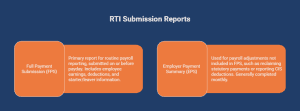
Most employers regularly submit two RTI reports to HMRC: the Full Payment Submission (FPS) and the Employer Payment Summary (EPS). These reports work together to keep PAYE records updated throughout the tax year, covering employee pay, deductions, payroll adjustments, and periods where no employees are paid.
The FPS is used for routine payroll reporting during each pay cycle, while the EPS handles adjustments that sit outside standard employee pay reporting. Understanding when each report is required helps employers avoid PAYE discrepancies, missed filings, and incorrect payroll liabilities.
1. Full Payment Submission (FPS)
The Full Payment Submission (FPS) is the primary RTI report employers send to HMRC. An FPS must usually be submitted on or before payday whenever employees are paid, whether payroll runs weekly, fortnightly, or monthly.
This report includes employee earnings, PAYE deductions, National Insurance contributions, and starter or leaver information for the pay period. HMRC uses FPS data to calculate employer PAYE liabilities and maintain current employee tax records throughout the tax year.
Late or inaccurate FPS submissions can quickly create payroll discrepancies, trigger compliance checks, or affect employee benefit calculations. For businesses processing payroll regularly, automated payroll software often helps reduce reporting errors and missed submission deadlines.
2. Employer Payment Summary (EPS) and Other RTI Reports
An Employer Payment Summary (EPS) is used when employers need to report payroll adjustments that are not included in the FPS. This may include reclaiming statutory payments, reporting CIS deductions suffered, claiming Employment Allowance, or notifying HMRC that no employees were paid during a tax month.
Unlike FPS reporting, EPS submissions are generally completed monthly and are often linked to payroll adjustments rather than routine employee pay reporting. Employers may also need to submit additional RTI updates in specific situations, such as correcting previous payroll year information.
| Feature | Full Payment Submission (FPS) | Employer Payment Summary (EPS) |
|---|---|---|
| Primary purpose | Reports employee pay and deductions | Reports payroll adjustments and recoveries |
| Submission timing | On or before payday | Usually by the 19th of the following tax month |
| Reporting frequency | Every pay run | Monthly when required |
| Common contents | Employee pay, PAYE, NICs, starter/leaver details | Statutory pay reclaims, CIS deductions, and no-payment periods |
What RTI Submission Deadlines Should Employers Track?
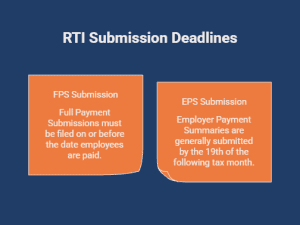
RTI reporting deadlines are tied directly to payroll activity, which means employers must submit payroll information throughout the tax year rather than waiting for year-end reporting periods. Missing filing deadlines can quickly create PAYE discrepancies, late payment charges, and HMRC penalties, particularly for businesses running frequent payroll cycles.
The two main RTI deadlines employers need to monitor relate to FPS and EPS submissions. Each serves a different reporting purpose and follows a separate filing schedule.
1. FPS and EPS submission deadlines
Full Payment Submissions (FPS) must usually be filed on or before the date employees are paid. This applies to every payroll run, whether staff are paid weekly, fortnightly, or monthly. HMRC uses FPS data to update employee tax records and calculate PAYE liabilities during the tax month.
Employer Payment Summaries (EPS) follow a different schedule. These reports are generally submitted by the 19th of the following tax month when employers need to report payroll adjustments, reclaim statutory payments, or notify HMRC that no employees were paid.
Submitting payroll reports early within the tax month can help businesses identify rejected submissions, payroll discrepancies, or missing employee records before deadlines expire.
| Submission Type | Purpose | Filing Deadline |
|---|---|---|
| Full Payment Submission (FPS) | Reports employee pay, tax, and National Insurance details | On or before employee payday |
| Employer Payment Summary (EPS) | Reports payroll adjustments, statutory payment recoveries, or no-payment periods | By the 19th of the following tax month |
| PAYE Payment | Pays PAYE and National Insurance liabilities to HMRC | By the 22nd of the following month (electronic payment) |
PAYE payment deadlines and missed filing risks
Submitting RTI reports late can create more than just filing penalties. Delayed FPS or EPS submissions may also affect PAYE reconciliations, employee tax records, statutory payment calculations, and Universal Credit assessments linked to payroll data.
HMRC applies monthly penalties based on employer size, with larger businesses facing higher charges for repeated late filings.
| Number of Employees | Monthly Penalty |
|---|---|
| 1–9 employees | £100 |
| 10–49 employees | £200 |
| 50–249 employees | £300 |
| 250 or more employees | £400 |
Repeated late submissions or unpaid PAYE liabilities can also trigger interest charges and additional compliance reviews from HMRC. Businesses managing regular payroll runs often reduce these risks by automating RTI reporting and reviewing payroll data before submission deadlines.
How Does RTI Submission Online Reporting Work?
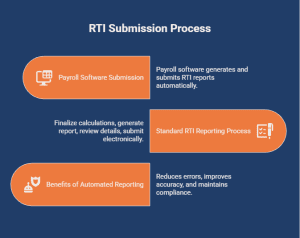
Most employers submit RTI reports through HMRC-recognized payroll software, which connects directly to HMRC’s PAYE system. Instead of manually preparing payroll reports for each submission, payroll software automatically generates FPS and EPS reports using employee pay data entered during the payroll process.
This approach helps businesses manage RTI reporting more efficiently, particularly when running frequent payroll cycles or handling multiple employees. Automated reporting also reduces the risk of missed deadlines, duplicate submissions, and payroll discrepancies caused by manual data entry.
1. How payroll software submits RTI reports
Once payroll calculations are completed for the pay period, the payroll system generates the required RTI report using current employee records, tax codes, earnings, and deduction data. Employers can then review the submission before sending it electronically to HMRC.
Most payroll systems also provide submission confirmations, rejected filing alerts, and payroll audit records, helping businesses identify reporting issues before they create PAYE discrepancies or compliance problems.
A standard RTI reporting process usually includes:
- Finalizing payroll calculations for the pay period
- Generating the FPS or EPS report automatically
- Reviewing employee pay and deduction details
- Submitting the RTI report electronically to HMRC
This process allows payroll teams to maintain consistent reporting without manually recreating payroll data for every submission cycle.
2. Why automated RTI reporting reduces payroll errors
Manual payroll reporting increases the risk of incorrect employee details, duplicate payroll records, inaccurate tax deductions, and missed filing deadlines. Automated RTI reporting helps reduce these issues by using payroll data already stored within the payroll system.
Consistent payroll automation also improves reporting accuracy across the tax year, making it easier to maintain current employee records and reconcile PAYE liabilities with HMRC submissions.
| Manual Payroll Reporting Risks | Benefits of Automated RTI Reporting |
|---|---|
| Incorrect employee data | Improved payroll accuracy |
| Duplicate submissions | Consistent RTI reporting |
| Missed filing deadlines | Faster payroll processing |
| PAYE reconciliation issues | Reduced compliance risks |
Businesses processing regular payroll runs often rely on automated payroll systems to reduce administrative pressure while maintaining accurate RTI reporting throughout the tax year.
How Should Employers Correct or Amend RTI Submissions?
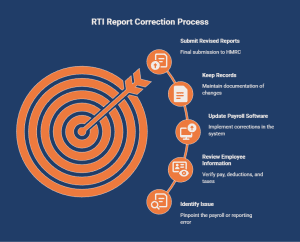
RTI errors can affect employee tax records, create HMRC record mismatches, and increase the time needed to resolve payroll issues. While HMRC allows employers to amend RTI submissions, payroll data should be reviewed carefully before any revised information is submitted.
Most corrections involve updating payroll figures for the current tax year and reporting the revised information through a subsequent FPS or EPS submission. Addressing issues promptly helps minimise the risk of duplicate records, incorrect tax calculations, and additional administrative work.
Common RTI reporting mistakes and correction methods
Many RTI reporting issues stem from inaccurate payroll records, missed filing deadlines, or incorrect employee information. Common examples include submitting FPS reports after payday, using outdated tax codes, entering incorrect National Insurance numbers, or failing to report employee starters and leavers correctly.
The correction method depends on the type of payroll error and when it is identified. For most current tax year errors, employers correct the figures in their payroll software and submit updated year-to-date totals in the next FPS. More complex issues may require additional payroll adjustments or revised submissions.
| Common RTI Error | Typical Correction Method |
|---|---|
| Incorrect employee pay | Update payroll records and resubmit FPS |
| Wrong tax code or NI details | Correct employee information in payroll software |
| Late FPS submission | Submit the report with the appropriate late filing reason |
| Missing starter or lever details | Update payroll records in the next submission |
Regular payroll reviews can help identify reporting inconsistencies before they affect tax calculations or result in HMRC queries.
Steps employers should follow before resubmitting RTI reports
Before submitting amended RTI data, employers should review payroll calculations, employee information, and reporting periods carefully. Resubmitting inaccurate information can create duplicate records and additional reporting complications.
A structured correction process usually includes:
- Identifying the payroll issue or reporting error.
- Reviewing employee pay, deductions, and tax information.
- Updating payroll software with the correct figures.
- Submitting the revised FPS or EPS to HMRC.
- Keeping records of all payroll amendments and submission updates.
Maintaining a clear audit trail makes it easier to track payroll changes, support future reconciliations, and respond to HMRC enquiries if additional information is requested.
What Can Employers Do to Improve RTI Compliance?
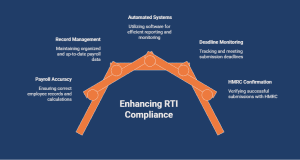
Consistent RTI compliance depends on accurate payroll records, reliable reporting processes, and timely submissions. Even small payroll inconsistencies can create rejected filings, incorrect PAYE liabilities, or employee tax discrepancies that become difficult to correct later in the tax year.
For businesses processing regular payroll runs, improving RTI compliance is less about reacting to reporting issues and more about preventing them through stronger payroll controls and automated reporting systems.
Improving payroll accuracy and record management
Most RTI reporting issues begin with incorrect employee records or outdated payroll information. Errors involving tax codes, National Insurance numbers, employee status changes, or starter and leaver details can quickly affect PAYE calculations and create reporting discrepancies with HMRC.
Maintaining accurate payroll records requires regular payroll reviews rather than relying solely on year-end corrections. Businesses should update employee information promptly and review payroll data before each submission cycle.
Practical ways to improve payroll accuracy include:
- Verifying employee tax and identification details before processing payroll
- Updating payroll records immediately when employees join or leave
- Reviewing PAYE deductions and statutory payments before submission
- Keeping internal payroll records organised for future reconciliations and audits
Strong record management reduces the risk of rejected RTI filings and helps businesses respond more effectively if payroll discrepancies arise.
Using payroll systems to monitor RTI deadlines and submissions
Payroll software plays a central role in maintaining RTI compliance across multiple pay periods. Modern payroll systems help businesses automate reporting workflows, monitor submission deadlines, and maintain consistent payroll records throughout the tax year.
Many payroll platforms also provide automated alerts, submission tracking, and HMRC confirmation records, helping payroll teams identify missed filings or rejected reports before they create compliance problems.
| Manual Payroll Monitoring | Automated Payroll Systems |
|---|---|
| Higher risk of missed deadlines | Automated RTI deadline tracking |
| Manual payroll updates | Real-time payroll record updates |
| Greater risk of duplicate reporting | Improved submission consistency |
| More administrative workload | Faster payroll processing |
Businesses using automated payroll systems often reduce reporting delays, administrative pressure, and payroll correction workloads while improving long-term PAYE compliance.
What Penalties and Operational Risks Can RTI Errors Create?
Late or inaccurate RTI submissions can quickly create financial and operational pressure for employers. HMRC applies monthly penalties for missed filing deadlines, with charges increasing based on workforce size. Repeated late submissions may also trigger interest charges, PAYE discrepancies, and additional compliance scrutiny.
| Number of Employees | Monthly Penalty |
|---|---|
| 1–9 employees | £100 |
| 10–49 employees | £200 |
| 50–249 employees | £300 |
| 250 or more employees | £400 |
The impact of RTI errors often extends beyond financial penalties. Incorrect payroll reporting can affect employee tax records, delay statutory payment calculations, and create disputes linked to incorrect PAYE deductions or missing payroll data. Businesses may also face increased administrative pressure when payroll teams need to investigate rejected filings, reconcile payroll records, or respond to HMRC compliance queries.
Repeated reporting issues can signal weak payroll controls, increasing the likelihood of compliance reviews or deeper HMRC investigations. For employers managing regular payroll cycles, accurate payroll records and timely RTI submissions are essential for reducing both compliance exposure and operational disruption.
How Should Employers Handle RTI Submissions for Special Cases?
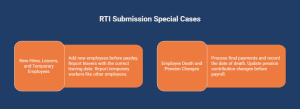
Certain payroll changes require additional checks before RTI reports are submitted. New starters, leavers, temporary workers, employee deaths, and pension adjustments can affect payroll records and must be reflected accurately in the relevant FPS submission.
1. New hires, leavers, and temporary employees
Employers should add new employees to the payroll before their first payday, using information from a P45 or a starter checklist. Leavers must be reported in the FPS for their final pay period, including the correct leaving date. Temporary and seasonal workers should be reported in the same way as other employees whenever they are paid.
2. Processing RTI reporting after employee death or pension changes
For deceased employees, employers should process final payments and record the date of death as the leaving date in the final FPS. Pension contribution changes should also be updated before payroll is processed to ensure deductions remain accurate.
Accurate payroll updates help prevent reporting issues and keep HMRC records up to date.
How Can Direct Payroll Services Help Businesses Manage RTI Submissions?
Managing RTI submissions becomes more challenging when businesses are processing multiple payroll runs, handling staff changes, or correcting payroll records after filing. Missed deadlines or inaccurate submissions can lead to rejected reports, filing penalties, and additional administration.
Direct Payroll Services can support employers by preparing FPS and EPS submissions, checking payroll records before filing, correcting RTI errors, and helping businesses stay aligned with HMRC deadlines. This is particularly valuable for companies managing frequent pay runs, new starters and leavers, or complex PAYE adjustments.
Direct Payroll Services can help with:
- Preparing and submitting FPS and EPS reports
- Reviewing payroll data before RTI filing
- Correcting payroll and employee record errors
- Managing starter and leaver reporting requirements
- Monitoring RTI and PAYE deadlines
- Supporting PAYE adjustments and statutory payment reporting
Businesses looking to improve payroll accuracy and reduce RTI administration can explore Direct Payroll Services’ payroll support solutions for ongoing payroll and compliance assistance.
Conclusion
RTI reporting has changed payroll administration from a year-end process into an ongoing compliance responsibility. Employers must now manage payroll submissions throughout every pay cycle while ensuring employee records, PAYE deductions, and reporting deadlines remain accurate. Even small RTI errors can create wider payroll discrepancies, compliance risks, and unnecessary administrative pressure if they are not corrected quickly.
Maintaining accurate payroll records, monitoring submission deadlines, and using reliable payroll systems can help businesses reduce reporting errors and improve RTI compliance. For employers managing complex payroll requirements or recurring reporting challenges, professional payroll support can also help streamline RTI submissions and reduce the risk of HMRC penalties.
Frequently Asked Questions
What happens if I submit my RTI late or need to amend a submission?
Late RTI submissions can result in HMRC penalties, PAYE discrepancies, and compliance checks. If you discover an error, you can usually amend the submission by updating payroll records and submitting corrected FPS or EPS data through your payroll software.
Can RTI submissions be done without payroll software?
Yes, but only in limited situations. Most employers use HMRC-recognised payroll software to submit RTI reports accurately and on time. Manual reporting increases the risk of payroll errors, missed deadlines, and rejected submissions, especially for businesses running regular payroll cycles.
How often do employers need to make RTI submissions to HMRC?
Employers must submit an RTI report every time employees are paid. An FPS is usually required on or before each payday, while an EPS is submitted separately when reporting payroll adjustments, recoveries, or periods where no employees were paid.
Are there different filing options for making RTI submissions as an employer?
Most employers submit RTI reports through HMRC-recognised payroll software, which automatically sends FPS and EPS reports online. In limited cases, exempt employers may use alternative filing methods approved by HMRC, although electronic payroll reporting is the standard approach.
Where can I find official guidance on RTI submission rules for the current tax year?
Employers can find official RTI guidance for the current tax year through HMRC’s PAYE and payroll reporting resources, which cover FPS and EPS submissions, filing deadlines, payroll corrections, and compliance updates. HMRC-recognised payroll software also helps businesses stay aligned with current RTI reporting rules.
How do I amend an RTI submission?
Employers can amend an RTI submission by correcting payroll records in their payroll software and submitting updated FPS or EPS data. Most current tax year payroll errors are corrected through revised year-to-date figures.
What is the monthly RTI submission deadline?
FPS reports must usually be submitted on or before payday, while EPS reports are generally due by the 19th of the following tax month. Missing these deadlines may result in HMRC penalties and PAYE reporting issues.
What is a PAYE RTI submission?
A PAYE RTI submission is a payroll report sent to HMRC under the Real Time Information system. It provides updated employee pay, tax, and National Insurance details to maintain accurate PAYE records throughout the tax year.
What are RTI submission dates?
RTI submission dates depend on the type of payroll report being filed. FPS reports are normally submitted on or before employee payday, while EPS reports are usually filed monthly when payroll adjustments or no-payment periods apply.