Key Highlights
- A payroll provider manages payroll processing, tax deductions, and HMRC compliance for businesses
- Businesses use payroll outsourcing providers to reduce errors and administrative workload
- Online payroll providers automate payroll calculations, reporting, and employee access
- CIS payroll providers support construction businesses with specialised compliance requirements
- Payroll providers ensure accurate payments and timely submissions each pay cycle
- Choosing the right provider improves operational efficiency, cost control, and scalability
- Structured payroll systems reduce risk and support long-term business stability
Payroll rarely becomes a priority until something goes wrong. A missed payment, incorrect tax deduction, or late HMRC submission can quickly turn a routine process into a financial and compliance risk for businesses.
As organisations grow, managing payroll internally becomes more demanding. Increasing employee numbers, changing tax regulations, and manual processes can create inefficiencies, errors, and added administrative pressure that directly impact both operations and employee trust.
This is where payroll providers become essential. This guide explains what a payroll provider is, how it works, the different types available, and how UK businesses can choose the right solution to improve accuracy, ensure compliance, and streamline payroll management.
What Is a Payroll Provider and Why Do Businesses Use One?
A payroll provider is a third-party service that manages payroll processing, tax deductions, and compliance on behalf of a business. Instead of handling payroll internally, businesses outsource these responsibilities to ensure accuracy, consistency, and compliance with HMRC requirements.
In practice, this includes calculating employee wages, applying PAYE and National Insurance deductions, generating payslips, and submitting reports on time. Payroll providers use structured systems to reduce manual work, minimise errors, and keep payroll running smoothly.
When Businesses Typically Switch to a Payroll Provider
Most businesses move to a payroll provider when payroll becomes harder to manage internally.
Common triggers include:
- Team growth
As employee numbers increase, payroll becomes more time-consuming and complex - Compliance complexity
Keeping up with tax rules, deadlines, and reporting requirements becomes difficult - Payroll errors or inconsistencies
Mistakes in calculations or submissions increase the risk of penalties and employee issues
Businesses switch to a payroll provider when payroll becomes complex or risky, especially when comparing options like payroll vs contract.
How Does a Payroll Provider Work?
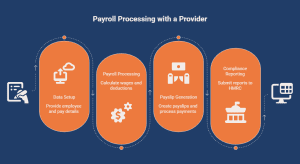
A payroll provider follows a structured process to manage payroll accurately and ensure compliance each pay cycle. It combines data input, automated calculations, and regulatory reporting to maintain consistency and reduce errors.
The process typically follows these steps:
- Setup and Data Transfer: The business provides employee details, pay structures, tax codes, and bank information. The provider verifies this data to ensure accuracy and compliance before payroll processing begins.
- Payroll Processing: For each pay cycle, the business submits updates such as working hours, bonuses, or deductions. The provider calculates wages, applies PAYE and National Insurance deductions, and prepares payroll outputs.
- Payslips and Payments: Payslips are generated, and employee payments are processed through secure systems, ensuring accurate and timely salary distribution.
- Reporting and Compliance: The provider submits payroll reports to HMRC and maintains records for compliance, audits, and financial tracking.
This structured approach ensures payroll is processed consistently, reduces manual workload, and helps businesses maintain compliance with UK payroll regulations.
What You No Longer Need to Manage
Once payroll is outsourced, several time-consuming tasks are removed from your internal workload:
- Manual payroll calculations
No need to calculate wages, deductions, or tax adjustments manually - Tax submissions and reporting
PAYE, National Insurance, and RTI filings are handled by the provider - Compliance tracking
Keeping up with HMRC rules, deadlines, and updates is managed externally
You move from manually managing payroll tasks to reviewing and approving outputs, reducing both workload and the risk of costly errors.
What Types of Payroll Providers Are Available?
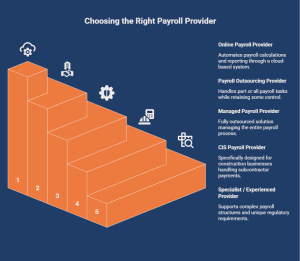
Payroll providers offer different levels of service depending on business size, complexity, and how much control you want to retain. Choosing the right type depends on whether you need simple automation, partial support, or full payroll management.
Here’s how each type works and which one is best suited to your business stage:
1. Online Payroll Provider
A cloud-based system that automates payroll calculations, tax deductions, and reporting through an online platform. You manage payroll internally using software tools.
Best for:
- Small businesses with simple payroll needs
- Teams are comfortable managing payroll in-house
- Businesses looking for a low-cost solution
2. Payroll Outsourcing Provider
Handles part or all payroll tasks on your behalf, while you still retain some control over inputs and approvals.
Best for:
- Growing businesses with increasing payroll workload
- Companies that want to reduce admin but keep some oversight
- Teams transitioning from in-house to outsourced payroll
3. Managed Payroll Provider
A fully outsourced solution that manages the entire payroll process, including compliance, reporting, and HMRC submissions.
Best for:
- Larger or more complex businesses
- Companies with strict compliance requirements
- Businesses that want a hands-off, fully managed service
4. CIS Payroll Provider
Designed specifically for construction businesses, handling subcontractor payments and ensuring compliance with the Construction Industry Scheme (CIS).
Best for:
- Construction companies managing subcontractors
- Businesses requiring CIS reporting and deductions
5. Specialist / Experienced Payroll Provider
Supports complex payroll structures, multiple pay schedules, or businesses with unique regulatory requirements.
Best for:
- Businesses with complex payroll setups
- Multi-location or multi-entity organisations
- Companies needing tailored payroll solutions
Best Choice by Business Type
To simplify your decision, here’s how most businesses choose:
- Small business → Online payroll provider
- Growing business → Payroll outsourcing provider
- Complex or scaling business → Managed payroll provider
Each option offers different levels of automation and support—learn how to choose the right one in our guide to choosing a payroll service.
Payroll Provider vs Payroll Software: What’s the Difference?
Payroll providers and payroll software both support payroll processing, but they differ in responsibility, control, and level of support. Payroll software helps automate calculations, while a payroll provider manages the entire process.
| Feature | Payroll Provider | Payroll Software |
|---|---|---|
| Responsibility | Fully managed by the provider | Managed by the business |
| Payroll Processing | End-to-end service | Partially automated |
| Compliance | Handled by the provider | Business responsibility |
| HMRC Reporting | Managed and submitted | Requires manual submission |
| Expertise | Payroll specialists involved | No expert support |
| Risk | Lower risk of errors | Higher risk if mismanaged |
Which Option Is Right for Your Business?
Choose payroll software if:
- You have a small team with simple payroll needs
- You want to keep costs low
- You’re comfortable managing payroll and compliance internally
Choose a payroll provider if:
- Your payroll is becoming time-consuming or complex
- You want to reduce compliance risk
- You prefer a fully managed, hands-off solution
A payroll provider delivers a fully managed solution, while payroll software requires internal management and oversight. For example, managing CIS payments and HMRC submissions manually can be complex; see our guide on how to pay CIS to HMRC for a detailed breakdown.
What Should Businesses Do When Choosing a Payroll Provider?
Selecting a payroll provider requires a structured approach to ensure the service aligns with business needs, compliance requirements, and operational processes. A clear evaluation helps businesses avoid errors, reduce risk, and ensure long-term efficiency.
Top 3 Factors That Matter Most
- Compliance capability:- The provider must handle HMRC reporting, tax submissions, and regulatory requirements accurately
- Cost transparency: Pricing should be clear, with no hidden fees for additional services or support
- Scalability: The provider should support your business as it grows, without requiring a system change later
Key Steps to Evaluate a Payroll Provider
The selection process typically includes the following steps:
- Assess Payroll Requirements: Identify current payroll challenges, workforce size, and compliance needs to determine the level of support required.
- Evaluate Provider Experience: Choose a provider with proven experience in handling payroll complexity and regulatory requirements relevant to your business.
- Check Compliance Capability: Ensure the provider can manage HMRC reporting, tax submissions, and statutory requirements accurately.
- Review Technology and Integration: Confirm that the provider’s systems integrate with existing accounting or HR platforms to maintain data consistency.
- Compare Pricing and Service Scope: Review cost structures alongside service coverage to ensure transparency and long-term value.
Selecting the right provider ensures payroll processes remain accurate, compliant, and scalable as the business grows.
What Are the Risks of Managing Payroll Without a Provider?
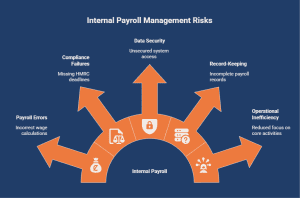
Managing payroll internally exposes businesses to operational, compliance, and data risks. Without structured systems and expertise, payroll errors and reporting issues are more likely to occur.
The key risks include:
- Payroll Errors: Incorrect wage calculations, tax deductions, or overtime payments can lead to employee disputes and financial discrepancies.
- Compliance Failures: Failure to meet HMRC deadlines or apply correct tax rules can result in penalties, audits, and additional reporting obligations.
- Data Security Risks: Storing payroll data on unsecured systems increases the risk of data breaches and unauthorised access to sensitive employee information.
- Record-Keeping Issues: Incomplete or disorganised payroll records can create challenges during audits and financial reporting.
- Operational Inefficiency: Managing payroll manually requires ongoing time and attention, reducing focus on core business activities.
Example of a Common Risk
- Missed RTI submission – penalty + compliance review
Late or incorrect Real Time Information (RTI) filings can trigger HMRC penalties and increase the likelihood of further scrutiny
Without a structured payroll system, these risks can accumulate over time, affecting financial accuracy, compliance, and overall business stability.
What Is the Business Impact of Using a Payroll Provider?
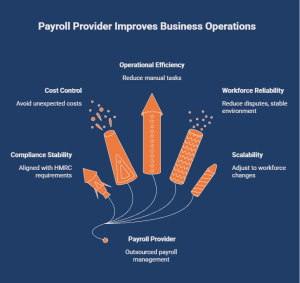
Using a payroll provider improves how businesses manage compliance, costs, including cost savings, and workforce operations. It ensures payroll processes are consistent, reduces the likelihood of errors, and provides better visibility into payroll data. These improvements support more stable operations and allow businesses to manage payroll without increasing internal complexity.
These are the same areas where businesses typically struggle before switching to a provider:
Key Business Impacts
Partnering with a payroll provider improves operational control and reduces exposure to payroll-related risks, enhancing employee experience. It also provides better visibility into payroll data, supporting more informed decision-making.
The key impacts include:
- Compliance Stability:
Payroll processes are aligned with HMRC requirements, reducing the risk of penalties, audits, and reporting errors. - Cost Control:
Fewer payroll errors and efficient processing help avoid unexpected costs and improve overall financial predictability. - Operational Efficiency:
Automated payroll systems reduce manual tasks, allowing teams to focus on core business functions. - Workforce Reliability:
Consistent and accurate payments reduce disputes and support a stable working environment. - Scalability:
Payroll systems can adjust to workforce changes without requiring additional internal resources or process changes.
A structured payroll system, therefore, supports consistent operations, improves financial control, and enables businesses to scale without increasing administrative complexity.
How Can Direct Payroll Services Support Your Business?
Managing payroll requires accurate processing, consistent reporting, and strict compliance with UK regulations. Direct Payroll Services supports businesses by ensuring payroll operations are handled efficiently, reducing errors and administrative workload.
Their services help businesses:
- Process employee wages accurately across all pay structures
- Manage PAYE, National Insurance, and HMRC reporting requirements
- Generate compliant payslips and maintain payroll records
- Support pension auto-enrolment and statutory payments
- Maintain accurate reporting for audits and financial tracking
- Reduce manual workload across HR and finance teams
A structured payroll system ensures consistency across each pay cycle while reducing compliance risks and operational delays.
Looking to improve payroll accuracy and efficiency? Contact Direct Payroll Services today to streamline your payroll processes and ensure reliable, compliant payroll management.
Conclusion
A payroll provider plays a critical role in ensuring payroll accuracy, payroll compliance, and operational consistency. By outsourcing payroll, businesses can reduce risk, improve efficiency, and maintain reliable payroll processes without increasing internal workload.
Choosing the right provider as a small business owner depends on business complexity, compliance needs, and long-term growth plans. A structured approach to payroll management not only prevents errors but also supports better financial control and workforce stability.
Frequently Asked Questions
How does payroll outsourcing work with an online payroll provider?
Payroll outsourcing with an online payroll provider involves submitting employee data digitally, after which the provider processes payroll, applies tax deductions, generates payslips, and submits HMRC reports through automated systems.
Are online payroll providers recognised by HMRC?
Online payroll providers are not directly approved by HMRC, but they use HMRC-recognised payroll systems to process employee payments, manage tax deductions, and file taxes when submitting PAYE reports accurately in line with UK compliance requirements.
What is a CIS payroll provider, and who needs one?
A CIS payroll provider, staffed by payroll experts, manages payroll for construction businesses, ensuring subcontractor payments and tax deductions comply with the Construction Industry Scheme (CIS). It is required for contractors and subcontractors who must comply with CIS rules and reporting requirements.
Are online payroll providers reliable?
Yes, online payroll providers are reliable when they use HMRC-recognised systems and follow UK compliance rules, as these platforms automate calculations, reduce errors, and ensure accurate PAYE reporting and tax submissions.
What are some common mistakes to avoid when switching to an online payroll provider?
Common mistakes include incomplete data migration, failing to verify HMRC compliance, ignoring integration with existing systems, poor employee communication, and not testing payroll accuracy before the first pay run.
What are the typical costs involved with online payroll service providers?
Typical costs include a monthly base fee, per-employee charges, setup or onboarding fees, and optional add-ons such as pension management, reporting, or integrations, depending on the provider and level of service.
What features should I look for in payroll software that’s HMRC-recognised?
Look for RTI submission support, automatic PAYE and National Insurance calculations, secure data handling, HMRC-compliant reporting, integration with accounting systems, and regular updates to reflect UK tax changes.
How can small businesses get started with an online payroll provider?
Small businesses can start by selecting a provider, setting up employee and payroll data, integrating systems if needed, and running an initial payroll test to ensure accuracy before processing the first live pay cycle.