Key Highlights
- Human capital management views employees as assets aligned with long-term business growth goals.
- It integrates HR functions like talent, workforce planning, and performance into unified strategy
- Effective HCM helps attract talent, improve retention, engagement, and overall productivity outcomes
- Modern HCM uses software to streamline HR processes and deliver actionable workforce insights
- Automation reduces HR workload, minimises errors, and ensures compliance with regulations
- HCM software enables data-driven decisions and real-time workforce visibility for leaders
- Integration with ERP and HRMS improves coordination across finance, HR, and operations
- Businesses gain scalable, future-ready workforce management for long-term sustainable growth
Introduction
Many UK businesses are currently facing growing challenges such as high employee turnover, skill shortages, and rising pressure to improve productivity while keeping costs under control. HR leaders managing a diverse workforce across hybrid and remote environments have also made HR processes more complex and harder to streamline without the right structure in place.
Human capital management offers a practical way to solve these issues by bringing recruitment, onboarding, performance, payroll, and training into one connected system. Effective talent management and talent acquisition helps businesses shift from reactive HR practices to a more strategic and data-driven approach, improving both employee experience and organisational efficiency.
Learn how human capital management transforms workforce efficiency, productivity, and future-ready business growth.
What Is Human Capital Management?
Human capital management (HCM) is a strategic approach to managing employees as valuable business assets rather than administrative resources. It combines workforce planning, recruitment, onboarding, performance management, learning, payroll, and retention into a unified framework that helps organisations improve workforce performance and achieve long-term business goals.
Why Is HCM Different From Traditional HR?
Traditional HR primarily focuses on administrative functions such as payroll, compliance, employee records, and benefits administration. HCM takes a broader, strategic approach by connecting these activities with workforce planning, talent development, performance management, and business objectives.
Rather than simply managing employees, HCM helps organisations attract, develop, engage, and retain talent while using workforce data to support informed decision-making. This shift enables businesses to view employees as a source of competitive advantage and long-term growth.
Why Is HCM Essential for Workforce Growth?
Human capital management helps organisations build a stronger, more capable workforce by improving how talent is acquired, developed, managed, and retained. By integrating workforce data and people processes, HCM supports better business outcomes and long-term organisational success.
Key benefits include:
- Helps organisations identify future skill gaps, succession risks, and workforce capacity issues before they impact operations.
- Enhances employee productivity and engagement through structured performance frameworks and recognition programmes.
- Reduces turnover by addressing retention risks early through data-driven insights into employee satisfaction and career progression.
- Supports continuous learning and skill development by aligning training investments with evolving business needs.
- Improves workforce planning by giving HR leaders the visibility to anticipate headcount changes, talent shortfalls, and resource gaps in advance.
- Aligns individual employee performance with broader business goals, ensuring every role contributes to measurable outcomes.
HCM enables organisations to make more strategic workforce decisions, improve employee experiences, and create a more agile, growth-oriented workforce.
How Do Human and Social Capital Drive Business Success?
Human capital management strengthens both human capital (skills, knowledge, experience) and social capital (trust, relationships, collaboration). When these two work together, businesses see stronger teamwork, better decision-making, and improved performance across all levels.
1. The link between HCM and social capital
Human capital management helps build stronger social capital by improving how employees connect, communicate, and share actionable insights and knowledge across teams. Structured HR systems make collaboration more intentional rather than accidental.
- Encourages cross-functional teamwork and knowledge sharing
- Breaks down departmental silos through shared platforms and processes
- Supports collaborative learning through training and development programs
For example, when employees from HR, finance, and operations attend joint training sessions, they better understand each other’s roles, which improves coordination in daily tasks.
2. Building trust and stronger workplace relationships
Trust grows when employees experience fairness, transparency, and consistency in HR processes. HCM systems help standardise these experiences across the organisation.
- Transparent performance reviews reduce bias and improve fairness
- Accurate and timely payroll builds employee confidence
- Clear communication channels improve manager–employee relationships
For instance, when performance feedback is tracked continuously instead of once a year, employees feel more supported and less uncertain about expectations.
3. Impact on productivity and organisational culture
When human and social capital are strong, employees work more effectively together and adapt quickly to change. This directly improves productivity and shapes a positive workplace culture.
- Faster collaboration leads to quicker decision-making
- Stronger relationships reduce workplace conflict
- Higher engagement improves overall output and retention
For example, teams with strong trust levels can resolve project issues faster without excessive approvals or delays.
When human and social capital are developed through effective human capital management, businesses build a more connected, productive, and resilient workforce.
Find out who manages payroll in a company with this complete guide.
How Does Human Capital Management Transform Your Workforce?
Human capital management transforms the workforce by aligning people, processes, and technology with business objectives. Rather than focusing only on administrative HR tasks, HCM helps organisations attract, develop, manage, and retain talent more effectively while using workforce data to support strategic decision-making.
1. Workforce planning
HCM enables organisations to forecast staffing needs, identify skill gaps, and align workforce capacity with future business goals. This helps leaders make proactive hiring, training, and succession planning decisions.
2. Talent acquisition
Modern HCM systems streamline recruitment by improving candidate sourcing, applicant tracking, onboarding, and hiring workflows. This helps organisations attract and retain qualified talent more efficiently.
3. Employee development
HCM supports continuous learning through training programs, career development plans, and skills management tools. Investing in employee growth improves engagement, productivity, and long-term retention.
4. Performance management
Performance management tools help organisations set goals, track progress, provide feedback, and conduct evaluations consistently. This creates greater accountability while supporting employee and business growth.
5. Workforce analytics
HCM platforms provide workforce data and reporting tools that help organisations measure productivity, monitor retention, analyse workforce trends, and make evidence-based decisions.
Beyond these core transformation areas, HCM also helps organisations manage remote employees, hybrid teams, contractors, and gig workers through digital collaboration, onboarding, compliance, payroll, and workforce management tools. This enables businesses to maintain consistency and efficiency across diverse workforce structures.
How HCM Works Across The Employee Lifecycle?
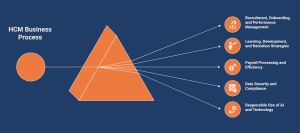
The human capital management business process connects everyday HR operations into one system that helps businesses hire faster, manage better, and retain employees longer. The real value comes from how these processes work in day-to-day operations, making HR a valuable asset, not just in theory.
1. Recruitment, onboarding, and performance management
In practice, many UK firms now use applicant tracking systems to filter CVs automatically, cutting screening time by almost half. During onboarding, companies like retail chains digitise induction checklists so new hires can complete compliance training before their first shift. Performance management is also shifting from annual appraisals to monthly or quarterly check-ins using OKR-based tools, helping managers fix issues early to drive business outcomes instead of waiting for year-end reviews.
2. Learning, development, and retention strategies
Instead of generic training, organisations now use role-based learning platforms. For example, a sales team might receive product training modules triggered automatically when new products launch. This helps close skill gaps faster. Retention improves when employees see structured growth paths, such as “junior → senior → lead” mapped inside HCM systems rather than left informal.
3. Payroll processing and its role in efficiency
In many organisations, payroll errors happen due to manual time-sheet updates. Integrated human capital management payroll systems solve this by syncing attendance, overtime, and leave data automatically.
For example, if an employee logs overtime in the system, it directly reflects in the payroll cycle without HR intervention, reducing disputes and delays.
4. Data security and compliance in HCM
Operationally, compliance means controlling who accesses what data. HR teams often use role-based access systems so managers can view performance data but not salary details. With GDPR requirements, companies also maintain audit trails showing who accessed employee records and when, which is critical during inspections or audits.
5. Responsible use of AI and technology in HCM
AI is already used in real hiring workflows, such as ranking candidates based on skill match scores. However, leading organisations add a human review layer to prevent biased or overly automated decisions. Some also regularly audit AI recommendations to ensure fair hiring and promotion outcomes.
HCM works best when these components are not treated as separate HR tasks but as connected, automated workflows that reduce manual effort and improve real-time decision-making.
How Does HCM Software Improve Workforce Management?
Human capital management software improves workforce management by bringing HR processes into one connected platform. Instead of using spreadsheets and disconnected tools, businesses gain real-time visibility into employees, payroll, performance, and compliance. This helps reduce manual work, improve accuracy, and support better decision-making.
Key features of modern HCM platforms
Modern HCM tools simplify HR operations and improve employee experience. Common features include:
- Centralised employee database
- Recruitment and applicant tracking tools
- Performance management dashboards
- Learning and development modules
- Attendance and leave management systems
These features help reduce administrative workload while improving efficiency and transparency.
How are AI and automation shaping HCM tools?
AI helps HR teams reduce repetitive tasks and make more informed decisions. It can screen CVs, identify turnover risks, and recommend training based on skill gaps. Automation streamlines routine processes such as onboarding, policy updates, and performance reminders, allowing HR teams to focus on higher-value activities.
Automating payroll to reduce errors and ensure compliance
Payroll automation is one of the most valuable HCM capabilities because it reduces manual calculations and improves accuracy. Using real-time employee data, the system can:
- Calculate salaries, overtime, taxes, and benefits automatically
- Reduce payroll errors and disputes
- Support compliance with tax and labour regulations
- Update payroll when employee records change
- Deliver accurate and timely payments
For example, overtime hours or leave updates can be reflected automatically in the next payroll cycle without additional HR input.
How does HCM integrate with ERP and HRMS systems?
HCM software integrates with payroll, finance, and other business systems to create a connected flow of workforce data. Key benefits include:
- Seamless data sharing across departments
- Automatic payroll and accounting synchronisation
- Better visibility into workforce costs
- Reduced duplicate data entry
- Improved reporting and decision-making
These integrations help organisations maintain accurate records, save time, and gain a more complete view of workforce operations.
HCM software improves workforce management by centralising data, automating routine tasks, and enabling smarter, faster HR decisions.
How can Direct Payroll Services improve your workforce and payroll efficiency?
Direct Payroll Services Direct Payroll Services supports human capital management by helping organisations streamline payroll processes while improving workforce administration and compliance. By combining payroll expertise with workforce management support, businesses can reduce administrative burdens, improve accuracy, and free HR teams to focus on strategic initiatives.
- Automated payroll processing to reduce manual calculations and minimise errors.
- Accurate management of salaries, tax deductions, pensions, and statutory payments.
- Improved compliance with payroll legislation and employment regulations.
- Better workforce visibility through integrated employee and payroll data.
- Reduced administrative workload for HR and finance teams.
- Timely, accurate payments that improve employee trust and satisfaction.
As part of a broader HCM strategy, efficient payroll management supports employee retention, workforce planning, and business performance by ensuring that critical employee data remains accurate, accessible, and aligned with organisational goals.
Get in touch with Direct Payroll Services today to simplify your human capital management and boost operational efficiency.
Conclusion
Human capital management helps businesses streamline recruitment, payroll, performance, and compliance into one cohesive system, reducing administrative burden and improving workforce efficiency.
If your HR processes feel fragmented or manual, it is worth evaluating where the gaps are. The right HCM approach gives you better visibility into your workforce, faster decision-making, and more time to focus on growth.
Start by auditing your current workflows, identifying tasks that automation could handle, and exploring solutions that match your company’s scale. Topics like payroll automation, HR integration, and HCM software selection are good next steps to help you build a stronger, more productive team with confidence.
Frequently Asked Questions
How does HCM support employee development and retention?
HCM supports development and retention through structured training, performance management, and clear career paths. It helps improve employee satisfaction, makes employees feel valued, improves engagement, and increases long-term retention by aligning personal growth with organisational goals.
What skills are essential for working in human capital management?
Key skills include data analysis, strategic thinking, and strong communication. These help HR professionals identify workforce needs, align HR strategies with business goals, and manage employee development and relationships effectively.
What challenges do businesses face when implementing HCM systems?
Common challenges include employee resistance, data migration issues, system integration difficulties, and high initial costs. Businesses also need strong change management to ensure smooth adoption and successful implementation.
Which are some popular human capital management software solutions used by businesses?
Some popular human capital management software solutions include Workday, SAP SuccessFactors, Oracle HCM Cloud, and ADP Workforce Now. These platforms help organisations streamline HR processes, improve workforce management, enhance employee experience, and efficiently support remote, hybrid, and multigenerational teams across different business environments.
How does human capital management improve overall business performance?
Human capital management improves business performance by aligning workforce skills with organisational goals and effectively meeting company goals, streamlining HR processes, and enhancing productivity. It supports better decision-making through data insights, reduces operational inefficiencies, and helps build a more engaged, skilled, and high-performing workforce.