
Key Highlights
- Payroll Errors Law UK outlines employer responsibilities for accurate payroll reporting, tax deductions, and employee payments.
- Common payroll errors include incorrect PAYE calculations, late RTI submissions, and mistakes involving overtime pay or statutory payments.
- The consequences of payroll errors may include HMRC penalties, legal disputes, and a negative impact on employee morale.
- Employers must follow HMRC procedures when correcting payroll submissions and fixing payroll errors to maintain tax compliance.
- Implementing payroll best practices, regular audits, and reliable payroll systems can significantly reduce payroll risks.
- Many organisations work with a payroll provider to ensure compliance with employment laws and minimise human error.
Running payroll accurately is essential for every employer in the UK. Employees expect to be paid correctly and on time, while HMRC requires businesses to comply with strict tax laws, payroll taxes, and reporting obligations. When mistakes occur, they can affect far more than accounting records.
Payroll mistakes can disrupt employee trust, create compliance problems, and damage a company’s reputation if they occur repeatedly. Errors involving tax deductions, overtime pay, or statutory deductions such as child support can quickly lead to financial adjustments and regulatory attention. This is where the Payroll Errors Law UK becomes important. The law establishes employer responsibilities for accurate payroll reporting, employee payments, and compliance with tax regulations.
Understanding payroll compliance helps businesses avoid common mistakes, reduce administrative workload, and maintain smoother business operations. This guide explains what payroll errors are, the legal consequences of payroll mistakes, and how employers can correct and prevent payroll errors in the UK.
What Are Payroll Errors Under UK Law?
Payroll errors refer to mistakes in calculating, processing, or reporting employee wages, tax deductions, or statutory payments under UK payroll regulations.
Payroll obligations primarily arise under PAYE regulations, HMRC reporting requirements, and UK employment law governing wage payments. Under these frameworks, employers are responsible for ensuring payroll information submitted to HMRC is accurate and compliant with applicable tax and employment laws.
Payroll errors can occur for many reasons, including outdated payroll systems, incorrect employee information, or simple human error.
Examples of payroll errors include:
- Incorrect tax deductions or PAYE calculations
- Wrong tax rates applied to employees
- Errors involving overtime hours or overtime pay
- Incorrect deductions, such as child support or pension contributions
- Incorrect handling of stock options or bonuses
- Incorrect classification of employees and independent contractors
Payroll mistakes may also occur during a payroll run if payroll data is entered incorrectly or if manual calculations are used. In many organisations, payroll teams spend a lot of time reviewing employee records, deductions, and payroll schedules to ensure accuracy.
Accurate payroll management is the first step in preventing payroll issues and ensuring compliance with HMRC regulations.
What Are the Most Common Payroll Errors Businesses Make?
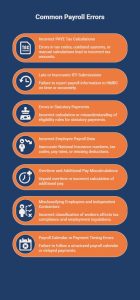
Payroll involves multiple processes, from calculating wages to reporting deductions. As a result, common payroll errors can occur even in well-organised businesses.
These mistakes often arise due to outdated payroll systems, incorrect employee data, or manual payroll processing that increases the risk of manual errors.
1. Incorrect PAYE Tax Calculations
Incorrect PAYE calculations are one of the most frequent payroll mistakes. Payroll teams must ensure the correct tax rates, allowances, and tax deduction rules are applied for each employee.
Errors can occur when:
- Tax codes are incorrect
- Payroll systems are outdated
- Payroll staff rely on manual calculations
Incorrect payroll calculations can result in employees paying too much or too little tax, which may later require adjustments and corrections.
Persistent PAYE inaccuracies may trigger HMRC compliance reviews or penalty assessments.
2. Late or Inaccurate RTI Submissions
UK employers must report payroll information to HMRC through Real Time Information (RTI) each time employees are paid.
Late RTI submissions or inaccurate reporting may lead to late payments of PAYE liabilities and potential penalties. In some cases, businesses may also need to pay back taxes if payroll errors affect tax reporting.
These issues can consume a lot of time and administrative effort to correct, particularly for businesses managing large payrolls.
Repeated RTI reporting errors may increase the risk of HMRC enquiries or late filing penalties.
3. Errors in Statutory Payments
Statutory payments such as Statutory Sick Pay, maternity pay, or statutory paternity pay must follow specific eligibility rules.
Payroll errors may occur if statutory pay is calculated incorrectly or if payroll staff misunderstand eligibility requirements. These errors can lead to unhappy employees and potential legal disputes if payments are not corrected quickly.
Incorrect statutory payments may expose businesses to employment disputes or claims related to unpaid statutory entitlements.
4. Incorrect Employee Payroll Data
Payroll accuracy relies heavily on accurate employee records.
Common data-related payroll mistakes include:
- Incorrect National Insurance numbers
- Incorrect tax codes
- Incorrect salary or hourly pay rates
- Missing deductions such as pensions or child support
Inaccurate employee payroll data can lead to reporting discrepancies and payroll corrections that increase administrative workload.
5. Overtime and Additional Pay Miscalculations
Payroll teams must carefully track overtime hours and overtime pay to ensure employees are compensated correctly.
Errors in overtime calculations may result in unpaid overtime, which can lead to employee complaints and a negative impact on employee morale.
Repeated overtime payment errors may also create compliance risks under UK wage payment regulations.
6. Misclassifying Employees and Independent Contractors
Another payroll mistake occurs when businesses incorrectly classify workers as employees or independent contractors.
Incorrect classification can affect tax compliance, payroll taxes, and benefits eligibility, and may create compliance issues with employment regulations.
Worker misclassification can lead to back tax liabilities, penalties, and employment law disputes.
7. Payroll Calendar or Payment Timing Errors
Payroll mistakes may also occur when businesses fail to follow a structured payroll calendar.
Late payroll processing or delayed payments can disrupt business operations and create frustration among employees. In some cases, late payments may even result in regulatory issues.
Delayed payroll payments may damage employee trust and create compliance concerns if wage payment obligations are not met.
Want to reduce payroll compliance risks before they turn into costly mistakes? Explore how effective payroll risk management helps businesses identify vulnerabilities, strengthen payroll processes, and stay compliant with HMRC regulations.
What Are the Legal Consequences of Payroll Errors in the UK?
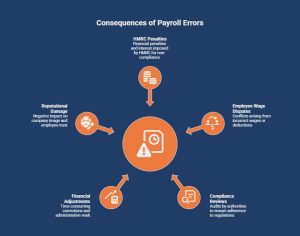
Payroll mistakes may appear small at first, but they can lead to serious consequences for employers if they are not corrected quickly.
Under the UK payroll errors law, businesses must ensure payroll processes comply with HMRC regulations and employment legislation.
1. HMRC Penalties and Interest
HMRC may impose penalties when payroll reporting obligations are not met.
Penalties may occur if:
- RTI submissions are late
- PAYE deductions are incorrect
- Payroll taxes are underreported
In addition to penalties, HMRC may charge interest on unpaid tax liabilities. Businesses may also need to pay back taxes if payroll errors affect previous reporting periods.
Maintaining accurate payroll processes is essential to avoid these compliance risks.
2. Employee Wage Disputes
Payroll mistakes can quickly affect employee trust and workplace morale. If employees receive incorrect wages or deductions, they may raise concerns with the payroll team or escalate the issue further.
Payroll errors affecting overtime hours, unpaid overtime, or statutory deductions can lead to legal disputes and employee complaints. These issues may also negatively affect employee morale and productivity.
Employees may raise formal grievances or pursue employment tribunal claims if payroll errors remain unresolved. Resolving payroll issues quickly helps maintain transparency and protects the organisation’s reputation.
3. Compliance Reviews and Audits
Repeated payroll mistakes may attract attention from HMRC or other regulatory authorities.
In some situations, businesses may face payroll compliance reviews or audits that examine payroll records, tax reporting procedures, and payroll documentation. HMRC audits often review payroll records going back several tax years, making accurate record keeping especially important.
Employers must ensure payroll operations comply with UK employment legislation, including National Minimum Wage regulations, statutory payment rules, PAYE tax obligations, and HMRC reporting requirements.
4. Financial Adjustments and Administrative Burden
Payroll errors often require time-consuming corrections and administrative work. Employers may need to review multiple payroll records, adjust employee payslips, and update RTI submissions.
These corrections can take a lot of time for the payroll staff and may disrupt normal payroll operations if the issue affects several employees.
5. Reputational Damage and Employee Retention Risks
Frequent payroll mistakes can damage a company’s reputation internally and externally. When employees repeatedly experience late payments or incorrect wages, confidence in payroll processes may decline.
Over time, these issues may lead to unhappy employees, reduced workplace trust, and potential challenges in employee retention.
Consistent payroll accuracy goes a long way toward preventing compliance investigations.
Payroll mistakes can lead to compliance issues, unhappy employees, and unexpected costs. Learn about the most costly payroll mistakes businesses make and practical ways to avoid them.
How Can Employers Correct Payroll Errors According to HMRC?
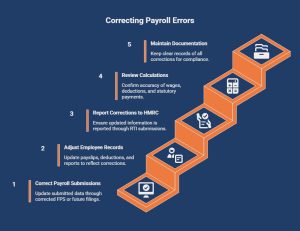
Even with strong payroll systems in place, mistakes can occasionally occur. When payroll errors are discovered, employers must act quickly to ensure corrections are made according to HMRC guidance.
Understanding how to correct payroll errors helps employers resolve payroll issues efficiently and maintain regulatory compliance.
1. Correcting Payroll Submissions
If payroll data has already been submitted to HMRC, employers must update their submissions through corrected Full Payment Submissions (FPS) or adjustments in future payroll filings.
Correcting payroll submissions ensures payroll records remain accurate and aligned with HMRC requirements.
2. Adjusting Employee Pay Records
Employers should also update employee payroll records when corrections are required.
This may include:
- Adjusting payslips
- Updating payroll deductions
- Correcting tax deductions calculations
- Revising payroll reports
These adjustments help ensure payroll records accurately reflect employee pay.
3. Reporting Corrections to HMRC
Once payroll records are corrected, employers must ensure updated information is reported to HMRC through RTI submissions.
Guidance on GOV.UK payroll errors explains how payroll corrections should be reported and documented. Following these procedures helps businesses avoid further compliance issues.
4. Reviewing Payroll Calculations and Deductions
Employers should review payroll calculations to confirm that wages, deductions, and statutory payments are accurate after corrections are made. This includes checking overtime pay, tax rates, and pension contributions to ensure payroll records match the correct employee entitlements.
5. Maintaining Documentation of Payroll Corrections
Employers should keep clear records of any payroll corrections made. Documentation such as updated payroll reports, corrected payslips, and submission records helps demonstrate compliance if HMRC reviews payroll records in the future.
Understanding how to fix payroll errors ensures payroll records remain accurate and compliant with the UK payroll errors law.
Unsure when your business must register with HMRC? Learn the key registration timelines, requirements, and steps every employer should understand to stay compliant.
How Can Businesses Prevent Payroll Errors?
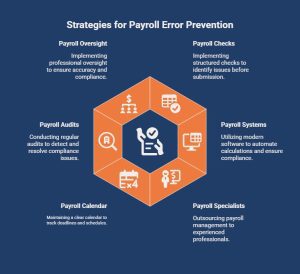
Preventing payroll mistakes is far more efficient than correcting them after they occur. Businesses that adopt strong payroll processes often reduce the risk of payroll errors significantly.
1. Implementing Payroll Checks
Implementing structured payroll checks helps identify issues before payroll submissions are finalised.
Payroll teams may review:
- Employee pay data
- Tax codes and deductions
- Overtime calculations
- Payroll reports before submission
These checks can significantly reduce the risk of manual errors and ensure payroll accuracy.
2. Using Reliable Payroll Systems
Modern payroll systems help automate calculations and ensure payroll reporting complies with HMRC regulations.
Payroll software can:
- Automatically apply correct tax rates
- Calculate overtime pay
- Generate RTI reports
- Maintain accurate payroll records
These tools help payroll teams work more efficiently while reducing the risk of human error.
3. Working With Payroll Specialists
Many organisations choose to outsource payroll management to experienced professionals.
Working with a payroll provider can help businesses manage complex payroll requirements, including global payroll operations, tax compliance, and statutory deductions.
Payroll specialists can support businesses with:
- Payroll processing
- Tax compliance and payroll taxes
- HMRC reporting
- Fixing payroll errors
For many employers, outsourcing payroll provides greater peace of mind and allows internal teams to focus on core business activities.
4. Maintaining an Accurate Payroll Calendar
A clearly defined payroll calendar helps businesses keep track of payroll runs, reporting deadlines, and payment schedules.
Employers should ensure their payroll calendar includes:
- Payroll run dates
- PAYE and National Insurance deadlines
- Statutory payment schedules
- Reporting deadlines for HMRC
Following a consistent payroll calendar helps prevent late payments and ensures payroll submissions remain compliant with the UK payroll errors law.
5. Conducting Regular Payroll Audits
Regular payroll audits help businesses detect issues before they become larger compliance problems.
Audits may involve reviewing:
- Payroll records and employee data
- Tax Deductions and deductions
- Overtime hours and payments
- Payroll reports submitted to HMRC
Routine audits allow payroll staff to identify discrepancies early, maintain tax compliance, and avoid serious consequences caused by overlooked payroll errors.
6. Implementing Professional Payroll Oversight
In many organisations, payroll oversight extends beyond routine payroll processing. Businesses with complex payroll structures often benefit from professional payroll oversight that ensures payroll operations remain accurate, compliant, and well-documented.
Professional payroll oversight may include reviewing payroll procedures, monitoring tax reporting, and ensuring payroll submissions align with HMRC requirements.
This additional layer of review helps businesses identify payroll risks early, strengthen payroll governance, and maintain consistent payroll processes across the organisation.
For growing businesses or organisations managing large workforces, professional payroll oversight can play an important role in preventing payroll errors and maintaining long-term payroll compliance.
Worried about triggering an HMRC investigation? Learn the most common reasons businesses face audits and how to stay compliant.
How Can Direct Payroll Services Help Businesses Reduce Payroll Errors?
Payroll management can become increasingly complex as organisations grow. Managing employee pay, statutory deductions, tax reporting, and compliance requirements requires experience and attention to detail.
Direct Payroll Services supports businesses by providing professional payroll solutions designed to minimise payroll risks and improve payroll accuracy.
Their services include:
- Accurate payroll processing and PAYE calculations
- RTI submissions to HMRC
- Statutory payment management
- Payroll compliance monitoring
- Support with fixing payroll errors
By implementing structured payroll processes and professional oversight, Direct Payroll Services helps businesses reduce exposure to legal and compliance risks through structured payroll checks, professional oversight, and HMRC-compliant payroll processes.
Final Thoughts
Payroll accuracy plays a critical role in maintaining compliance, employee trust, and smooth business operations. Even small payroll mistakes can create administrative complications if they are not addressed quickly. Understanding payroll errors law in the UK helps employers recognise potential payroll risks, correct mistakes effectively, and implement stronger payroll processes.
By adopting payroll best practices, performing regular audits, and maintaining accurate employee data, businesses can significantly reduce payroll errors and protect their organisation from unnecessary legal or financial issues. For organisations seeking greater payroll accuracy and compliance support, professional payroll services can provide the expertise needed to manage payroll efficiently and confidently.
Frequently Asked Questions
What should you do if a payroll error is detected?
Yes, payroll errors can usually be corrected. If you notice a payroll error on your payslip, inform your employer or payroll team as soon as possible. Employers can correct the issue by updating payroll records, adjusting tax deductions if necessary, and submitting corrected information through RTI to HMRC.
Are there time limits for correcting payroll errors under UK law?
Employers should correct payroll errors as soon as possible once they are identified. HMRC allows payroll corrections through updated payroll submissions or adjustments in future payroll reports.
Can employers face penalties for repeated payroll mistakes?
Yes. Repeated payroll mistakes may lead to HMRC penalties, compliance investigations, or additional reporting requirements if businesses fail to correct payroll issues promptly.
Underpaid due to payroll error – how long do I give them to rectify?
Employers should investigate underpayment issues immediately and correct them as soon as possible, usually within the next payroll cycle, once the payroll error has been confirmed.
Is outsourcing payroll a good idea for small businesses?
Outsourcing payroll can help small businesses reduce administrative workload and ensure payroll compliance. A professional payroll provider manages payroll calculations, HMRC submissions, and statutory payments accurately.