Key Highlights
- Zero-hour contracts give employers workforce flexibility, helping you match staffing levels to real demand instead of fixed schedules.
- Labour costs stay closely aligned to actual hours worked, reducing financial strain during quieter periods.
- They support faster scaling for seasonal, project-based, and event-driven businesses, where workload can change weekly.
- Payroll can become more complex without the right systems, especially around holiday pay, records, and HMRC reporting.
- Compliance is manageable with accurate tracking and expert payroll support, which is where Direct Payroll Services plays a critical role.
- Zero-hour contracts suit certain business models extremely well, but they are not right for every role or workforce.
- The real advantage comes from combining flexibility with proper pay administration, not from the contract alone.
If you are exploring zero-hour contracts, chances are you are not trying to cut corners. You are trying to solve a real business problem. Demand is unpredictable. Workloads fluctuate. Some months are intense, others are quiet. Yet your wage bill does not always move in the same way.
That tension between flexibility and cost control is something many UK employers are feeling. You want the freedom to respond to market changes, but you also want to stay compliant, treat people fairly, and avoid payroll headaches that eat into your time.
This is where understanding the advantages of zero-hour contracts becomes important. Used properly, they can support agile operations and controlled labour spend. Used carelessly, they can create legal risk, payroll confusion, and reputational damage. Let us break down what you really need to know.
What Is a Zero-Hour Contract?
A zero-hour contract is an agreement where you don’t guarantee any minimum hours of work. The worker isn’t obliged to accept shifts, and you only pay for the hours they actually work. This arrangement is common in hospitality and retail, where demand varies. It offers flexibility for managing seasonal peaks or absences.
The main feature is the lack of guaranteed hours. However, zero-hours workers are still entitled to rights under UK law, such as the National Minimum Wage and paid holiday. Their employment status depends on the actual working relationship, not just the contract title, which can affect their legal rights. Use zero-hour contracts only when workloads genuinely fluctuate.
What Are the Advantages of Zero-Hour Contracts for Employers?
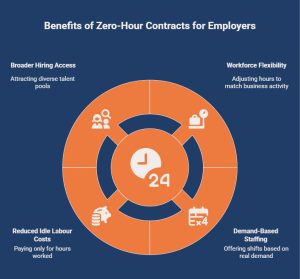
In many sectors, demand is unpredictable, and fixed staffing can create cost pressure. Zero-hour contracts help you stay responsive, allowing labour levels to rise or fall with workload while maintaining access to trained workers when you need them.
1. Workforce Flexibility
You can adjust hours offered in line with business activity instead of committing to regular schedules. This prevents overstaffing during quiet periods and helps ensure cover during busy times without constant recruitment.
2. Demand-Based Staffing
Shifts can be offered when real demand appears, such as short-term projects or sudden spikes. This keeps your workforce aligned with operational needs rather than forecasts that may not hold.
3. Reduced Idle Labour Costs
Pay is linked more closely to hours worked, lowering the risk of paying for unproductive time. This supports healthier cash flow during slower periods.
4. Broader Hiring Access
Flexible work appeals to students, carers, and semi-retired professionals. You gain access to a wider talent pool and build a reliable bank of workers to call on when needed.
Used appropriately, zero-hour contracts give you greater control over staffing, costs, and operational agility.
What Are the Benefits of Zero-Hour Contracts for Employers From a Payroll Perspective?
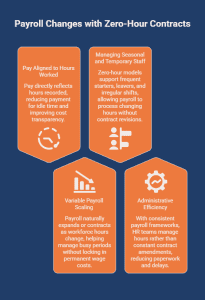
Zero-hour contracts change how payroll behaves. Instead of fixed wage commitments, your labour costs move with actual activity. This can improve financial control, but only when supported by accurate tracking, compliant calculations, and structured payroll processes that prevent small errors from becoming bigger problems.
1. Pay Aligned to Hours Worked
Pay directly reflects hours recorded, helping wage spend mirror operational output. This reduces payment for idle time, improves cost transparency, and supports fair compensation. Reliable time tracking is essential, as payroll accuracy depends entirely on correctly captured working hours.
2. Variable Payroll Scaling
Payroll naturally expands or contracts as workforce hours change. This helps manage busy periods without locking in permanent wage costs. Employers must still monitor National Minimum Wage compliance and ensure statutory pay is handled correctly despite fluctuating schedules.
3. Managing Seasonal and Temporary Staff
Zero-hour models support frequent starters, leavers, and irregular shifts. Payroll can process changing hours without contract revisions, provided systems are organised. Holiday pay, PAYE, and statutory entitlements still apply, so structured processing is key to avoiding reporting errors.
4. Administrative Efficiency
With consistent payroll frameworks, HR teams manage hours rather than constant contract amendments. This reduces paperwork, manual adjustments, and delays when staffing levels shift. Efficiency improves when payroll tools and processes are built to handle workforce variability smoothly.
Payroll flexibility becomes an advantage only when supported by accurate data and compliance. Without strong processes, variable hours quickly turn into payroll risk rather than cost control.
What Are the Advantages of Zero-Hour Contracts for Business Operations?
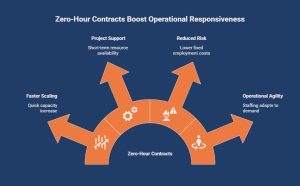
Operationally, zero-hour contracts support responsiveness. They allow staffing levels to adjust with demand, helping you respond to opportunities, cover gaps, and manage workload changes without long-term employment commitments that could strain resources during slower periods.
1. Faster Scaling
You can increase capacity quickly when demand rises by offering more hours or bringing in additional flexible workers. This avoids lengthy recruitment processes and helps capture growth opportunities without committing to permanent staffing too early.
2. Short-Term Project Support
Flexible workers can be brought in for specific projects or short-term demands. This keeps the core team lean while ensuring resources are available where needed, improving efficiency without expanding long-term employment overheads.
3. Reduced Fixed Employment Risk
Labour costs reduce when work slows, lowering exposure to fixed salary obligations. This helps businesses navigate uncertainty and seasonal changes without relying heavily on redundancies to manage payroll pressures.
4. Operational Agility
Staffing levels can shift alongside market conditions, customer demand, or unexpected absences. This adaptability supports continuity and faster decision-making, helping businesses stay competitive in environments where workloads change frequently.
Operational benefits come from responsiveness and control. Zero-hour contracts support agility, but their value depends on clear workforce planning and structured administration.
Not sure how redundancy pay applies to zero-hour workers? Read our guide to understand eligibility, length of service rules, and employer responsibilities.
What Are the Disadvantages and Risks of Zero-Hour Contracts for Employers?
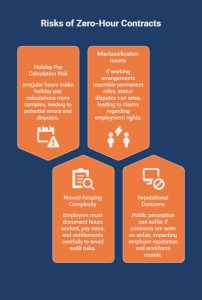
Flexibility increases responsibility. Variable hours can complicate compliance, payroll calculations, and workforce management. Without strong oversight, small administrative issues can lead to disputes, legal exposure, or reputational harm.
1. Holiday Pay Calculation Risk
Irregular hours make holiday pay calculations more complex. Errors can lead to underpayments, disputes, and compliance breaches. Accurate tracking and correct calculation methods are essential.
2. Record Keeping Complexity
Employers must document hours worked, pay rates, and entitlements carefully. Inconsistent records increase audit risk and make resolving disputes more difficult.
3. Misclassification Issues
If working arrangements resemble permanent roles, status disputes can arise. Misclassification may lead to claims regarding employment rights and benefits.
4. Reputational Concerns
Public perception can suffer if contracts are seen as unfair. Transparent practices and proper entitlements help protect employer reputation and workforce morale.
Zero-hour contracts offer flexibility, but risk increases when processes are weak. Compliance, documentation, and fair treatment are what keep flexibility from becoming liability.
Wondering how maternity pay works for staff on flexible contracts? This guide explains zero-hour contract maternity pay rights, eligibility rules, and what employers must provide to stay compliant.
How Can Employers Stay Compliant When Using Zero-Hour Contracts?
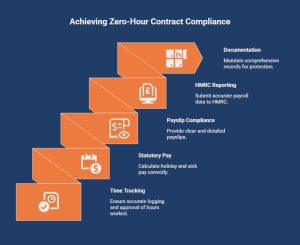
Zero-hour contracts require disciplined processes behind the scenes. While hours may be flexible, your legal obligations are not. Compliance depends on accurate pay, correct statutory calculations, and clear reporting. Getting the fundamentals right reduces disputes, protects your business, and supports fair treatment.
1. Time Tracking Accuracy
Accurate time records are the foundation of lawful pay. Every hour worked must be logged and approved before payroll runs.
Employers should:
- Use a consistent system to record hours
- Ensure managerial approval of timesheets
- Retain records for audit and dispute purposes
Reliable tracking supports correct pay and statutory calculations.
2. Statutory Pay Calculations
Zero-hour workers remain entitled to holiday pay and, where eligible, statutory sick pay. These must be calculated using the correct average earnings reference period.
Maintaining accurate pay histories ensures:
- Holiday pay is lawful
- Minimum wage compliance is met
- Back pay risks are avoided
3. Payslip Compliance
Payslips must clearly show how pay has been calculated, especially when hours vary.
Each payslip should include:
- Hours worked
- Rate of pay
- Gross earnings and deductions
- Holiday pay elements where applicable
Clear payslips reduce confusion and demonstrate compliance.
4. HMRC Reporting
Payroll data must be submitted accurately through Real Time Information. Late or incorrect submissions can lead to penalties.
Ensure:
- PAYE and National Insurance are correct
- Submissions are made every pay cycle
- Employee details match payroll records
5. Documentation Practices
Clear documentation protects your position if questions arise.
Maintain:
- Written zero-hour contracts
- Records of hours worked
- Holiday accrual and payment logs
In short, compliance with zero-hour contracts relies on structured systems. Accurate tracking, lawful calculations, transparent payslips, proper HMRC reporting, and strong documentation work together to minimise risk.
When Are Zero-Hour Contracts Most Suitable For Businesses?
Zero-hour contracts are most effective when they match genuine operational needs. They work best in environments where workload cannot be predicted precisely, and staffing demand rises and falls. In these cases, flexibility supports efficiency rather than creating instability.
1. Fluctuating Or Seasonal Demand
Industries such as hospitality, retail, events, and care often experience sharp peaks and quieter periods. Zero-hour contracts allow staffing levels to adjust in line with demand, helping control labour costs without constant contract changes.
2. Project-Based or Short-Term Work
Where work is linked to specific projects, events, or temporary funding, zero-hour arrangements can provide short-term support without long-term employment commitments. This reduces the risk of overstaffing once the project ends.
3. Early Stage Or Scaling Businesses
Businesses testing new services or expanding cautiously may not know their long-term staffing needs. Zero-hour contracts allow capacity to grow gradually, giving employers time to assess demand before committing to permanent roles.
Overall, these contracts are most suitable where flexibility reflects operational reality. When workload genuinely varies, zero-hour arrangements can support controlled growth and responsive workforce planning.
When Should Employers Avoid Zero-Hour Contracts?
While flexible, zero-hour contracts are not appropriate in every situation, using them in a very flexible way where work is stable or clearly ongoing can create dissatisfaction, legal challenges, and reputational risk. The key question is whether flexibility is truly needed.
1. Roles With Predictable Hours
If a role involves regular weekly hours and consistent duties, a part-time or full-time contract is usually more appropriate. Using a zero-hour arrangement in this context may be seen as unfair or misleading.
2. Core, Long-Term Positions
Jobs central to daily operations, especially those requiring continuity and responsibility, benefit from stable contracts. Guaranteed hours help build commitment and reduce turnover in these roles.
3. Highly Skilled Or Specialist Roles
Positions requiring extensive training or specialist knowledge often rely on long-term engagement. A lack of guaranteed work can lead to disengagement and make retention more difficult.
In summary, zero-hour contracts should be avoided where stability is essential. Matching the contract type to the true nature of the role helps protect morale, maintain compliance, and support sustainable workforce planning.
What Are the Alternatives to Zero-Hour Contracts?
Zero-hour contracts are not the only way to achieve flexibility. In some cases, alternative arrangements provide more stability while still allowing employers to manage fluctuating demand responsibly.
1. Fixed-Term Contracts
Fixed-term contracts work well for seasonal peaks, maternity cover, or defined projects. They provide guaranteed hours for a set period, offering more certainty for workers while still limiting long-term employment commitments for the business.
2. Part-Time Contracts with Variable Overtime
A core set of guaranteed hours combined with optional overtime can create balance. This structure ensures predictable income for employees while giving employers additional flexibility during busier periods.
3. Annualised Hours Contracts
Under annualised hours, employees work a total number of hours across the year rather than fixed weekly hours. This allows employers to increase hours during peak periods and reduce them during quieter months without changing contract terms.
4. Agency Workers
For short-term or unpredictable demand, agency workers can reduce administrative burden. The agency manages payroll and employment compliance, though this may come at a higher cost per worker.
5. Casual Worker Agreements with Clear Frameworks
Some employers use casual worker arrangements with transparent scheduling practices, notice periods, and predictable shift patterns. This improves worker experience while maintaining operational flexibility.
Choosing the right structure depends on the nature of the role, demand volatility, and your long-term workforce strategy. Zero-hour contracts offer flexibility, but alternatives may provide stronger engagement and reduced reputational risk where work is more predictable.
How Can Direct Payroll Services Support Employers Using Zero-Hour Contracts?
Zero-hour contracts only deliver real value when payroll keeps up with their complexity. Variable hours, fluctuating earnings, and statutory calculations increase the risk of errors. Without structured systems, flexibility can quickly turn into compliance pressure.
Direct Payroll Services helps UK employers manage that complexity with confidence.
They support businesses by:
- Processing payroll accurately based on changing hours
- Calculating holiday pay correctly for irregular earnings
- Managing PAYE, National Insurance, and statutory deductions
- Producing clear, compliant payslips
- Submitting Real Time Information to HMRC on time
With specialist payroll oversight, you reduce the risk of underpayments, reporting errors, and disputes. More importantly, you free up internal teams to focus on running the business rather than fixing payroll issues.
If you are using zero-hour contracts to stay agile, Direct Payroll Services ensures your pay administration stays just as agile and fully compliant.
Need payroll that can handle zero-hour complexity without compliance stress? Contact Direct Payroll Services today.
Final Thoughts
Zero-hour contracts offer a flexible solution for UK employers seeking to adapt to the ever-changing business landscape. By leveraging these contracts, businesses can efficiently manage contract workers to meet workforce needs while minimising costs and administrative burdens. However, it’s crucial to navigate the potential risks and compliance requirements to ensure a fair and efficient work environment.
As you consider the advantages of zero-hour contracts, remember the importance of maintaining transparency and a supportive approach towards your employees.
Frequently Asked Questions
Can zero-hour contracts help organisations manage changing business needs?
Yes. Zero-hour contracts, also known as casual contracts, allow you to adjust the number of hours offered based on demand, sometimes at short notice or even at the last minute. This flexibility suits seasonal spikes without committing to a set number of hours on a regular basis for permanent staff.
Are there any protections for workers on zero-hour contracts?
Yes. Workers are entitled to the national living wage, annual leave, and rest breaks under the Working Time Regulations. Depending on their length of service, they may also qualify for statutory payments, though eligibility for redundancy pay and protection from unfair dismissal depends on employment status.
What are the key considerations when offering zero-hour contracts in the UK?
From a legal perspective, you must assess employment status and employee status carefully, particularly around mutuality of obligation and control. Contracts should not imply a minimum number of hours if none is guaranteed. Seeking expert legal advice helps ensure compliance and avoid status disputes.
Do zero-hour contracts provide any benefits for employees?
For some, yes. They offer flexibility to accept or decline an offer of work, helping manage studies, childcare, or other commitments. Workers still receive annual leave entitlement and protection under employment law, although income may fluctuate month to month.
Who benefits most from zero-hour contracts?
Businesses with fluctuating demand and individuals seeking flexibility benefit most. They suit students, semi-retirees, or those supplementing their income. However, for those seeking financial stability, the absence of guaranteed hours and statutory redundancy pay can be challenging.
How can zero-hour contracts be useful for staff who want a work-life balance?
Zero-hour contracts allow workers to choose shifts rather than commit to a set number of hours. This greater flexibility supports work-life balance while still providing protection under the employment world framework, including pay rights and rest periods under UK law.