Key Highlights
- Workers on zero-hours contracts may qualify for Statutory Sick Pay (SSP) if they meet eligibility rules, including employment status, earnings, and sickness duration.
- The SSP rate is £118.75 per week (2025–2026) and can be paid for up to 28 weeks during a qualifying sickness period.
- To qualify, workers must earn at least the Lower Earnings Limit of £123 per week on average, based on recent payroll records.
- SSP usually begins after three unpaid waiting days, unless the sickness periods are linked.
- Employers must verify average earnings, track sickness absence, and maintain accurate payroll records to ensure correct SSP calculations.
- Managing sick pay and zero-hours contracts requires handling irregular schedules, fluctuating income, and qualifying periods carefully.
- Payroll providers like Direct Payroll Services help businesses ensure compliance, reduce errors, and simplify statutory payments for flexible workforces.
Flexible working arrangements are now common across the UK workforce. Many businesses rely on zero-hours contracts and agency workers to manage seasonal demand, shift-based operations, and changing workloads. While these arrangements provide flexibility, they also create additional responsibilities for employers, particularly when managing payroll and employee entitlements.
One area that often confuses is sick pay and zero-hours contracts. Employers frequently question whether workers with irregular hours qualify for sick pay and how eligibility or payments should be calculated.
Workers must usually report the first day of sickness, and longer absences may require a fit note. Employers must then track these periods of sickness carefully to ensure statutory payments are processed correctly. This guide explains how sick pay works for zero-hours workers and how employers can manage compliance effectively.
What Is Statutory Sick Pay in the UK?
Statutory Sick Pay (SSP) is the minimum amount employers must pay eligible workers who are unable to work because of illness or injury. It is administered through payroll and governed by UK employment legislation.
SSP provides financial support during periods when employees cannot perform their job duties. Employers are responsible for determining eligibility, calculating payments accurately, and ensuring correct payroll reporting to HMRC.
As of the 2025–2026 tax year, the SSP rate is £118.75 per week. Payments are made for up to a maximum of 28 weeks per qualifying sickness period, provided the worker continues to meet eligibility requirements.
Several statutory payments exist within the UK payroll system, including:
• Statutory Sick Pay for illness
• Statutory Maternity Pay for employees on maternity leave
• Other Government benefits, such as Universal Credit or Employment and Support Allowance, for long-term inability to work
Unlike Government benefits, SSP is paid directly by employers through payroll and is subject to PAYE deductions.
Understanding the rules governing SSP is particularly important when managing sick pay and zero-hours contracts, where fluctuating earnings and irregular work schedules can affect eligibility and payment calculations.
Are Zero-Hours Contracts Entitled to Sick Pay?
Many employers ask: Are zero-hours contracts entitled to sick pay? In many cases, the answer is yes, but eligibility depends on several conditions defined by UK employment law.
Workers on zero-hour contracts can receive zero-hour contract sick pay if they meet the same requirements applied to other employees.
1. Employment status and eligibility rules
Eligibility begins with employment status. Workers must qualify as employees or workers and must be paid through PAYE payroll.
Even though zero-hour contracts do not guarantee fixed schedules, workers may still qualify for SSP if they maintain an ongoing working relationship with the employer.
This includes:
• Casual staff regularly working shifts
• Seasonal workers returning for repeated work periods
• Agency workers paid through payroll systems
Employment legislation, including updates proposed under the Employment Rights Bill, continues to review protections for workers in flexible arrangements.
2. Minimum earnings requirement
To qualify for SSP, workers must earn at least the Lower Earnings Limit on average.
Employers determine eligibility by reviewing the worker’s average earnings during the relevant pay period before the sickness absence.
If earnings fall below the threshold, SSP cannot be paid.
3. Qualifying sickness period
In addition to meeting the earnings requirement, the illness must last for a minimum period before SSP applies.
Workers must be off work for four consecutive days, including both working and non-working days. For example, if a worker becomes ill on a Tuesday and remains sick until Friday, the sickness period would normally meet the qualifying requirement.
Want a clearer understanding of Statutory Sick Pay (SSP) in the UK? Learn how SSP works, who qualifies, and how employers can manage sick pay compliance effectively.
How Does Sick Pay Work on a Zero-Hours Contract?
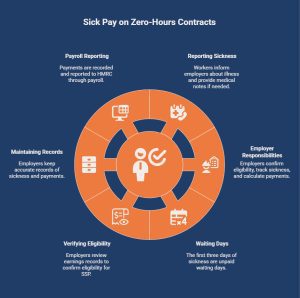
Employers often ask how sick pay works on a zero-hours contract, especially when workers have unpredictable schedules and varying weekly hours. While working patterns may differ, the statutory process for managing sick pay remains consistent. Employers must ensure sickness is reported correctly, eligibility is verified, and payments are processed accurately through payroll.
1. Reporting Sickness Absence
The process begins when a worker informs their employer that they are unable to work due to illness. Most businesses require employees to notify their manager or HR team on the first day of sickness, following the organisation’s absence reporting policy.
For short illnesses, workers can usually self-report their absence. However, if the illness continues for several days, employers may request medical confirmation, such as a fit note or sick note, from a healthcare professional. Proper reporting helps employers track periods of sickness and determine whether the absence qualifies for statutory sick pay.
2. Employer Responsibilities For SSP
Once sickness has been reported, employers must determine whether the worker qualifies for statutory sick pay. When managing sick pay and zero-hours contracts, employers typically need to:
• Confirm that the worker meets SSP eligibility criteria
• Track qualifying periods of sickness accurately
• Review the worker’s earnings history and employment status
• Calculate statutory payments according to current SSP rules
If a worker does not meet the eligibility requirements for SSP, some employers may still provide contractual sick pay depending on the terms of their employment policies.
3. Waiting Days Before SSP Begins
Statutory sick pay does not usually start immediately when a worker becomes ill. The first three qualifying days of sickness are typically treated as waiting days and are unpaid.
For example:
• A worker becomes ill on Monday
• Waiting days apply on Monday, Tuesday, and Wednesday
• SSP begins from Thursday if the employee remains sick
However, if a worker experiences linked periods of sickness, waiting days may not apply again.
4. Verifying Eligibility Through Earnings Records
Before paying SSP, employers must confirm whether the worker meets the eligibility threshold based on earnings. This involves reviewing payroll records to determine the worker’s average earnings during the relevant period.
Employers usually examine pay information leading up to the last payday before the sickness absence to confirm whether the employee meets the Lower Earnings Limit required for statutory sick pay.
5. Maintaining Sickness and Payroll Records
Employers must keep accurate records of sickness absence and statutory payments. These records help ensure payroll accuracy and support compliance with HMRC reporting requirements.
Typical documentation includes:
• Dates covering the employee’s periods of sickness
• Medical evidence, such as a fit note, when required
• SSP payment calculations
• Payroll entries reported to HMRC
Maintaining detailed records helps employers resolve payroll queries and ensures statutory payments are administered correctly when managing sick pay and zero-hours contracts.
6. Payroll Reporting Requirements
Once SSP eligibility and payment amounts are confirmed, the payments must be recorded within the employer’s payroll system. These payments are then reported to HMRC as part of regular payroll submissions.
Accurate reporting ensures employers maintain compliant payroll records, reduce administrative errors, and avoid potential disputes related to statutory payments.
Not sure how notice periods work for flexible staff? Learn how zero-hour contract notice periods are handled in the UK and what employers must consider to stay compliant and avoid disputes.
How Much Is Sick Pay on a Zero-Hours Contract?
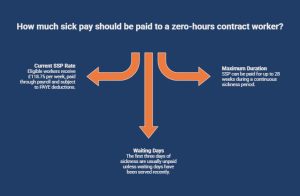
Employers often ask how much sick pay on a zero-hours contract workers may receive, particularly when schedules and earnings vary. While SSP follows a fixed statutory rate, the final payment depends on qualifying days, waiting periods, and how long the sickness absence lasts.
1. Current SSP Weekly Rate
The SSP rate is set by the UK and reviewed periodically. Eligible workers receive £118.75 per week, paid through payroll and subject to PAYE deductions.
Although SSP is a weekly rate, payments are calculated based on qualifying working days. This means zero-hour workers may receive a pro-rated amount depending on how many days they would typically work.
2. Waiting Days Before SSP Begins
Statutory Sick Pay does not normally begin immediately when a worker becomes ill. The first three waiting days of sickness are usually unpaid unless the worker has already served waiting days during a recent sickness period.
For example:
• A worker reports illness on Monday
• Waiting days apply on Monday, Tuesday, and Wednesday
• SSP payments begin on Thursday
These waiting days apply regardless of whether the employee works full-time, part-time, or under a zero-hours contract.
3. Maximum Duration of Sick Pay
Statutory Sick Pay can usually be paid for up to 28 weeks during a continuous sickness period, provided the worker remains eligible. Employers must track sickness records and payroll entries carefully to ensure payments remain within this limit and are recorded accurately when managing sick pay and zero-hours contracts.
Want to understand why many UK businesses use flexible staffing models? Explore the advantages of zero-hour contracts and how they help employers manage seasonal demand, control labour costs, and adapt to changing workloads.
How Do You Calculate Sick Pay for a Zero-Hours Contract?
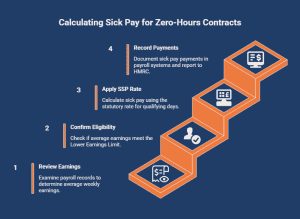
Calculating sick pay for a zero-hours contract requires employers to review earnings history and confirm eligibility before applying statutory rates. Because hours can vary, payroll teams must follow a structured process to ensure statutory sick pay is calculated accurately and reported correctly.
Step 1: Review average weekly earnings
The first step in calculating sick pay for a zero-hours contract is reviewing the worker’s earnings during the relevant period before the sickness absence. Employers usually examine payroll records up to the last payday before the illness began. This helps determine the worker’s average earnings, which are used to assess eligibility for statutory sick pay.
Step 2: Confirm eligibility threshold
After calculating average earnings, employers must confirm whether the worker meets the Lower Earnings Limit of £125 per week (2025–2026). If the worker’s average earnings meet or exceed this threshold, the employee qualifies for SSP. If earnings fall below the limit, statutory sick pay cannot be paid.
Step 3: Apply the statutory sick pay rate
Once eligibility has been confirmed, employers apply the Statutory Sick Pay rate of £118.75 per week to the qualifying sickness days. This ensures payments comply with the statutory rules governing statutory sick pay for zero-hour contracts.
Example: Calculating Sick Pay for a Zero-Hours Contract
Here’s a simple example to show how calculating sick pay for a zero-hours contract works in practice:
- A worker earns an average of £200 per week over the relevant period
- This is above the £123 Lower Earnings Limit, so they qualify for SSP
- The worker is off sick for five consecutive days (Monday to Friday)
- The first three days are unpaid waiting days
- SSP is paid for the remaining two qualifying days
Calculation:
- Weekly SSP rate = £116.75
- Daily SSP rate (assuming 5 qualifying days) = £23.35 per day
- SSP payable = £23.35 × 2 days = £46.70
The employer would record this payment through payroll and report it to HMRC as part of regular submissions.
Step 4: Record payments in the payroll system
The final step is recording SSP payments within payroll systems and reporting them through HMRC payroll submissions.
Employers should maintain records, including:
• Dates covering periods of sickness
• Payroll calculations used to determine SSP
• Payment history recorded through payroll
• Relevant payroll reporting entries
Maintaining accurate payroll documentation helps employers manage sick pay and zero-hours contracts while reducing compliance risks and payroll disputes.
Wondering if workers on flexible contracts qualify for paid leave? Learn how holiday pay works for zero-hours contracts and what UK employers must do to stay compliant with payroll regulations.
What Payroll Challenges Do Employers Face With Zero Hours Sick Pay?
Managing sick pay and zero-hours contracts can create several payroll challenges, especially for businesses with flexible workforces. Irregular schedules, varying earnings, and statutory reporting requirements often make sick pay administration more complex.
1. Irregular earnings patterns
Workers on zero-hour contracts may earn different amounts each week. Since eligibility depends on the worker’s average earnings, payroll teams must review previous pay periods carefully to determine whether the employee meets the required threshold.
2. Determining SSP eligibility
Confirming eligibility can be difficult when workers have inconsistent schedules. Employers must review earnings history, identify the last payday, and calculate average earnings to determine whether the employee qualifies for statutory sick pay for zero-hour contracts.
3. Tracking sickness periods
Employers must record periods of sickness accurately. Workers typically report the first day of sickness, and longer absences may require a fit note or sick note. Proper tracking ensures waiting days and SSP payments are applied correctly.
4. Managing flexible work schedules
Because zero-hour workers may not have fixed shifts, sickness may occur on days they were not scheduled to work. Payroll teams must still determine whether those days fall within the qualifying sickness period.
5. Maintaining compliant payroll records
Employers must maintain detailed records, including:
• Sick leave dates
• Earnings calculations
• Medical documentation, such as a fit note
• Payroll reporting entries
These records help ensure compliance with HMRC requirements.
6. Avoiding payroll disputes
Errors in calculating how much sick pay on a zero-hours contract should be paid can lead to disputes. If disagreements arise, employers and workers may seek support from the Statutory Payment Dispute Team.
In some cases, unresolved issues may require assistance from the Statutory Payment Dispute Team, which helps resolve disputes between employers and employees regarding statutory payments.
Why Should Businesses Use Payroll Specialists for Irregular Workers?
Businesses managing flexible workforces often face payroll complexities due to irregular schedules, variable earnings, and statutory payment rules. Payroll specialists help simplify these processes by ensuring accurate calculations, maintaining compliance with HMRC requirements, and supporting organisations that rely on large numbers of flexible workers.
1. Accurate SSP calculations
Calculating statutory sick pay can be more complex when workers have fluctuating schedules or inconsistent earnings. Payroll specialists review workers’ average earnings, qualifying periods of sickness, and eligibility thresholds to ensure statutory sick pay is calculated accurately and applied correctly.
2. Compliance with HMRC payroll rules
Payroll providers stay up to date with HMRC requirements and statutory payment regulations. Their systems help ensure that sick pay records, payroll submissions, and statutory calculations remain compliant, reducing the risk of payroll reporting errors or regulatory issues.
3. Handling large flexible workforces
Businesses employing shift-based staff, seasonal workers, or agency workers often manage payroll for many employees with different schedules and pay structures. Payroll specialists streamline these processes using structured systems designed to support flexible workforce management.
4. Reducing payroll errors and disputes
Accurate payroll management reduces misunderstandings about sick pay eligibility and payment amounts. By maintaining clear documentation and consistent payroll calculations, payroll specialists help employers avoid disputes and improve transparency between employers and employees.
How Direct Payroll Services Supports Employers Managing Zero-Hour Workers?
Managing payroll for flexible workforces requires systems that can handle irregular hours, statutory payments, and compliance obligations.
Direct Payroll Services provides payroll support for UK businesses managing complex payroll structures.
Our services help employers:
• Manage payroll for flexible workers and agency workers
• Ensure accurate statutory sick pay for zero-hour contracts
• Maintain compliant payroll reporting processes
• Reduce administrative workload for HR and finance teams
Direct Payroll can support employers managing irregular workers by applying correct sick pay calculations and eligibility rules, ensuring accuracy and compliance across payroll processes. Employers managing seasonal workers or shift-based teams often benefit from payroll systems designed to simplify sick pay and zero-hours contracts administration.
Need Help Managing Payroll for Zero-Hour Workers? Direct Payroll Services helps UK employers handle statutory sick pay, payroll compliance, and reporting for flexible workforces. Speak with our payroll experts today to simplify payroll for your business.
Final Thoughts
Understanding sick pay and zero-hours contracts is essential for UK employers managing flexible workforces. While workers may qualify for Statutory Sick Pay, eligibility depends on earnings, qualifying sickness periods, and accurate payroll calculations.
Employers must track sickness records, verify eligibility, and maintain compliant reporting. As UK employment laws continue to evolve, staying updated with SSP rules is crucial to avoid compliance risks and ensure accurate, efficient payroll management.
Frequently Asked Questions
What if my employer refuses to pay sick pay on a zero-hours contract?
If a worker meets eligibility requirements for statutory sick pay, the employer must provide SSP. If payment is refused incorrectly, workers may contact HMRC or the Statutory Payment Dispute Team for guidance.
How to calculate sick pay for a zero-hours contract?
To calculate sick pay for a zero-hours contract, check if average weekly earnings meet the £123 threshold. If eligible, apply the £116.75 weekly SSP rate after three waiting days, then calculate payment based on qualifying days worked.
Does holiday entitlement affect my sick pay on a zero-hours contract?
Holiday entitlement usually does not affect statutory sick pay eligibility. However, workers may choose to take annual leave during sickness if agreed with the employer.
Have there been recent changes to sick pay rules for zero-hour contracts?
The rules governing SSP continue to evolve as employment law develops. Policy discussions around worker protections, including proposals within the Employment Rights Bill, may affect flexible working arrangements in the future.
How do you calculate sick leave hours?
Employers calculate sick pay by reviewing the worker’s average earnings, confirming eligibility thresholds, applying the statutory rate, and recording payments through payroll systems.
How much is sick pay on a zero-hours contract?
Eligible workers receive the statutory sick pay rate set by the government, provided they meet earnings thresholds and qualifying sickness period requirements.
What is the Relevant Period?
The relevant period refers to the timeframe used to calculate average earnings when determining SSP eligibility. Employers typically review wages earned before the last payday prior to sickness.
Where can I check if I qualify for statutory sick pay as a zero-hour contract employee?
You can check your eligibility for statutory sick pay on the UK Government website using the SSP guidance pages or eligibility tools. These resources explain requirements such as workers’ average earnings, qualifying periods of sickness, and employment status.
How do I use the online tool to calculate my statutory sick pay for a zero-hour role?
Use the statutory sick pay calculator available on the GOV.UK website. Enter details such as your average weekly earnings, the first day of sickness, and recent pay information from your last payday to estimate the SSP amount.