Key Highlights
- Employee remuneration is the total payment an employee receives, including salary, benefits, and perks.
- It encompasses both financial compensation, like wages and bonuses, and non-financial rewards such as health insurance.
- A clear remuneration policy helps your organisation maintain fairness, transparency, and standardisation across roles.
- Determining fair pay involves market benchmarking, evaluating job responsibilities, and considering employee performance.
- Structuring remuneration correctly is crucial for tax efficiency and avoiding compliance risks with employment law.
- Effective remuneration management is a key tool for attracting, motivating, and retaining top talent in your workforce.
Managing pay used to feel straightforward. A salary, a payslip, and that was that. Today, it is rarely so simple. Employers are juggling salaries, bonuses, allowances, pensions, benefits, and tax rules, all while trying to stay fair, competitive, and compliant. It can quickly become overwhelming.
If you have ever found yourself second-guessing a pay decision, worrying about consistency between employees, or wondering whether your payroll setup truly reflects your remuneration structure, you are not alone. Many UK businesses grow faster than their pay systems evolve, and that gap creates risk, confusion, and frustration.
This guide is here to bring clarity. You will learn what employee remuneration really includes, how to structure it properly, and how payroll administration plays a central role in turning policy into an accurate, consistent reality.
What Is Employee Remuneration?
Employee remuneration is the total compensation an employee receives in exchange for their work. It covers all forms of reward provided by an employer under the employment relationship, reflecting the overall value of the role rather than just basic pay.
In simple terms, remuneration represents the complete return an individual receives for their time, skills, responsibilities, and contribution to the organisation.
Employee Remuneration vs Payroll: What’s the Difference?
Employee remuneration and payroll are closely connected, but they are not the same.
Remuneration defines what employees are entitled to receive. Payroll is the operational process that ensures those payments are calculated, processed, and reported correctly.
| Employee Remuneration | Payroll |
|---|---|
| Defines total compensation structure | Processes and administers payments |
| Includes salary, bonuses, benefits, allowances, and statutory pay | Calculates net pay after tax and deductions |
| Focuses on pay policy, fairness, and strategy | Focuses on compliance, tax reporting, and accuracy |
| Designed by HR and leadership | Managed by payroll or finance teams |
| Aligns pay with performance and business goals | Ensures payments meet tax and legal requirements |
In simple terms, remuneration is the strategy behind employee pay. Payroll is the system that executes it accurately and compliantly. Both must work together to maintain transparency, financial control, and employee trust.
What Are the Different Types of Remuneration?
Modern pay structures rarely rely on one element alone. Employers combine fixed earnings, performance-linked pay, and role-specific payments to create balanced packages that stay competitive, compliant, and aligned with business goals.
1. Salary and Wages
Base pay forms the core of most remuneration structures. Salaries provide fixed, predictable annual earnings paid in regular instalments, while wages vary according to hours worked. Both must meet legal pay thresholds and reflect the responsibility and scope of the role.
2. Commission and Incentive Pay
Performance-linked pay connects earnings to measurable outcomes. Commission and incentive schemes reward contribution, often through percentages, target bonuses, or tiered structures. Clear rules and reliable payroll tracking are essential to ensure transparency and prevent payment disputes.
3. Bonuses and Overtime
Bonuses recognise exceptional results or company performance, while overtime compensates additional hours beyond contractual time. These payments influence taxable income and statutory calculations, so consistent classification and accurate processing are critical for compliance and reporting accuracy.
4. Allowances
Allowances cover specific work-related conditions or expenses, such as travel or shift requirements. They are not general rewards but structured payments with defined purposes, requiring careful documentation and correct tax treatment within payroll systems.
5. Statutory Payments Covered via Payroll
Payroll also administers statutory payments such as Statutory Sick Pay, Statutory Maternity Pay, Statutory Paternity Pay, and holiday pay. These are legal entitlements governed by UK employment law. Employers must calculate eligibility, qualifying periods, and payment thresholds accurately to meet compliance obligations and avoid disputes.
6. Benefits and Perks
Beyond direct pay, many remuneration packages include pension contributions, private healthcare, flexible benefit schemes, and enhanced holiday entitlement. While not always paid in cash, these benefits carry financial value and tax implications. Proper reporting and payroll coordination ensure transparency and regulatory compliance.
Together, these components form a structured remuneration framework, ensuring employee pay is competitive, compliant, transparent, and efficiently managed through reliable payroll operations.
Why Do Employers Need an Employee Remuneration Policy?
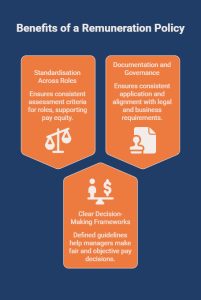
As organisations grow, pay decisions become more complex. Multiple roles, performance levels, and legal requirements influence compensation. Without structure, inconsistencies can arise, increasing risk, confusion, and perceptions of unfairness.
1. Standardisation Across Roles
A remuneration policy ensures roles are assessed using consistent criteria such as responsibility, skill, and impact. This supports pay equity, reduces unexplained gaps, and gives managers a clear basis for compensation discussions.
2. Clear Decision-Making Frameworks
Defined guidelines help managers make fair decisions on salaries, pay reviews, and incentives. This reduces subjectivity, strengthens financial control, and aligns pay progression with performance and organisational goals.
3. Documentation and Governance
A documented policy ensures consistent application across HR, finance, and leadership. Regular reviews keep remuneration aligned with legal requirements, market conditions, and business strategy while supporting accurate payroll administration.
Regular policy reviews allow businesses to respond to legal updates, compliance requirements, and organisational changes without creating disruption.
What Factors Influence a Remuneration Policy?
While the previous section explains why a policy is necessary, this section focuses on what shapes it.
Effective remuneration policies are influenced by both internal strategy and external market conditions. They must remain commercially sustainable while competitive enough to attract and retain talent.
Key influencing factors include:
- Market benchmarks for comparable roles
- Skills shortages or high-demand specialisms
- Business performance and profitability
- Workforce structure and growth plans
- Regulatory requirements and pay legislation
- Internal equity and fairness considerations
Separating these strategic influences from governance ensures the policy remains practical, transparent, and aligned with payroll operations.
Managing temporary staff pay can be just as complex as permanent payroll. Explore the top payroll solutions for seasonal employees and learn how to stay accurate, compliant, and in control during peak hiring periods.
How Is Fair Remuneration to Employees Determined?
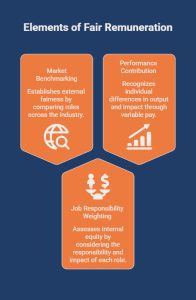
Fair remuneration is not guesswork. It comes from structured evaluation that balances market reality, internal role value, and individual contribution. Using clear criteria helps employers make consistent, defensible pay decisions while maintaining employee trust and supporting long-term workforce stability.
1. Market Benchmarking
Market benchmarking establishes external fairness. Employers compare similar roles across their industry and region to understand prevailing pay levels. This prevents underpaying key roles or overspending without justification.
It typically involves:
- Reviewing salary surveys
- Consulting recruitment data
- Monitoring demand for specialist skills
- Adjusting for regional labour differences
This creates a realistic pay reference point that supports attraction and retention.
2. Job Responsibility Weighting
Internal equity comes from assessing what each role truly carries in responsibility and impact. Titles alone are not reliable indicators of value.
Role weighting considers:
- Complexity of work
- Decision-making authority
- Accountability for people or budgets
- Business impact
- Required expertise
Roles with greater accountability sit in higher pay bands, ensuring structured and transparent differentiation.
3. Performance Contribution
After the role value is set, individual contribution influences variable pay. This recognises differences in output and impact between employees in similar roles.
Common mechanisms include:
- Merit-based increases
- Performance bonuses
- Commission structures
- Target linked rewards
Clear performance criteria ensure fairness and reduce disputes.
Fair remuneration combines external competitiveness, internal logic, and individual recognition. When these three elements align, pay decisions become easier to justify, more consistent, and more likely to be accepted as fair across the workforce.
Choosing the right pay schedule can make a bigger difference than you think. Explore how pay frequency affects cash flow, employee satisfaction, and payroll accuracy in this practical guide.
What Makes Employee Remuneration Tax Efficient?
Tax efficiency is about structuring pay correctly within UK rules, not avoiding obligations. How remuneration elements are classified and processed through payroll directly affects tax, National Insurance, reporting accuracy, and the overall value employees receive from their compensation package.
1. Tax Treatment of Different Pay Types
Different pay elements attract different tax treatments, which shape how remuneration should be designed.
In general:
- Salary and most bonuses are fully taxable
- Employer pension contributions can offer tax advantages
- Benefits in kind follow specific valuation rules
- Genuine business expense reimbursements may be non-taxable
Correct classification ensures compliance and prevents costly corrections.
2. Structuring Allowances Correctly
Allowances must be clearly defined to avoid being treated as extra taxable pay. Purpose and documentation matter.
Good practice includes:
- Linking allowances to a clear business reason
- Separating reimbursements from general earnings
- Requiring appropriate records where needed
- Using correct payroll coding
Structure determines whether an allowance adds value or creates risk.
3. Compliance Risks of Poor Structuring
Incorrect structuring often leads to wider compliance problems beyond tax.
Risks include:
- Incorrect tax or National Insurance deductions
- Errors in benefits reporting
- Payroll adjustments and back payments
- Increased HMRC scrutiny
Accurate payroll processing is essential to keep remuneration both efficient and compliant.
Tax-efficient remuneration depends on thoughtful design and precise payroll execution. When structure and processing align, employers reduce risk, improve clarity, and ensure employees receive the intended value of their pay.
Want to better understand how payroll tax really works in the UK and what it means for your business? Explore this clear guide from Direct Payroll Services to stay compliant, avoid costly mistakes, and manage payroll with greater confidence.
What Is the Benefit of an Employee Forum for Remuneration?
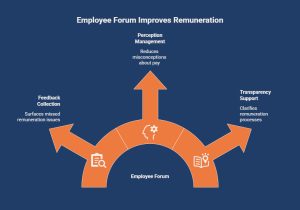
An employee forum creates a structured space to discuss remuneration at a policy level rather than through individual pay debates. It helps you understand how pay and benefits are perceived, while improving trust, communication, and alignment between leadership decisions and employee expectations.
1. Feedback Collection
A forum gives employees a safe way to share how remuneration works in practice. This often surfaces issues that formal processes miss, such as unclear bonus criteria or benefits that employees do not value.
It helps you spot:
- Confusion around performance-linked pay
- Underused or misunderstood benefits
- Communication gaps
- Early dissatisfaction signals
This insight allows you to refine your employee remuneration and benefits using real feedback, not assumptions, while showing employees that their views matter.
2. Perception Management
Pay satisfaction is shaped by perception as much as pay levels. Employees may be paid fairly but still feel otherwise if decision-making is unclear.
A forum lets you explain:
- How roles are evaluated
- How performance affects pay
- How fairness is maintained
This reduces misconceptions and builds confidence in your remuneration approach without needing constant structural changes.
3. Transparency Support
Forums support transparency by clarifying processes, not disclosing individual salaries.
You can openly discuss:
- How your employee remuneration policy works
- The mix of pay, benefits, and incentives
- How remuneration decisions are reviewed
This clarity improves trust and makes pay conversations more informed and less reactive.
Overall, employee forums turn remuneration into an ongoing dialogue, reducing misunderstandings and reinforcing fairness.
Want to avoid costly payroll mistakes and stay on the right side of UK regulations? Explore this essential guide to payroll compliance and learn how to protect your business while keeping pay processes accurate and stress-free.
How Does Payroll Administration Support Remuneration Management?
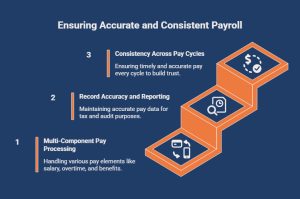
The remuneration strategy defines what employees should receive, but payroll ensures they receive it correctly. Every salary, allowance, deduction, and benefit passes through payroll, making it the operational link between pay policy and accurate, compliant execution.
1. Multi-Component Pay Processing
Modern pay includes more than base salary. Payroll must handle:
- Salary or wages
- Overtime and premiums
- Bonuses and commission
- Allowances
- Benefit deductions
Each has different rules and tax implications. Accurate processing ensures every element of employee remuneration appears correctly on each payslip.
2. Record Accuracy and Reporting
Payroll records are the official source of pay data. Accuracy supports:
- Correct tax reporting
- Audit readiness
- Clear dispute resolution
- Workforce cost tracking
Strong reporting also helps you review and improve remuneration structures using reliable data.
3. Consistency Across Pay Cycles
Employees expect pay to be correct and on time every cycle. Consistent payroll ensures stable processes, reliable dates, and minimal errors.
This builds trust and removes a major source of employee concern. Structured payroll support, such as Direct Payroll Services, helps maintain this consistency as remuneration structures grow more complex.
In short, payroll turns remuneration policy into a dependable, day-to-day reality.
What Problems Occur Without Structured Remuneration Management?
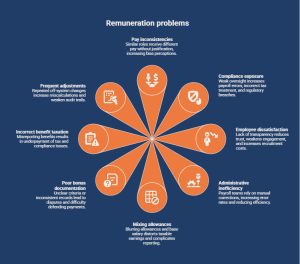
When remuneration lacks structure, issues rarely appear all at once. They develop gradually, beginning with small inconsistencies and expanding into broader operational, financial, and legal risks. Without defined frameworks, pay decisions become harder to justify, track, and defend.
Common problems include:
- Pay inconsistencies and internal inequality: Similar roles may receive different levels of pay without clear justification, increasing perceptions of bias and undermining pay equity.
- Compliance exposure and legal risk: Weak oversight increases the likelihood of payroll errors, incorrect tax treatment, and regulatory breaches, which can lead to penalties or disputes.
- Employee dissatisfaction and higher turnover: Lack of transparency around pay decisions reduces trust, weakens engagement, and increases recruitment and retention costs.
- Administrative inefficiency and payroll strain: Payroll teams may rely on manual corrections, one-off adjustments, and exception handling, increasing error rates and reducing operational efficiency.
- Mixing allowances with base salary: Blurring the distinction between structured allowances and core pay can distort taxable earnings, complicate reporting, and create confusion during audits or pay reviews.
- Poor bonus documentation: Unclear incentive criteria or inconsistent records can lead to disputes, mistrust, and difficulty defending payment decisions.
- Incorrect benefit taxation: Misreporting benefits such as healthcare or pension contributions can result in underpayment of tax, compliance issues, and reputational risk.
- Frequent manual payroll adjustments: Repeated off-system changes increase the chance of miscalculations and weaken audit trails, making compliance monitoring more difficult.
Without structured remuneration management, challenges spread across people, processes, and compliance. What begins as informal flexibility often ends in reduced trust, higher costs, and avoidable risk, making clear frameworks and reliable payroll administration essential for organisational stability.
How do Direct Payroll Services Help Employers Administer Employee Remuneration Accurately?
Designing a remuneration structure is only half the task. The real challenge is executing it accurately every pay cycle. As pay elements grow more varied, administration becomes more complex, and risk increases.
Direct Payroll Services help UK employers manage employee remuneration in a structured, controlled way. Their payroll support ensures:
- Accurate processing of salaries, bonuses, overtime, allowances, and deductions
- Correct tax and National Insurance treatment of remuneration and benefits
- Consistent, on-time payroll cycles employees can rely on
- Clear reporting for finance and HR oversight
- Compliance-aligned payroll administration that reduces risk
This turns complex remuneration structures into reliable, well-managed payroll operations, giving employers greater confidence, control, and clarity.
Review your current payroll setup and check whether it truly supports the full structure of your employee remuneration. Speak with Direct Payroll Services to simplify administration, strengthen compliance, and ensure every pay element is handled with confidence.
Final Thoughts
Understanding employee remuneration is essential for building a fair and sustainable workplace. It extends beyond salaries and bonuses to include benefits, statutory payments, and structured incentives that influence motivation and retention. A clear remuneration policy supports transparency, consistency, and compliance, helping employers make confident pay decisions.
When remuneration aligns with performance, responsibility, and market standards, organisations strengthen engagement, improve trust, and create a more stable foundation for long-term business growth and workforce satisfaction.
Frequently Asked Questions
What is the difference between employee remuneration and salary?
Employee remuneration refers to the total value an employee receives for their work, including salary, bonuses, allowances, and benefits. Salary is only the fixed base pay. Remuneration provides a broader picture of the full reward package and employment value.
What types of benefits are typically included in a remuneration package?
A remuneration package often includes benefits such as pension contributions, health insurance, paid leave, life cover, and wellbeing support. Some employers also offer flexible working, professional development funding, or travel allowances, which enhance the overall value beyond direct financial pay.
How do employers determine fair remuneration for staff?
Employers determine fair remuneration by combining market benchmarking, internal role evaluation, and individual performance assessment, considering factors such as length of service. This structured approach ensures pay remains competitive externally while maintaining fairness and consistency between roles of similar responsibility within the organisation.
Why is fair employee remuneration important for business success?
Fair employee remuneration supports motivation, engagement, and retention for job seekers. When employees believe pay decisions are reasonable and transparent, trust increases. This reduces turnover, strengthens productivity, and helps businesses attract skilled talent in competitive labour markets.
What is the maximum limit of remuneration?
There is generally no fixed legal maximum for employee remuneration in the UK; however, pay must comply with employment laws, tax rules, and reporting obligations as outlined in an employment contract. Executive remuneration in listed organisations may face additional governance and shareholder scrutiny.
How are employee wages linked to the revenue they generate?
Direct links between wages and revenue are common in sales roles through commission structures. In other roles, value is less directly measurable, so pay reflects responsibility, skill, and contribution rather than a strict revenue percentage, ensuring compliance with conditions of employment.
How does equal remuneration legislation work?
Equal remuneration laws require employers in the UK to provide fair pay for work of equal value, regardless of gender. Employers must assess roles objectively and ensure remuneration decisions are based on job content, responsibility, and performance, not discriminatory factors.
What is salary compression, and how does it relate to employee remuneration?
Salary compression occurs when pay differences between junior and experienced employees narrow, often due to market hiring pressures. This can affect morale and expectations about progression, making structured remuneration policies important for HR leaders in maintaining clear, logical pay differentiation.