
Key Highlights
- Franchise payroll is a specialised service designed to manage employee payments, tax deductions, and compliance across businesses operating multiple franchise locations.
- A franchise payroll system centralises payroll data, helping franchise owners maintain consistent payroll processes across different sites and employee structures.
- Franchise networks often face payroll challenges such as varying pay schedules, high employee turnover, and managing payroll across multiple locations.
- Outsourcing payroll to experienced providers like Direct Payroll Services can reduce administrative workload while ensuring payroll accuracy and HMRC compliance.
- Centralised payroll systems simplify tax calculations, payslip generation, pension contributions, and payroll reporting across the entire franchise network.
- Scalable payroll solutions support growing franchise businesses by maintaining consistent payroll management as new locations and employees are added.
Running a franchise is an exciting way to grow a business, but managing payroll across multiple locations can quickly become challenging. Each franchise site may have different employees, pay structures, schedules, and staffing changes. Without the right payroll system in place, owners often spend valuable time dealing with payroll calculations, tax deductions, and compliance tasks instead of focusing on running and expanding the business.
Franchise payroll management requires more coordination than traditional payroll. Maintaining consistent payroll policies, handling different staff roles, and ensuring accurate HMRC reporting across locations can create administrative pressure for both franchise owners and franchisors.
This is where franchise payroll solutions become essential. A structured franchise payroll service helps streamline payroll processing, maintain compliance, and ensure employees across all locations are paid accurately and on time. In this guide, we will explain how franchise payroll works, the challenges franchise businesses face, and how payroll services can simplify payroll management for growing franchise networks.
What Is Franchise Payroll?
Franchise payroll refers to the payroll management systems and processes used to pay employees across a franchise network that may operate multiple locations under the same brand.
Unlike a single-location business, franchise payroll must support payroll operations for several sites while maintaining consistency in wage calculations, tax reporting, and payroll policies.
A structured franchise payroll service allows each franchise location to submit employee data, while payroll processing, compliance checks, and reporting are handled centrally.
This approach helps franchise businesses maintain payroll accuracy, meet HMRC obligations, and ensure employees across locations are paid correctly and on time. Many growing franchise networks partner with specialist payroll providers to ensure consistent payroll governance across locations.
How Franchise Payroll Differs From Traditional Payroll Systems?
Traditional payroll systems are typically designed for businesses operating from a single location or with a unified workforce structure.
Franchise payroll, however, must accommodate decentralised operations while maintaining central control.
Key differences include:
| Traditional Payroll | Franchise Payroll |
|---|---|
|
Designed for a single business entity |
Supports multiple franchise locations |
|
Uniform workforce structure |
Multiple staff roles across locations |
| Simple reporting requirements |
Multi-location payroll reporting |
| Central employee database |
Location-based payroll inputs |
| Limited scalability |
Built to scale with franchise growth |
Because franchise networks often expand over time, payroll systems must also support scalability and standardisation across multiple franchise sites.
In practice, franchise payroll provides the structure needed to manage payroll consistently across locations while maintaining operational flexibility for individual franchise outlets.
Why Is Payroll Management More Complex for Franchise Businesses?
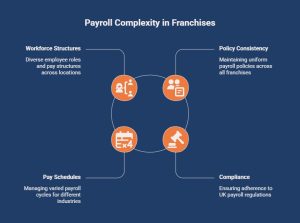
Franchise businesses often operate through multiple independently managed locations. While the brand remains consistent, payroll processes must accommodate different staff structures, pay schedules, and compliance requirements. This decentralised structure makes payroll coordination significantly more complex than in single-location businesses.
1. Multiple Franchise Locations and Workforce Structures
Franchise networks typically operate across several locations, each employing staff based on local operational needs. Workforce structures often differ between sites depending on business size, customer demand, and operating hours.
Common roles across franchise locations include:
• Full-time employees handling daily operations
• Part-time staff working flexible shifts
• Seasonal employees during peak periods
• Hourly wage workers in operational roles
• Managerial staff responsible for site performance
Each role may involve different wage structures, overtime rules, and tax treatments. As franchise networks grow, payroll data must be accurately consolidated across locations to ensure employees are paid correctly and consistently.
Many organisations exploring payroll franchise opportunities or working with payroll franchise companies recognise that managing these varied workforce structures requires structured payroll systems and clear reporting processes.
2. Maintaining Consistent Payroll Policies Across Franchises
Although franchisees manage their own teams, maintaining consistent payroll policies across locations is essential for brand stability and compliance.
Standard payroll policies often include:
• Overtime calculations
• Holiday pay rules
• Pension auto-enrolment contributions
• Payroll reporting standards
Without a coordinated payroll structure, different locations may interpret these policies differently. Over time, inconsistencies can create employee disputes and compliance risks.
For businesses evaluating the best payroll franchises or comparing the best payroll franchise UK providers, consistent payroll policies are often a key feature offered through centralised payroll platforms and specialist payroll support.
3. Handling Different Pay Schedules and Staff Roles
Franchise businesses frequently operate with varied payroll cycles depending on the industry and staffing model.
For example:
• Hospitality franchises may run weekly payroll cycles
• Retail franchises may process payroll biweekly
• Office-based teams may receive monthly salaries
Managing these different schedules across multiple locations requires reliable payroll coordination. Businesses exploring payroll service franchise opportunities often prioritise payroll systems that can handle multiple pay frequencies while maintaining accurate reporting and tax calculations.
4. Compliance Responsibilities Across All Locations
Payroll compliance remains a critical responsibility for every franchise location. Businesses must ensure that payroll operations follow current UK regulations.
Key compliance obligations include:
• PAYE tax calculations
• National Insurance contributions
• Pension auto-enrolment requirements
• Real Time Information submissions to HMRC
• Accurate employee payslips
Even when franchise owners manage their own staff, franchisors often require oversight to ensure payroll standards are maintained across the entire network. Consistent compliance becomes particularly important as franchise businesses expand and add new locations.
Learn how HMRC payroll regulations affect tax reporting, employee payments, and compliance for UK businesses.
Explore this guide to understand key HMRC payroll responsibilities and reporting requirements.
How Does Franchise Payroll Work Across Multiple Locations?
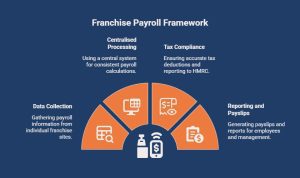
Franchise payroll across multiple locations requires a structured process that balances local workforce management with central oversight. Each franchise site contributes payroll data, while a central system ensures accurate calculations, tax compliance, and consistent payroll procedures across the entire network.
1. Collecting Payroll Data From Franchise Locations
Payroll processing begins at the individual franchise location. Each site records workforce activity during the pay period and prepares the payroll information required for processing.
Typical payroll inputs include:
• hours worked and shift schedules
• overtime payments
• bonuses or commissions
• new hires or employee departures
• holiday pay or sick leave
Once compiled, this information is submitted to the central payroll system or shared with the payroll provider responsible for managing payroll across the franchise network.
2. Centralised Payroll Processing Systems
After payroll data is collected, processing takes place through a central payroll platform or outsourced payroll provider. This approach ensures that payroll calculations follow consistent rules across all franchise locations.
Centralised payroll processing allows franchisors and franchise owners to:
• maintain consistent payroll policies across locations
• standardise deductions and wage calculations
• monitor payroll costs across franchise sites
• reduce discrepancies between local payroll processes
By processing payroll centrally, businesses can maintain better control over payroll accuracy while supporting multiple locations.
3. Tax Calculations and HMRC Reporting
Payroll systems automatically apply statutory deductions based on current UK payroll regulations. These automated calculations ensure that employees are taxed correctly and that franchise businesses remain compliant.
Common deductions processed during payroll include:
• PAYE income tax
• National Insurance contributions
• workplace pension contributions
Once payroll is finalised, payroll data is submitted to HMRC through Real Time Information (RTI) reporting, ensuring that each payroll cycle complies with UK payroll reporting requirements.
4. Payslip Generation and Payroll Reporting
Once payroll processing and tax submissions are completed, employees receive payslips detailing their earnings, deductions, and net pay. These payslips provide transparency into how wages are calculated.
In addition to employee payslips, payroll systems generate reports that help franchise businesses monitor workforce costs, including:
• total payroll expenses
• employee costs by location
• tax liabilities and deductions
• workforce and staffing trends
These reports provide valuable insights that help franchise owners and franchisors manage labour costs more effectively.
Managing payroll for recruitment agencies involves unique challenges like contractor payments, compliance checks, and rapid workforce changes. Explore this ultimate guide to payroll services for recruitment agencies to understand how specialised payroll support simplifies operations.
What Are the Benefits of Using a Franchise Payroll Service?
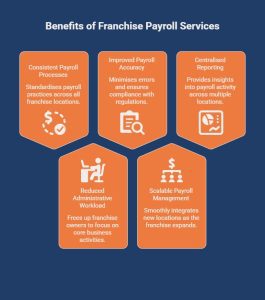
Managing payroll across multiple franchise locations can quickly become complex without the right systems in place. A dedicated franchise payroll service helps standardise payroll processes, improve compliance, and reduce administrative workload while giving franchise owners better visibility into payroll operations.
1. Consistent Payroll Processes Across Franchise Networks
One of the main advantages of a franchise payroll service is the ability to maintain consistent payroll practices across the entire network.
A structured payroll system ensures that all franchise locations follow the same payroll framework, including wage calculations, deductions, and reporting standards.
This consistency helps:
• maintain uniform payroll procedures
• prevent discrepancies between franchise sites
• ensure employees receive accurate payslips
• protect operational standards across the brand
A consistent payroll structure also strengthens trust among employees working across different franchise locations.
2. Reduced Administrative Workload for Franchise Owners
Payroll administration involves several detailed tasks such as calculating wages, processing deductions, preparing payslips, and submitting reports to HMRC. Managing these responsibilities internally can consume significant time.
Outsourcing payroll allows franchise owners to redirect their focus toward core business activities such as:
• improving customer service
• managing employees and operations
• expanding franchise locations
By reducing administrative tasks, franchise owners can concentrate on running and growing their businesses.
3. Improved Payroll Accuracy and Compliance
Payroll errors can lead to compliance risks and employee dissatisfaction. A professional franchise payroll service helps minimise these issues by applying standardised payroll calculations and regulatory updates.
Specialist payroll providers ensure:
• accurate tax and deduction calculations
• correct pension contributions
• timely HMRC reporting
• compliance with UK payroll regulations
Maintaining accurate payroll processes protects franchise businesses from regulatory penalties and improves payroll reliability.
4. Scalable Payroll Management for Growing Franchises
Franchise businesses often expand by opening new locations. As the network grows, the number of employees, payroll cycles, and reporting requirements also increases.
A scalable payroll system allows new locations to be integrated smoothly into the existing payroll framework without increasing complexity. This ensures that payroll operations remain efficient as the franchise network continues to expand.
5. Centralised Reporting for Franchise Operations
Franchise payroll services often provide central dashboards that allow franchisors and franchise owners to monitor payroll activity across multiple locations.
These reporting tools help businesses track:
• labour costs across franchise sites
• workforce size and staffing patterns
• payroll compliance status
• payroll spending trends
Access to these insights helps leadership teams make better operational and financial decisions across the franchise network.
Worried about a potential HMRC review? Discover the common reasons HMRC audits self-assessments and learn how businesses and individuals can reduce risks and stay compliant with tax regulations.
What Payroll Challenges Do Franchise Businesses Commonly Face?
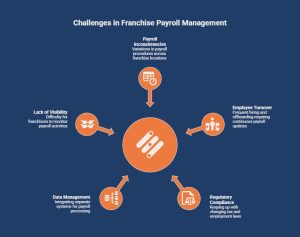
Even with payroll systems in place, franchise businesses often face operational challenges due to decentralised teams and varying workforce structures. Understanding these common payroll difficulties helps franchisors and franchise owners identify gaps and implement more efficient payroll management strategies.
1. Payroll Inconsistencies Between Franchise Locations
When franchise locations manage payroll independently, procedures may vary between sites. Differences in overtime calculations, wage structures, or payroll reporting can lead to inconsistencies.
Without standardised payroll processes, these variations can create confusion for employees and make financial reporting more difficult for the franchise network.
2. Managing Employee Turnover Across Sites
Franchise industries such as retail, hospitality, and food services often experience high employee turnover. Frequent hiring, onboarding, and offboarding require continuous payroll updates.
Payroll systems must regularly accommodate:
• new employee registrations
• employee departures and final pay calculations
• changes to working hours or job roles
Managing these updates across multiple locations can become complex without efficient payroll systems.
3. Keeping Up With Payroll Compliance Regulations
Payroll regulations in the UK change periodically, requiring businesses to stay updated on tax rules and employment legislation.
Important compliance areas include:
• PAYE tax thresholds
• National Insurance requirements
• workplace pension contributions
• statutory pay obligations
Franchise networks must ensure that regulatory updates are applied consistently across every location to maintain compliance.
4. Managing Payroll Data Across Multiple Systems
Many franchise businesses use separate tools for scheduling, HR records, and payroll processing. When these systems do not integrate, payroll teams often need to transfer information manually.
Manual data handling can lead to:
• increased risk of payroll errors
• delayed payroll processing
• inconsistent employee records
Integrated payroll systems or outsourced payroll providers help streamline these processes by centralising payroll data and automating calculations.
5. Lack of Payroll Visibility for Franchisors
In many franchise networks, individual locations manage their own payroll processes. While this allows operational flexibility, it can make it difficult for franchisors to maintain clear oversight of payroll activities across the network.
Without centralised payroll reporting, franchisors may struggle to monitor payroll costs, identify inconsistencies, or verify compliance across different franchise sites.
Limited visibility can also make it harder to analyse workforce expenses, compare payroll performance between locations, or identify operational inefficiencies.
Implementing centralised payroll systems or working with specialist payroll providers helps franchisors gain clearer oversight through consolidated reporting, standardised payroll processes, and improved data transparency across the entire franchise network.
Need Smarter Franchise Payroll Support? Discover Direct Payroll Services
Managing payroll across multiple franchise locations can quickly become complex. Direct Payroll Services helps simplify payroll management by providing reliable, fully managed payroll solutions tailored for growing businesses and franchise networks.
Based in London, Direct Payroll Services supports businesses with accurate payroll processing, HMRC reporting, payslip generation, and pension compliance. Their streamlined payroll approach ensures employees across all locations are paid correctly and on time.
By centralising payroll processes, franchise owners can reduce administrative workload while maintaining consistent payroll standards across every site.
Contact Direct Payroll Services today and discover a smarter, simpler way to manage franchise payroll.
Final Thoughts
Managing payroll across multiple franchise locations requires strong coordination, clear processes, and consistent compliance with UK payroll regulations. A structured franchise payroll approach helps centralise payroll data, standardise calculations, and ensure employees across all locations are paid accurately and on time.
By simplifying tax reporting, payslip generation, and payroll monitoring, franchise businesses can reduce administrative pressure and minimise errors. With efficient payroll systems in place, franchise owners and franchisors can focus more on operations, workforce management, and expanding their franchise network with confidence.
Frequently Asked Questions
What is the typical payroll franchise UK cost for new owners?
The payroll franchise UK cost varies depending on the brand, training support, and software provided. Initial investment usually includes franchise fees, technology setup, and working capital. Ongoing costs may involve royalties or service fees based on revenue generated.
Can I run a payroll franchise business remotely in the UK?
Yes, many payroll franchise businesses can be operated remotely using cloud-based payroll software. Franchise owners can manage payroll processing, reporting, and client communication from a home office while maintaining secure access to payroll systems and data.
What software do top payroll franchises use for processing payroll?
Top payroll franchises typically use professional cloud-based payroll platforms that support PAYE calculations, HMRC reporting, and employee record management. These systems often integrate with accounting and HR tools to streamline payroll processing and reporting.
Who is the largest payroll provider?
Several global companies provide payroll services at scale, serving thousands of businesses across different industries. The largest payroll providers are usually those offering comprehensive payroll software, compliance management, and workforce reporting for organisations of all sizes.
Do franchise owners set employee wages?
In most franchise businesses, the franchise owner is responsible for setting employee wages. However, wages must comply with national minimum wage regulations and employment laws. Some franchise systems may also provide guidance to maintain consistency across locations.
How can franchise businesses manage payroll across multiple locations?
Franchise businesses typically manage payroll across multiple locations using centralised payroll systems or outsourced payroll providers. This approach helps standardise wage calculations, automate tax submissions, and maintain consistent payroll reporting across the franchise network.
What should franchise networks look for in a payroll provider?
Franchise networks should look for payroll providers that support multi-location payroll processing, HMRC compliance, automated reporting, and scalable payroll systems. Reliable payroll providers help ensure consistent payroll management as franchise businesses grow.