|
TL;DR
|
|---|
The Construction Industry Scheme (CIS) is HMRC’s set of rules that requires contractors to deduct tax from payments to subcontractors before handing over their pay. If you hire subcontractors for tasks like building, repairs, plumbing, or electrical work or if your business spends over £3 million a year on construction, you are legally required to register as a contractor before making any payments. Subcontractors can also register voluntarily, which reduces their tax deductions from 30% to 20%. This guide will help you understand who must register, what documents you’ll need, and the steps to stay penalty-free and compliant with HMRC’s CIS rules.
How Do I Know If I Need to Register for CIS as a Contractor?

Suppose you pay subcontractors for construction work, or your business spends over £3 million on construction within any 12 months. In that case, you are legally required to register as a contractor under the Construction Industry Scheme (CIS) before making any payments. Failing to do so can lead to penalties from HMRC, and you cannot properly deduct and process tax without registration.
To check if you need to register, ask yourself: Do I regularly hire others for building, repairs, electrical, or plumbing work? If yes, HMRC considers you a contractor and registration is mandatory. If you act as both contractor and subcontractor, you must register for both roles to comply with CIS rules
Key CIS Registration Points
Want to stay stress-free and HMRC-compliant in the construction sector? These essential rules make sure you’re set up for success from day one:
- Contractors are required by law to register when hiring people for construction work.
- Any business spending over £3 million a year on construction must register, even if construction isn’t their primary activity.
- Registration is designed to ensure proper tax deductions and prevent tax evasion.
- Subcontractor registration is optional; however, it reduces the deduction from 30% (for unregistered subcontractors) to 20% (for registered subcontractors).
- Registering helps both contractors and subcontractors stay HMRC-compliant and avoid penalties.
- Non-registration can lead to fines, penalties, and changes to your tax classification.
Understanding these registration requirements is crucial for maintaining compliance and protecting your business from costly HMRC consequences
What Documents Do I Need for CIS Registration?

To successfully sign up for the Construction Industry Scheme (CIS), it’s important to have the right paperwork in order. HMRC requires contractors and subcontractors to provide accurate, up-to-date information before they can complete registration. Missing any key document can delay your application and create compliance headaches later.
Having the following documents ready will help make the registration process quick and hassle-free:
- Unique Taxpayer Reference (UTR)
- National Insurance Number
- Legal Business Name and Trading Name
- Full Business Address- PAYE Reference Number
- Proof of ID (for individuals)
- Business Registration Number (if applicable)
Tip: Double-check all your details before submitting. Any missing or incorrect information—especially your UTR, National Insurance number, or business name—can slow down your CIS registration and disrupt tax deduction compliance with HMRC.
Staying organised with these documents ensures your CIS registration goes smoothly and helps you avoid unnecessary delays or compliance issues.
How to Register for CIS as a Contractor: Step-by-Step Process
Getting set up for the Construction Industry Scheme (CIS) as a contractor is essential before you pay any subcontractors. Below, you’ll find a clear step-by-step registration process, so you can tackle compliance with confidence.
Step 1: Register as an Employer with HMRC
- Go to the HMRC website and set up as a new employer.
- This creates your PAYE (Pay As You Earn) scheme needed for CIS deductions.
- You’ll receive a PAYE reference number by post
When you finish the registration process this way, you set yourself up for an easy CIS registration.
Step 2: Register For CIS Online
- Log in or create a Government Gateway account.
- Select “Register for CIS as a Contractor.”
- Enter your business details: trading name, address, Unique Taxpayer Reference (UTR), National Insurance number (if sole trader), PAYE reference, and company registration number (if limited company)
When you send everything in, wait for their response. This last step is where you finish activation of your registration.
Step 3: Await HMRC Confirmation
- Submit your details online.
- HMRC will process your CIS registration and send confirmation, usually within 10 business days.
Tip: Before paying subcontractors, confirm your registration is active. Double-check all your information (especially your UTR, PAYE, and business details) to avoid delays.
Once your account is active, you must keep up with ongoing responsibilities.
What Pitfalls Should You Avoid When Registering for CIS?
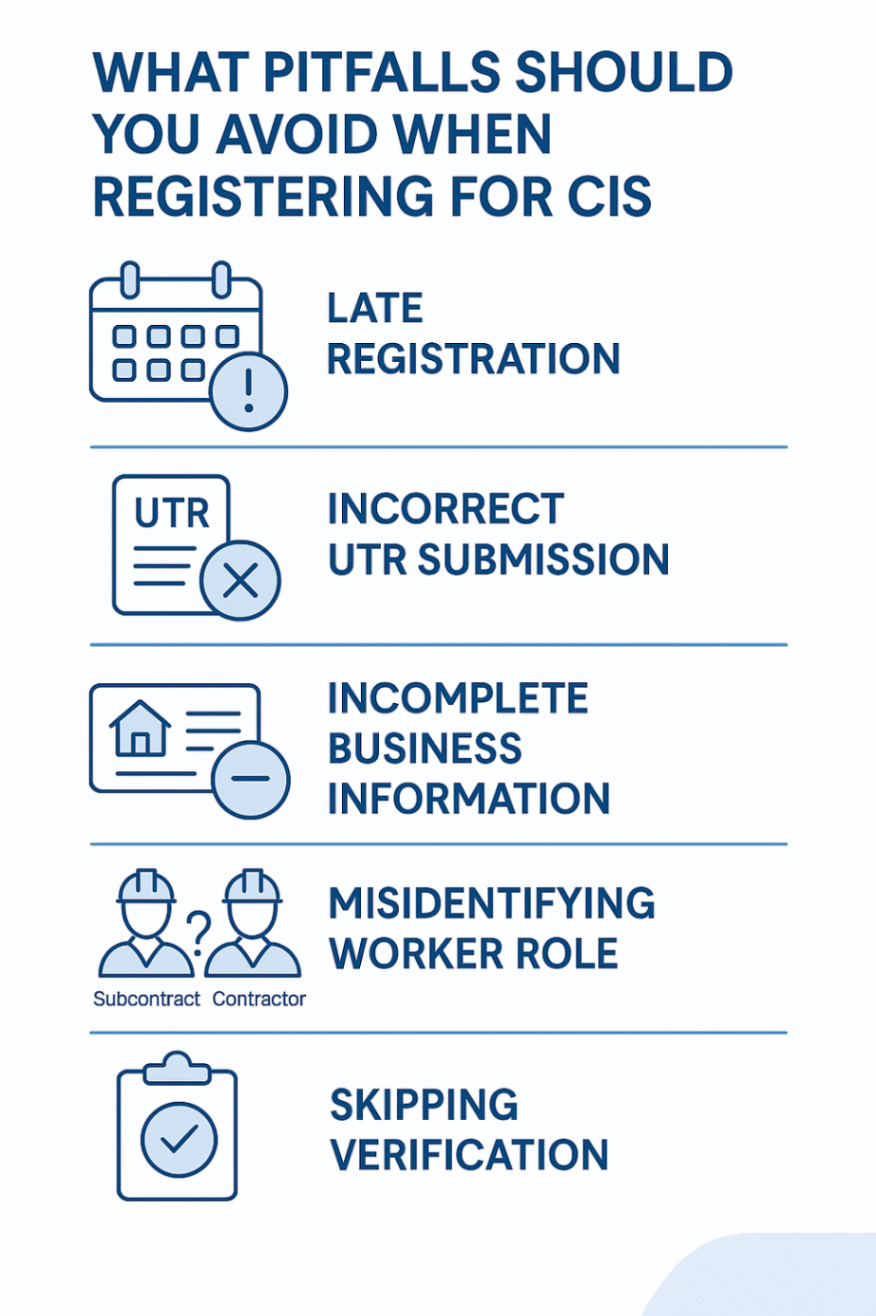
Mistakes during CIS registration can give you problems. Try to dodge these common errors:
- Late Registration: Be sure to register on time to avoid penalties from HMRC.
- Incorrect UTR Submission: Make sure your taxpayer reference (UTR) is correct before you submit it.
- Incomplete Business Information: Verify that the names and addresses in your registration contain all the necessary details. Missing info can slow the CIS registration process.
- Misidentifying Worker Role: Know if you are signing up as a subcontractor or a contractor.
- Skipping Verification: Always verify the subcontractor’s status before starting.
If you prepare early, you can avoid compliance problems with HMRC. Now, let’s look at the step-by-step registration process for CIS registration.
What Are My Responsibilities After CIS Registration?
Compliance does not end right after CIS registration. Staying compliant with CIS is crucial for every contractor. Here’s what you need to do after registering:
- Submit monthly CIS returns to HMRC showing all subcontractor payments and tax deductions.
- Verify each subcontractor’s CIS status before making any payments.
- Deduct 20% tax for registered subcontractors and 30% for unregistered ones.
- Ensure all details are accurate to avoid fines and compliance issues.
- Stay consistent with these tasks to demonstrate ongoing compliance and avoid penalties from HMRC.
Sticking to these responsibilities will keep your business on the right side of HMRC and help you work smoothly in the construction sector. Now, let’s examine the costs associated with non-compliance.
What Are the Costs and Penalties of CIS Non-Compliance?
Not following CIS rules can result in significant financial losses and legal issues. The fees you might have to pay depend on what mistake you make. Here is a table that shows what each mistake can cost:
| Breach Type | Penalty Details |
|---|---|
| Late Monthly Return | £100 first penalty. The amount goes up if you still do not send it after a while. |
| Incorrect or Missing Data | You must pay at least £300, or 5% of the tax, if you do not provide full details. |
| Failure to Verify Subcontractors | Failing to check subcontractor status can result in a £3,000 penalty. |
You also have to pay interest on late payments to HMRC. To avoid hefty fines, contractors should follow all CIS rules, particularly those related to registration and deadlines. Next, let’s see what common mistakes to avoid during the registration process.
What Common CIS Registration Mistakes Should I Avoid?
CIS registration errors can cause significant trouble and result in fines. You need to avoid these problems:
- Unregistered Subcontractor Engagements: Always ensure the subcontractor’s CIS registration and CIS compliance are in place before making any payments.
- Missing Monthly CIS Return Deadlines: Submit all forms on time to prevent fines from accumulating.
- Incomplete Documentation: Give the correct UTR and national insurance information every time.
- Skipping Tax Deductions: Ensure the proper tax deductions are made to avoid delays in subcontractor payroll.
If you avoid these mistakes, you are less likely to encounter problems with CIS compliance and registration.
How Can Direct Payroll Help with CIS Registration and Compliance?
At Direct Payroll Services, we make CIS compliance easy. We speak to HMRC on your behalf and handle your CIS registration from start to finish. Construction businesses rely on our payroll and online services to manage monthly CIS returns, ensuring all compliance needs are consistently met. We also manage subcontractor checks and handle payments, so you stay on top of every requirement.
Our online platform streamlines the registration process, taking care of all tricky CIS rules for you. By partnering with us, you can focus on your projects while we handle the legal and administrative work to keep you compliant.
Ready to simplify CIS and free up your time? Get started with Direct Payroll Services for smooth, stress-free CIS compliance. Start your journey with us today!
Make CIS Compliance Simple & Get Started Now
Staying compliant with CIS is vital for any construction business, and the right support makes all the difference. Direct Payroll Services takes the hassle out of CIS registration and ongoing compliance, so you can avoid penalties and focus on growing your business. Let our experts handle the paperwork while you concentrate on your projects. Get in touch with Direct Payroll today for a smooth, secure CIS journey.
Frequently Asked Questions
Do I need a Unique Taxpayer Reference (UTR) to Register For CIS?
Yes, you need to have a Unique Taxpayer Reference (UTR) to sign up for the Construction Industry Scheme (CIS). This UTR helps HMRC find your tax records. It also makes sure your payments in the construction industry are dealt with in the right way. If you do not have a UTR, you cannot finish your CIS registration.
How long does CIS contractor registration take?
Usually, CIS contractor registration takes around 10 business days after you send all details online to HMRC. Make sure you give all the needed information right away to stop any hold-ups in the process.
What happens if I do not register for CIS as a contractor?
If you skip CIS registration, you risk fines ranging from £100 to £3,000, plus higher tax deductions. This system ensures proper tax compliance and fights tax evasion in construction. Registering keeps your business legal, helps you avoid costly penalties, and ensures you pay the correct amount of tax.
Can I use an accountant to handle my CIS Registration?
Yes, accountants can help you make CIS registration easier by using HMRC’s online service. They are there to enter correct information, handle deductions, and check if you follow all rules. You have less of a chance of making mistakes when you do your registration with them.
How to De-register for CIS?
To de-register for CIS, you must contact HMRC directly by phone or in writing and request to be removed from the scheme. There is no direct de-registration option available through your Government Gateway account.