Key Highlights
- UK employers outsource payroll to manage compliance, HMRC deadlines, and complex payroll tasks.
- Payroll outsourcing covers payslips, tax deductions, RTI submissions, and year-end reporting.
- Many SMEs outsource payroll to reduce workload, improve accuracy, and lower compliance risks.
- Benefits include payroll expertise, compliance support, workforce flexibility, and reduced administrative burden.
- Outsourcing costs vary by employee count, pay frequency, and payroll complexity.
- Successful transitions require planning, provider checks, and secure onboarding processes.
- Businesses must still oversee payroll and provide accurate employee information.
According to Albert Goodman, the rate of Employers’ National Insurance contributions increased by 1.2 percentage points to 15% from April 2025, adding to payroll costs for many businesses. Even a small payroll error can lead to penalties, employee disputes, and time-consuming corrections.
Yet many businesses still rely on overstretched HR teams, outdated spreadsheets, or payroll software their staff were never properly trained to use. The result is a function that consumes disproportionate time and carries unnecessary compliance exposure.
That is why more UK employers are looking at how to outsource payroll to specialist providers who manage the entire process accurately, compliantly, and on time.
This guide explains how payroll outsourcing works, its costs, and the steps to switch smoothly while staying compliant.
How Does Payroll Outsourcing Work?
When a business outsources payroll, it appoints a specialist third-party provider to manage the end-to-end process of paying its employees. Rather than processing payroll internally, the employer provides relevant data to their provider, who then handles all calculations, deductions, and reporting requirements.
Understanding how the process works can help you choose the right provider and avoid disruptions during the transition.
Here is how payroll outsourcing typically works:
- Your business submits payroll information before each pay run, including employee hours, new starters, leavers, bonuses, and salary changes.
- The payroll provider calculates gross pay, tax, National Insurance, pension contributions, and other deductions.
- Payslips are generated and shared with employees digitally or in print.
- The payroll provider submits Real Time Information (RTI) reports to HMRC on your behalf.
- Statutory payments such as Statutory Sick Pay (SSP), Statutory Maternity Pay (SMP), and Statutory Paternity Pay (SPP) are calculated and processed for eligible workers.
- Year-end tasks, including the production of P60s and P11Ds, are completed in line with HMRC deadlines
Employers retain oversight of their workforce and remain accountable for the accuracy of the data they submit. The provider is responsible for applying that data correctly and ensuring all payroll outputs meet current legislative requirements.
Who Remains Responsible for Payroll Compliance?
This is one of the most important questions any business should ask before outsourcing payroll and one that is frequently misunderstood.
Outsourcing payroll does not transfer legal compliance responsibilities to your provider. Employers remain legally accountable to HMRC for payroll accuracy at all times. Even if a provider submits incorrect data, the employer still holds ultimate responsibility in HMRC’s view.
In practice, this means:
- You are responsible for: supplying accurate, complete, and timely payroll data to your provider before every pay run.
- Your provider is responsible for: processing that data correctly, applying current legislation, submitting RTI reports to HMRC, and ensuring all payroll outputs are accurate and compliant.
- Shared responsibility: any errors resulting from miscommunication or incomplete data sit with both parties, which is why a clear, documented onboarding process and ongoing communication with your provider matter enormously.
What Percentage of Companies Outsource Payroll?
According to Tandium, an estimated 40–50% of businesses, especially small and medium-sized businesses, outsource payroll either fully or partially. Many employers choose payroll outsourcing to reduce administrative pressure, improve payroll accuracy, and stay compliant with HMRC regulations. As payroll requirements become more complex, outsourcing has become a practical solution for businesses that want to save time, minimise errors, and focus more on day-to-day operations and business growth.
What Are the Main Benefits of Outsourcing Payroll?
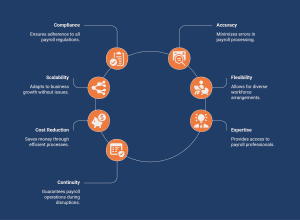
Employers across a range of industries choose to outsource payroll for several practical reasons. Whether a business is managing growth, reducing costs, or responding to the complexity of flexible staffing, outsourcing the payroll process offers clear and measurable advantages
1. Compliance You Can Count On
Payroll legislation changes regularly in the UK, covering tax thresholds, National Insurance rates, statutory payments, and employment law obligations. Keeping up with these updates can be time-consuming and challenging for internal teams.
Outsourced payroll providers continuously monitor HMRC regulations and legislative changes, helping businesses remain compliant while reducing the risk of penalties, inaccurate submissions, and costly compliance errors.
2. Greater Accuracy, Every Pay Run
Even small payroll mistakes can result in underpayments, overpayments, employee dissatisfaction, and potential HMRC penalties. Outsourced payroll providers use established systems and quality control processes to ensure calculations, deductions, and submissions are completed accurately. This helps employees receive the correct pay on time while giving employers greater confidence in every payroll cycle.
3. Scalability That Keeps Pace With Your Growth
As businesses grow, payroll becomes more complex. Additional employees, new locations, and evolving workforce structures can quickly increase administrative demands. Outsourced payroll services are designed to scale alongside your business, allowing you to manage growth without investing in additional payroll staff, software upgrades, or internal infrastructure.
4. Workforce Flexibility Without Added Complexity
Modern workforces often include contractors, agency workers, seasonal staff, and zero-hours employees, each with different payroll requirements. Managing these arrangements internally can be complicated and time-intensive. Payroll providers have the expertise and systems to handle varying pay rates, working patterns, and contract types while maintaining compliance across the entire workforce.
5. Cost Reduction That Goes Beyond the Invoice
The true cost of running payroll in-house extends far beyond software subscriptions. Businesses must also account for salaries, training, compliance management, system maintenance, and the cost of correcting errors. Outsourcing payroll can significantly reduce these overheads while providing access to specialist support, making it a cost-effective solution for many organisations.
6. Access to Expertise Without the Overhead
Payroll regulations are constantly evolving, requiring specialist knowledge and ongoing attention. By outsourcing payroll, businesses gain access to experienced payroll professionals who manage PAYE, RTI submissions, workplace pensions, statutory payments, and compliance requirements. This expertise is available without the expense of recruiting, training, and retaining an in-house payroll team.
7. Business Continuity, No Matter What
When payroll relies on a single employee or a small internal team, staff absences and turnover can create significant disruption. Outsourced payroll providers offer built-in continuity through dedicated teams and established processes. This ensures payroll remains accurate, compliant, and on schedule, even during periods of absence, employee changes, or unexpected business challenges.
Outsourced payroll gives businesses greater accuracy, stronger compliance support, operational flexibility, and access to specialist expertise while reducing internal administrative pressure and long-term payroll management costs.
How Much Does It Cost to Outsource Payroll?
The cost of outsourced payroll varies depending on workforce size, payroll complexity, pay frequency, and additional support services. Most UK payroll providers use a per-employee pricing model, allowing costs to scale alongside business growth.
Average Outsourced Payroll Costs in the UK
In the UK, outsourced payroll for SMEs typically costs around £4–£10 per employee per month for fully managed services. Lower-cost bureau or part-managed options may start from around £2–£5 per employee, depending on the service scope and provider pricing structure.
Typical examples include:
• 10 employees: around £40 – £100 per month
• 30 employees: around £120 – £300 per month
• 50 employees: around £200 – £500 per month
• 100 employees: around £400 – £1,000 per month
Typical Monthly Payroll Pricing by Business Size
• Micro businesses (1–10 employees): approximately £20 – £80 monthly
• Small businesses (11–50 employees): approximately £80 – £300 monthly
• Growing SMEs (51–100 employees): approximately £300 – £600 monthly
• Mid-sized businesses (101–250 employees): approximately £600 – £1,500 monthly
• Larger businesses (250+ employees): usually custom pricing
These figures vary between providers depending on payroll complexity and service requirements.
Factors That Affect Payroll Outsourcing Costs
Several factors influence outsourced payroll pricing:
• Employee numbers and workforce size
• Weekly, fortnightly, or monthly pay frequency
• Mixed workforce structures, including contractors or zero-hours staff
• Statutory payment processing such as SSP, SMP, or SPP
• Pension auto-enrolment administration requirements
• Additional reporting services, including CIS returns or P11D reporting
Payroll outsourcing costs depend on the level of support and payroll complexity, but many businesses find outsourcing more cost-effective than maintaining a fully in-house payroll function.
How to Outsource Payroll: A Step-by-Step Guide
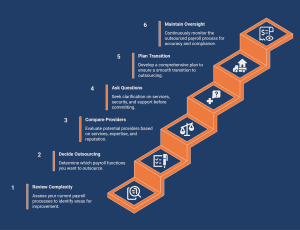
Outsourcing payroll works best when businesses focus on the right provider, clear responsibilities, and a smooth transition plan. Instead of comparing providers on price alone, employers should look closely at compliance support, communication standards, and service reliability.
Step 1: Review Your Payroll Complexity
Before comparing providers, take time to assess your current payroll requirements. Consider factors such as employee numbers, future growth plans, different contract types, pension obligations, statutory payments, and any recurring payroll issues you currently face. Understanding the complexity of your payroll will help you determine whether you need a basic payroll bureau service or a fully managed payroll solution with broader support.
Step 2: Decide What You Want to Outsource
Not every business requires the same level of payroll support. Some employers choose to outsource their entire payroll function, while others only need assistance with specific tasks such as payroll processing or HMRC reporting.
Clearly defining your requirements at the start helps narrow your options and ensures you compare providers offering the services you actually need. This may include payroll calculations, payslip generation, PAYE management, pension auto-enrolment, statutory payments, and year-end reporting.
Step 3: Compare Providers Beyond Pricing
Cheap payroll services are not always reliable. Focus on service quality, compliance knowledge, and communication standards. Payroll accuracy, compliance expertise, customer support, and service reliability often have a far greater impact on the value you receive.
When evaluating providers, focus on their experience, payroll knowledge, communication standards, security measures, and ability to support businesses similar to yours. Creating a shortlist of two or three providers usually makes it easier to compare service quality and overall value.
Step 4: Ask Practical Questions Before Signing
A provider’s sales proposal may look impressive, but the real value often becomes clear when you ask detailed questions about how the service operates day to day.
Find out who will manage your account, how payroll issues are resolved, how quickly urgent changes can be processed, and what level of support is available during HMRC enquiries. It is also worth understanding exactly what is included in the service and how easy it would be to switch providers in the future if needed.
Step 5: Plan the Transition Properly
Moving payroll to a new provider requires careful preparation. Most payroll errors occur during the transition phase when employee records, payroll history, and reporting information are transferred between systems.
To reduce risks, ensure payroll data is accurate and up to date before onboarding begins. Confirm implementation timelines, review employee pay information, and communicate any payroll changes to staff in advance. A structured onboarding process can help ensure a smooth and disruption-free transition.
Step 6: Maintain Ongoing Oversight
Although payroll processing may be outsourced, the employer remains responsible for providing accurate information and monitoring payroll performance. Regular oversight helps ensure the service continues to meet business requirements and compliance standards.
Review payroll reports routinely, submit employee changes promptly, and maintain open communication with your provider. Taking an active role in payroll oversight can help identify issues early and ensure payroll continues to run efficiently as your business evolves.
A successful payroll outsourcing depends less on finding the cheapest provider and more on choosing one that delivers reliable support, strong compliance standards, and consistent communication.
What Are the Risks of Outsourcing the Payroll Process?
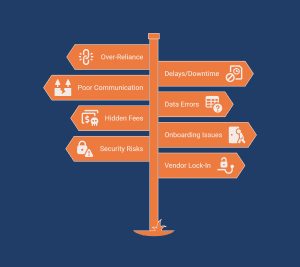
While outsourcing payroll delivers clear benefits, no business decision is without risk. Understanding what can go wrong and how to prevent it puts you in a far stronger position when choosing and managing a provider.
1. Over-Reliance on a Single Provider
When payroll is fully outsourced, businesses become dependent on their provider’s systems, processes, and performance. If the provider experiences service issues, staffing challenges, or operational disruptions, payroll delivery can be affected.
How to Reduce This Risk:
Review exit clauses and notice periods before signing any agreement, and ensure payroll data remains accessible at all times. Maintaining internal oversight and avoiding restrictive long-term contracts can also provide greater flexibility if a provider change becomes necessary.
2. Payroll Delays and Service Downtime
System outages, payroll processing delays, or inadequate provider resources can result in late payroll runs and delayed employee payments. This can negatively affect employee trust and create unnecessary administrative pressure.
How to Reduce This Risk:
Choose a provider with documented business continuity and disaster recovery plans. It is also important to establish clear payroll deadlines, turnaround times, and backup processing procedures before the service begins.
3. Poor Communication and Limited Visibility
Without clear communication, payroll issues can go unnoticed until payday. Delayed responses, limited reporting, or a lack of transparency may make it difficult to resolve problems quickly.
How to Reduce This Risk:
Request a dedicated payroll contact and agree on service response times from the outset. Regular payroll reporting and pre-processing reviews can also improve visibility and help identify issues before they affect employees.
4. Errors From Inaccurate Employee Data
Even the best payroll provider relies on accurate information from the employer. Incorrect employee details, missing updates, or delayed submissions can lead to payment errors and compliance issues.
How to Reduce This Risk:
Establish a clear internal process for submitting payroll information and assign responsibility for data accuracy. Reviewing employee records before each payroll cycle can help prevent avoidable mistakes.
5. Hidden Fees and Unexpected Charges
Some payroll providers charge additional fees for services such as year-end reporting, off-cycle payroll runs, pension administration, or employee onboarding. These costs may not be obvious during the initial discussions.
How to Reduce This Risk:
Request a fully itemised pricing structure before signing any contract. Comparing total annual costs rather than just monthly fees will provide a clearer understanding of the true cost of the service.
6. Onboarding and Transition Problems
Moving payroll to a new provider can create challenges if records are transferred incorrectly or implementation is poorly managed. This can lead to setup delays, missing data, and payroll inaccuracies.
How to Reduce This Risk:
Select a provider with a structured onboarding process and dedicated implementation support. Running parallel payroll testing before going live can help identify and resolve issues before employees are affected.
7. Data Security and GDPR Risks
Payroll outsourcing requires sharing sensitive employee and financial information with a third party. Weak security practices could increase the risk of data breaches, compliance failures, or reputational damage.
How to Reduce This Risk:
Work with providers that follow recognised security standards and GDPR requirements. Data processing agreements, clear breach management procedures, and robust security controls should all form part of the selection process.
8. Vendor Lock-In
Some providers make it difficult to switch services by limiting data access, applying excessive exit fees, or offering unclear migration processes. This can reduce flexibility if your business needs change.
How to Reduce This Risk:
Review data ownership, migration support, and exit terms carefully before committing. Choosing a provider that offers transparent offboarding processes and unrestricted access to payroll records can help avoid future complication
Most payroll outsourcing risks can be reduced by choosing a transparent provider, maintaining internal oversight, and setting clear expectations from the beginning.
Questions to Ask Before Choosing a Payroll Provider
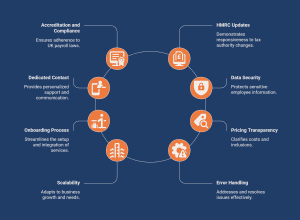
Choosing an outsourced payroll provider is an important decision that can impact compliance, payroll accuracy, and employee experience. Asking the right questions before signing a contract helps you assess provider reliability, understand service levels, and avoid unexpected costs or risks.
1. Are You Accredited and Compliant with UK Payroll Legislation?
Payroll compliance is one of the main reasons businesses choose to outsource. A provider should be able to demonstrate that they follow current UK payroll legislation and industry best practices.
Look for recognised accreditations such as the CIPP Payroll Assurance Scheme (PAS), which indicates a commitment to quality, accuracy, and compliance. A reputable provider should be able to explain:
- Which compliance standards and accreditations they hold
- How they ensure adherence to HMRC regulations
- How often compliance processes are reviewed
- What safeguards are in place to reduce payroll errors
Strong answers should give you confidence that compliance is embedded within their payroll processes rather than treated as an afterthought.
2. How Do You Keep Up with HMRC Changes and Legislative Updates?
Payroll regulations change frequently, and even minor updates can affect employee pay, tax deductions, and reporting requirements. Your provider should have a structured process for monitoring and implementing legislative changes.
Ask how they stay informed and how updates are applied to your payroll service. Key areas to discuss include:
- HMRC updates and payroll legislation monitoring
- National Insurance and tax threshold changes
- Statutory payment updates
- Software and system updates
A strong provider should be able to clearly explain how changes are implemented without disrupting your payroll operations.
3. Will I Have a Dedicated Point of Contact?
Payroll often requires quick answers to time-sensitive questions. Relying solely on a generic support desk can lead to delays and frustration, especially during busy payroll periods.
A dedicated payroll contact can provide continuity and a better understanding of your business requirements. Ask:
- Whether you will have a named payroll specialist
- Who handles cover during absences
- How payroll queries are escalated
- Typical response times for urgent issues
You should expect a clear support structure that gives you direct access to knowledgeable payroll professionals when needed.
4. How Secure Is My Employee Data?
Payroll contains highly sensitive employee and financial information. Any provider you choose should be able to demonstrate robust data protection measures and compliance with GDPR requirements.
When discussing security, ask about:
- ISO 27001 certification and other security standards
- Data encryption and secure file transfers
- GDPR compliance procedures
- Access controls and user permissions
- Data breach response processes
A trustworthy provider will be transparent about how employee information is stored, managed, and protected throughout the payroll process.
5. What Does Your Onboarding Process Look Like?
A smooth transition is critical when moving payroll to a new provider. Poor onboarding can lead to data inaccuracies, delayed payments, and unnecessary disruption for employees.
Ask for a detailed explanation of the implementation process, including:
- Project timelines and key milestones
- Data migration procedures
- Payroll testing and validation
- Employee and payroll record verification
- Training and support during transition
The best providers will offer a structured onboarding plan with dedicated support from start to finish.
6. What Is Included in Your Pricing and What Is Not?
Payroll pricing can vary significantly between providers, and some services may carry additional charges that are not immediately obvious. Understanding the full cost upfront helps avoid unexpected expenses later.
Ask providers to explain:
- What services are included in the quoted fee
- Charges for additional payroll runs
- Costs for year-end reporting and submissions
- Pension administration fees
- Setup, onboarding, or exit costs
Clear and transparent pricing is often a good indicator of a provider’s overall approach to customer service.
7. Can Your Service Scale as My Business Grows?
Your payroll requirements may change significantly as your business expands. A provider that works well today should also be capable of supporting future growth without requiring major process changes.
Discuss how the provider handles:
- Increasing employee numbers
- Multiple locations or business entities
- Different worker types and pay structures
- Additional reporting requirements
- Future service enhancements
A scalable payroll solution should grow alongside your business while maintaining efficiency and accuracy.
8. What Happens If Something Goes Wrong?
Even with strong systems and processes, payroll issues can occasionally occur. What matters is how quickly and effectively the provider responds when problems arise.
Ask about:
- Error correction procedures
- Service level agreements (SLAs)
- Payroll issue response times
- Escalation processes
- Business continuity and disaster recovery plans
A reliable provider should have clear procedures in place and be able to explain exactly how payroll issues are managed and resolved.
If a provider cannot answer these questions clearly and confidently, that tells you everything you need to know. The right outsourced payroll partner will have straightforward answers to every single one and Direct Payroll Services is no exception.
How Direct Payroll Services Supports Employers With Outsourced Payroll?
Managing payroll for a changing workforce requires systems and expertise that can keep pace with your business needs. Direct Payroll Services provides outsourced payroll support for UK businesses across a range of industries and workforce structures.
Our outsourced payroll services help employers:
- Process payroll accurately across multiple pay frequencies and contract types.
- Meet HMRC RTI submission deadlines and PAYE compliance requirements.
- Manage statutory payments, including SSP, SMP, and SPP, for eligible workers.
- Handle pension auto-enrolment contributions and reporting obligations.
- Support flexible and seasonal workforces with variable hours and earnings.
- Reduce internal administrative workload and free up HR and finance resources.
Direct Payroll Services works with businesses at every stage, from initial setup and data migration through to ongoing payroll management and year-end processing. We keep your payroll accurate, compliant, and efficient as your workforce changes.
Need Help Managing Payroll? Connect with our team for accurate, compliant, and stress-free payroll support.
Conclusion
Outsourcing payroll can help UK businesses improve accuracy, reduce administrative burden, and maintain compliance with evolving HMRC regulations. The key is selecting a provider that offers transparent pricing, strong security, reliable support, and the expertise needed to support your business as it grows.
Before making a decision, assess your current payroll challenges, compare providers against the questions outlined in this guide, and request detailed service proposals. Taking the time to evaluate your options carefully will help you choose a payroll partner that delivers long-term value, compliance, and operational efficiency.
Frequently Asked Questions
What should I look for when choosing a payroll outsourcing provider?
Look for a provider with proven payroll experience, strong compliance processes, transparent pricing, and robust data security measures. It is also important to assess their customer support, onboarding process, scalability, and ability to keep up with changing UK payroll legislation.
Are there disadvantages to outsourcing payroll I should consider?
Potential disadvantages include reduced direct control, dependence on an external provider, and possible communication delays. However, these risks can usually be minimised by selecting a reputable provider, maintaining internal oversight, and establishing clear service expectations from the outset.
How does the payroll outsourcing process typically work?
Most providers begin with an onboarding phase where payroll data is transferred and validated. Once implemented, the provider manages payroll calculations, tax deductions, reporting, and submissions, while the employer supplies employee updates and approves payroll information when required.
What are common reasons companies choose to outsource payroll?
Businesses often outsource payroll to improve accuracy, reduce administrative workload, strengthen compliance, and access specialist expertise. Outsourcing can also help lower operational costs and free internal teams to focus on strategic business activities rather than payroll administration.
Will I still have control over payroll if I outsource it?
Yes, outsourcing payroll does not mean losing control. Businesses typically retain approval authority and oversight while the provider handles processing and compliance tasks. Most providers also offer reporting tools and regular updates to keep employers informed.
How secure is outsourced payroll?
Reputable payroll providers use secure systems, encrypted data transfers, and strict access controls to protect sensitive information. Businesses should look for providers that comply with GDPR requirements and hold recognised security certifications such as ISO 27001.