TL;DR
|
|---|
In the UK, when it comes to your rights at work, things can get confusing – especially when what’s written in your contract doesn’t seem to match what you’ve heard you’re legally entitled to. Maybe your contract says one thing about holidays or sick pay, but you’ve read something different online.
That’s where understanding the difference between statutory notice period vs contractual really helps. Statutory rights are set by law and apply to everyone, while contractual rights are agreed between you and your employer. If they ever clash, the law always comes first. In this blog, we discuss how these rights work and what to watch out for.
What Are Statutory Rights in the UK?
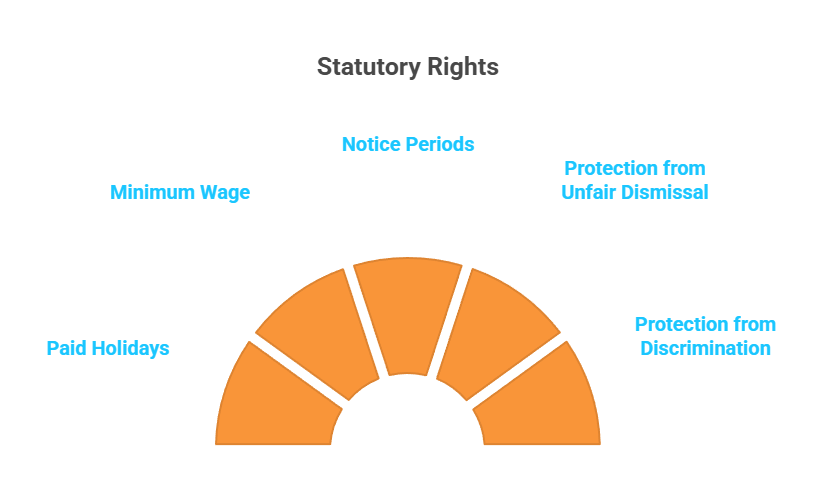
Statutory rights are the basic legal protections all employees in the UK are entitled to. Parliament sets these rights and applies them regardless of what’s written in your employment contract. They’re designed to ensure fair treatment at work and can’t be taken away or reduced by agreement.
These rights come from laws like the Employment Rights Act 1996. Courts always uphold them as the minimum standard, no matter what the contract says.
Some key examples of statutory rights include:
- Paid holidays: Most full-time workers are entitled to at least 28 days of paid leave, including bank holidays. This forms the basis of statutory vs contractual annual leave.
- Minimum wage: Employers must pay at least the legal minimum, reviewed annually.
- Notice periods: You’re entitled to a minimum notice period if your job ends—usually one week after a month of work. This is central to understanding Notice Period Statutory versus employment contract.
- Protection from unfair dismissal after a qualifying period.
- Protection from discrimination and illegal wage deductions.
These rights form the foundation of employment law. While your contract might offer more generous terms (contractual rights), it can never give you less than what the law guarantees.
What Are Contractual Rights in Employment?
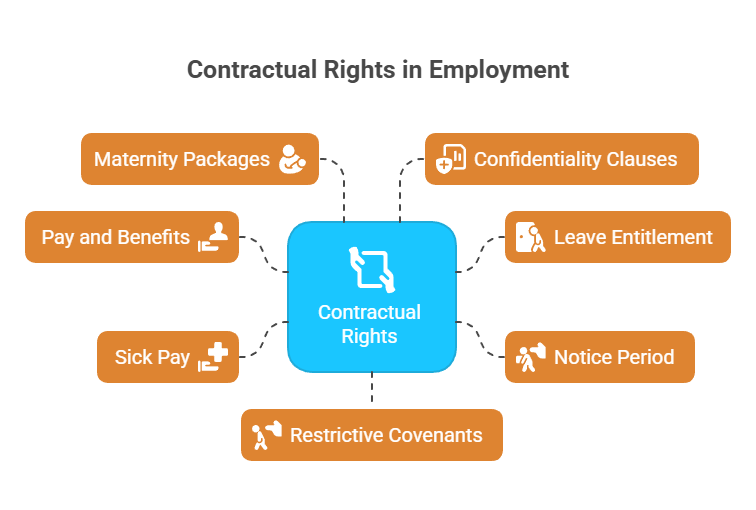
Contractual rights are the terms you and your employer agree on when you start a job. These rights form part of your employment contract and are legally binding once both parties accept them. They can offer more than your statutory rights, but never less.
These rights can be written, verbal, or even implied through consistent workplace practices.
Here’s what might count as a contractual right:
- Your agreed pay and benefits, such as bonuses, pension contributions, or overtime rates.
- Extra holiday entitlement beyond the statutory 28 days counts as contractual leave, whereas the 28 days required by law are statutory leave.
- Sick pay details if your employer offers more than Statutory Sick Pay (SSP).
- Enhanced maternity packages—explored under contractual maternity pay vs statutory maternity pay.
- Confidentiality clauses that explain how to handle sensitive company information.
- Restrictive covenants that may limit your ability to work for a competitor after leaving.
Even if you agree to these terms, they can’t override your legal rights. If your employer fails to follow any part of the contract, it could be a breach, and you may have the right to take action.
You can learn more about this in our detailed guide to Occupational Sick Pay.
What Is the Difference Between Statutory and Contractual Notice Periods?
When it comes to ending employment, notice periods are a key part of your rights. Both statutory and contractual notice periods apply, but they come from different sources.
The important thing to remember is: your notice period can be longer than the statutory minimum, but never shorter – even if your contract says otherwise.
Here’s a clear comparison of how the two types work:
|
Type of Notice Period |
Minimum Length |
Who Sets It? |
Can Contract change it? |
Which One Applies? |
|---|---|---|---|---|
|
Statutory Notice Period |
1 week after 1 month’s service (and 1 week for every full year worked, up to 12 weeks) | UK Employment Law (statutory) | No – it’s set by law | Always applies if the contract offers less |
|
Contractual Notice Period |
Any length, but must meet or exceed the statutory minimum | Employer and employee agreement | Yes – can be longer than the statutory minimum | Applies if it gives more than the statutory minimum |
So, if your contract offers four weeks’ notice instead of one, the longer contractual period applies. But if your contract says only three days’ notice, the statutory period overrides it.
How Statutory and Contractual Rights Work Together and What Happens if They Clash?
Statutory and contractual rights often work side by side, but sometimes they overlap or even conflict. When that happens, statutory rights always take priority. That’s because they’re protected by law and can’t be removed or reduced by what’s written in your contract.
If your contract gives you better conditions—like extra holidays or a longer notice period—you’re entitled to those better terms. But if it tries to offer less than the legal minimum, that part of the contract is ignored, and the statutory right is enforced instead.
Here’s how it works in practice:
- Statutory rights set the legal baseline and apply to everyone.
- Contractual rights are agreed between you and your employer and can be more generous.
- The law overrides any contract terms that fall below statutory standards.
- Employers must follow both sets of rules or face legal consequences.
If you’re wondering, What happens when a contract includes terms that conflict with statutory provisions?, the answer is simple: those terms are not enforceable.
Employers also have a duty of care, which includes respecting employment laws and honouring the contract. If your contract gives you less than what you’re legally entitled to—like lower pay or fewer holidays—you have the right to challenge it. In most cases, statutory law will step in to protect you.
How Do Statutory and Contractual Rights Differ Across Various Legal Contexts?
Statutory and contractual rights don’t just apply to jobs—they also matter in agreements like tenancies. Understanding how they work together helps protect you in any legal situation.
- Statutory rights are legal protections set by the government. They apply automatically, no matter what the contract says.
- These rights show up beyond employment—like tenancy agreements, where they cover things like minimum notice, property safety, and unfair eviction.
- Contractual rights are the terms both parties agree to in a written or verbal agreement. In a tenancy, this could include extra notice, who handles repairs, or when rent is due.
This leads to the concept of contractual periodic tenancy vs statutory periodic tenancy—where a statutory periodic tenancy arises automatically after a fixed term ends, and a contractual one is based on the agreed terms of a renewed or rolling contract.
- If a contract offers less than the legal minimum, it’s not valid—statutory rights override it.
- If it offers better terms than required by law—like longer notice periods or better living conditions—those enhanced terms apply.
This balance also exists in employment and other legal agreements—statutory rights protect your basic entitlements, while contractual rights can add more benefits.
Statutory vs Contractual Rights? Direct Payroll Services Simplifies the Complex
Navigating the statutory vs contractual minefield can be tricky, especially when it comes to payroll, notice pay, and legal compliance. At Direct Payroll Services, we take the guesswork out of the equation. Our experienced team ensures every payment aligns with both statutory obligations and contractual terms—accurately and transparently.
Stay compliant, reduce disputes, and protect your business from costly mistakes. Reach out today for a customised payroll solution that understands the difference—and handles both with precision.
Conclusion
Understanding the differences between statutory and contractual rights is vital for both employers and employees. Statutory rights are legally mandated protections, while contractual rights vary by individual agreements. Awareness of how these rights interact is crucial, especially in conflicts. This knowledge empowers you to assert your rights effectively and promotes a healthier workplace.
Frequently Asked Questions
How does the enforcement of statutory rights vary by jurisdiction?
Enforcement of statutory rights depends on the jurisdiction’s legal requirements and available recourse. Some areas have stronger enforcement agencies and more accessible remedies, while others require you to pursue claims through employment tribunals or courts. Always check local employment law for specific procedures.
What should I do if I believe my contractual rights have been violated?
If you suspect a breach of contract, consult legal experts or your HR department. Document the issue and seek remedies as outlined in your contract. If informal resolution fails, consider formal grievance procedures or seek legal consultation to protect your contractual rights.
Are there limitations to contractual rights that do not apply to statutory rights?
Yes, contractual rights are limited by the statutory minimum and cannot provide less protection than statutory rights. Statutory rights cannot be waived, while contractual rights depend on a legally binding agreement and are subject to the terms and conditions agreed upon.