
Key Highlights
- Casual workers qualify for statutory paid holiday under the UK Working Time Regulations
- Holiday entitlement is linked to hours worked, not fixed schedules
- The 52-week average pay reference period determines holiday pay value
- Holiday pay must reflect average earnings, not just basic pay
- Variable earnings, such as overtime and commission, often count
- Rolled-up holiday pay is allowed only under strict transparency rules
- Payroll errors can lead to backdated claims and tribunal risk
- Structured payroll systems reduce compliance exposure
Managing payroll is hard enough. Add casual workers, irregular hours, and shifting earnings into the mix, and holiday pay quickly becomes one of the most misunderstood compliance areas for UK employers. For example, if a casual worker earns different amounts each week and then takes five days off, how do you determine what they should be paid?
The risk is not small. Getting holiday pay wrong can lead to back pay claims, tribunal exposure, penalties, and reputational damage. Many employers assume casual means flexible and informal. Legally, it does not. Casual arrangements still trigger statutory rights that payroll must handle accurately.
This guide breaks down how holiday pay for casual workers works in the UK, how to calculate it properly, what must be included, and how structured payroll processes help you stay compliant with confidence.
Do Casual Workers Get Holiday Pay in the UK?
Yes. Most casual staff qualify as workers under UK law, which means they are legally entitled to 5.6 weeks of paid holiday per year.
This right comes from the Working Time Regulations and applies even if the contract is labelled casual or flexible. What matters is the working relationship, not the wording.
For employers, this means:
- Casual status does not remove statutory holiday rights
- Zero-hour contracts still create paid leave entitlement
- Holiday builds are based on work done, not guaranteed hours
If someone works under your direction and is not genuinely self-employed, holiday pay is your responsibility.
Are Casual Workers Entitled to Holiday Pay Without Guaranteed Hours?
Yes. Holiday entitlement is linked to hours worked, not fixed schedules.
Workers with irregular shifts or zero-hour contracts still accrue statutory leave. The only difference is how holiday pay is calculated. Instead of a fixed salary, you must use their average earnings.
Employers should focus on:
- Tracking hours worked accurately
- Recognising that gaps in work do not automatically remove rights
- Using past pay data to ensure fair holiday pay
Irregular patterns make payroll more complex, but they do not reduce legal obligations.
Wondering what payroll support really costs your business? Explore the average cost of payroll services for small businesses and see how to balance compliance, accuracy, and value.
How Is Holiday Pay for Casual Workers Calculated?
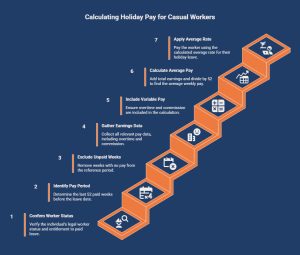
Holiday pay must reflect normal earnings, not just base pay. For casual workers, this means using an average of past earnings.
In simple terms, you look back, work out what they typically earned, and use that figure when they take leave.
Step 1: Confirm Worker Status and Entitlement
Before calculating anything, confirm the individual is legally a worker. Most casual staff engaged directly by an employer will be. Once confirmed, they qualify for statutory paid leave, which is 5.6 weeks of holiday per year, pro-rated according to work patterns.
Misclassification at this stage creates risk that flows through the entire payroll process.
Step 2: Identify the Correct 52 Week Pay Reference Period
Holiday pay is based on the last 52 paid weeks before annual leave entitlement is taken. This reference period was extended from 12 weeks to better reflect typical earnings for workers with irregular schedules.
Key points:
- You are gathering 52 weeks where pay was actually received
- The reference period sits immediately before the leave date
- If employment is shorter than 52 weeks, use the available paid weeks
Step 3: Exclude Weeks With No Pay From the Reference Period
Weeks where the worker did not earn pay must be ignored. Including them would artificially reduce the average and lead to underpayment.
This means:
- Skip unpaid weeks
- Look further back in time to find 52 paid weeks
- Ensure the average reflects active earning periods
This step is frequently mishandled and is a common source of payroll error.
Step 4: Gather All Relevant Earnings Data
Once the reference period is set, collect full pay data for each of those weeks. This requires more than just hourly rates.
Payroll should capture:
- Basic pay
- Overtime payments
- Commission or productivity-based pay
- Regular allowances linked to the role
Incomplete data leads directly to incorrect holiday pay.
Step 5: Include Variable Pay Such as Overtime and Commission
Holiday pay must represent normal remuneration. Where overtime, commission, or similar payments are regularly part of earnings, they are usually included.
This ensures workers are not financially discouraged from taking leave. From an employer’s perspective, it also reduces the risk of claims that holiday pay has been systematically undercalculated.
Step 6: Calculate the Average Weekly Pay
Now the calculation itself.
- Add together the total pay from the 52 paid weeks
- Divide by 52
The result is the worker’s average weekly pay, which becomes the reference figure for holiday.
For example, if total earnings over 52 paid weeks were £15,600, the average weekly pay would be £300.
Step 7: Apply the Average Rate to Holiday Leave Taken
When a worker takes a holiday, they should be paid using this average rate.
- A full week of leave = one average weekly payment
- Part weeks or single days = pro-rated from the weekly figure
This approach ensures pay during leave mirrors normal earning levels as closely as possible.
For example:
- Total earnings over 52 paid weeks: £15,600
- Average weekly pay: £300
- The worker takes 3 days off
- Weekly rate £300 divided by 5 working days = £60 per day
- Holiday pay for 3 days = £180
This method ensures holiday pay reflects normal earning levels as closely as possible, even where weekly income varies.
Why Employers Must Get This Right?
Holiday pay for casual workers is a compliance issue, not a preference.
Employers need:
- Accurate time and pay records
- Systems that handle variable earnings
- Clear calculation history
Without structured payroll handling, underpayment risks rise fast.
Why outsourcing payroll helps UK businesses reduce compliance risk, improve accuracy, and free internal teams from time-consuming admin.
What Payments Must Be Included When Paying Holiday Pay for Casual Workers?
Understanding how much holiday counts toward holiday pay is one of the most critical parts of compliance. Employers often assume holiday is based on basic pay alone, but UK case law and regulations require a broader view of normal earnings. Getting this wrong directly affects a worker’s weekly pay and overall holiday allowance.
What Does “Normal Remuneration” Actually Mean?
Holiday pay should reflect what the worker normally earns during their regular working hours, not a reduced or simplified rate. The new rules affirm that courts have reinforced that a worker’s rate of pay during a week’s holiday should mirror their typical earnings pattern, especially where variable hours or fluctuating shift patterns exist.
This applies whether the individual is part-time, works regular hours, or is engaged only for part of the year under a casual arrangement.
Payments That Usually Form Part of Holiday Pay
Where payments are regularly linked to the role or performance of duties, they are commonly included:
- Commission linked to work completed
- Performance-related pay tied to output
- Regular overtime forming part of normal working patterns, as well as payments related to length of service and seniority.
- Shift premiums based on working times or unsocial hours
- Allowances connected to duties carried out consistently
These elements influence the worker’s true average hourly rate and therefore their correct weeks of pay when leave is taken.
Payments That Are Normally Excluded
Some payments sit outside the concept of normal pay:
- Reimbursement of expenses
- One-off discretionary bonuses
- Payments for unused leave
- Benefits in kind do not form part of the salary
The key test is whether the payment reflects normal work done, not exceptional or separate arrangements.
Holiday pay must represent real earnings, not just a base rate. Regular variable pay affects the value of a worker’s weekly pay, and excluding it risks underpayment and non-compliance.
Choosing the right pay schedule matters more than you think. Explore our guide to pay frequency and how it affects compliance, cash flow, and employee satisfaction.
What Is the Casual Holiday Pay Rate?
There is no single statutory rate for casual holiday pay. Unlike salaried employees with fixed weekly earnings, casual workers often have fluctuating income. Because of this variability, holiday pay cannot be based on a simple hourly figure.
Why There Is No Fixed Rate
UK law aims to ensure workers do not lose income when taking leave. If holiday pay were calculated using only a current or minimum hourly rate, workers with variable schedules could be underpaid during time off. Instead, the rate must reflect what the worker normally earns.
In short, casual holiday pay is designed to mirror real earning patterns rather than apply a flat, one-size-fits-all percentage. This approach protects fairness while maintaining compliance.
What Is Rolled Up Holiday Pay Under a Casual Contract in the UK?
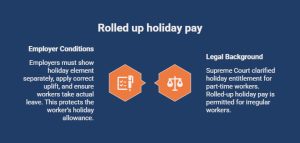
Rolled up holiday pay changes when holiday is paid, not whether it exists. Instead of receiving pay only when leave is taken, eligible workers receive an uplift added to their regular wages. This approach mainly applies to workers with irregular hours or part-year contracts, such as zero-hour staff or seasonal workers.
Who Does This Apply To?
Rolled-up holiday pay applies to irregular hours workers and part-year workers whose hours vary across the year. It does not apply to full-time employees with fixed hours and pay. Employers must ensure the worker genuinely falls into an irregular or part-year category before using this method.
1. The Legal Background
In Harpur Trust v Brazel, the Supreme Court clarified that part-year workers are still entitled to full statutory holiday entitlement. Following later reforms, rolled up holiday pay was permitted again for certain irregular workers, provided it is calculated and presented correctly.
2. Conditions Employers Must Meet
Employers using rolled-up holiday pay must:
- Clearly show the holiday pay element separately on payslips
- Apply the correct uplift percentage
- Ensure workers still take actual leave for rest
Rolled-up pay is lawful only when applied transparently and correctly. The key principle remains unchanged: workers must still receive and take their statutory holiday entitlement.
What Are the Most Common Employer Errors When Calculating Holiday Pay for Casual Workers?
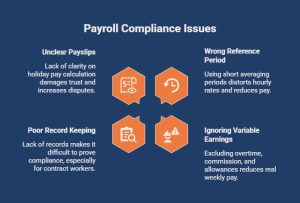
Most non-compliance does not stem from complex law, but from routine payroll practices that fail to match legal requirements. These issues often emerge years later when workers review historic pay or raise claims.
1. Using the Wrong Reference Period
Some employers still use short averaging periods. The correct method requires up to 52 paid weeks. Using less can distort the worker’s average hourly rate and reduce their weeks of pay unfairly.
2. Ignoring Variable Earnings
Overtime, commission, and allowances are often excluded due to system limitations. This reduces the worker’s real weekly pay and can lead to claims.
3. Poor Record Keeping
Without clear records of the number of hours, earnings breakdowns, and leave taken, employers struggle to prove compliance. This is particularly risky for contract workers and staff with irregular patterns.
4. Unclear Payslips
Workers must see how holiday pay is calculated. Lack of clarity damages trust and increases disputes.
Errors usually come from system gaps and poor processes. Accurate records and correct averaging protect both employers and workers.
How Can Employers Manage Calculating Holiday Pay for Casual Workers More Effectively?
Effective management of holiday pay is about systems, not guesswork. Casual and irregular staff create complexity, but structured payroll processes remove much of the risk.
1. Use Accurate Time and Earnings Data
Recording the number of days, hours of work, and earnings consistently ensures entitlement builds correctly across the holiday year.
2. Maintain Reliable Pay Histories
Payroll systems must store detailed data over the required length of time, including variable elements. This supports accurate calculations and audit trails.
3. Configure Payroll Systems Properly
Modern payroll tools should handle irregular shift patterns, variable hours, and reference period calculations automatically. Employers may also use a holiday entitlement calculator to track the accrual of paid holiday entitlement accurately.
Clear internal policies and training help teams understand how entitlement builds, whether workers are part-time, seasonal, or engaged for part of the year.
Strong systems, reliable data, and clear processes turn complex holiday calculations into manageable payroll tasks, reducing risk and improving compliance confidence.
Why Choose Direct Payroll Services to Manage Holiday Pay for Casual Workers Accurately?
Managing holiday pay for casual and irregular workers can be complicated, especially when earnings vary, and calculations must follow the 52-week reference period. Direct Payroll Services helps businesses apply holiday pay rules with accuracy, compliance, and clarity. We ensure average earnings are calculated correctly, variable pay such as overtime and commission is included where required, and holiday pay is processed in line with UK regulations.
Our specialists support clear reporting, reliable record keeping, and transparent payslips, reducing legal risk and administrative pressure. Whether your workforce includes zero-hour staff, seasonal workers, or employees with changing hours, we keep holiday pay precise and manageable.
Looking to simplify holiday pay for casual workers? Speak to Direct Payroll Services today for expert payroll support you can rely on.
Final Thoughts
Getting holiday pay right for casual employees is not just good practice; it is a legal responsibility. Using the 52-week reference period, including normal earnings, and keeping clear records protects both workers and your business. Irregular hours should never mean irregular compliance.
With structured payroll systems, accurate data, and transparent processes, employers can reduce tribunal risk and handle holiday pay entitlement confidently. Now is the time to review how your payroll manages holiday calculations and close any gaps before they become costly issues.
Frequently Asked Questions
Do casual workers on zero-hour contracts receive holiday pay?
Yes. Casual workers on zero-hour contracts are legally entitled to 5.6 weeks of annual leave as paid holiday each year. Their holiday pay is based on average earnings across the previous 52 paid weeks, ensuring compensation reflects their irregular hours and typical income pattern.
What are the basics of holiday pay for casual workers?
Casual workers qualify for 5.6 weeks of statutory entitlement for paid leave under the Working Time Regulations. Holiday pay is calculated using their average weekly earnings over a 52-week paid reference period, so pay during leave mirrors normal earnings rather than minimum rates.
How is holiday pay calculated?
Employers’ total earnings from the last 52 paid weeks, excluding unpaid weeks, are then divided by 52 to find the average weekly pay. This figure becomes the value of one week’s statutory annual leave, with shorter leave periods calculated proportionately from that weekly average.
Do you get paid holiday pay as a casual worker?
Yes. Casual workers accrue statutory holiday pay as they work, even with irregular schedules. When leave is taken, they must receive pay based on average earnings, ensuring they are not financially disadvantaged for exercising their right to statutory annual leave.
What are the rules for paying casual workers’ holiday pay?
Employers must follow the Working Time Regulations by granting 5.6 weeks of paid leave annually. Holiday pay must reflect average earnings over 52 paid weeks and include regular variable pay, with clear records and payslip transparency supporting compliance in each pay period.
Are there updates to holiday pay rules for casual workers in 2024?
Yes. For leave years starting on or after 1 April 2024, rolled-up holiday pay is permitted for irregular hours workers and part-year workers, provided it is clearly itemised on payslips and irregular hours workers still take statutory leave, preserving their right to rest.