
Key Highlights
- Bonus pay is additional compensation given to employees beyond their regular salary.
- Bonuses are taxed through PAYE and subject to income tax and National Insurance.
- Some bonuses may affect holiday pay calculations depending on employment terms.
- Employees may choose to pay a bonus into pension contributions for tax efficiency.
- Employers often use bonuses instead of pay raises to maintain flexibility in compensation.
- Payroll accuracy is essential to ensure bonuses are taxed and reported correctly.
- Outsourced payroll services can simplify bonus processing and compliance.
- Average bonus pay can vary significantly depending on role, industry, and company performance, ranging from modest annual incentives to substantial payouts for senior professionals.
- Some bonuses may influence holiday pay calculations if they form part of an employee’s regular or contractual earnings.
- Bonus payments can create payroll challenges, requiring accurate tax deductions, correct HMRC reporting, and careful payroll processing during large bonus cycles.
Getting bonus payments wrong can result in incorrect tax deductions, compliance issues with HMRC, and frustrated employees, all of which cost your business time and money.
This guide explains what both employers and employees need to understand about bonus payments, including how they work, how they are taxed, and the responsibilities businesses must meet when processing them through Payroll.
It also provides a clear overview of key areas, including bonus taxation, pension contributions, holiday pay implications, and common payroll challenges businesses face when managing bonus payments.
What Is Bonus Pay?
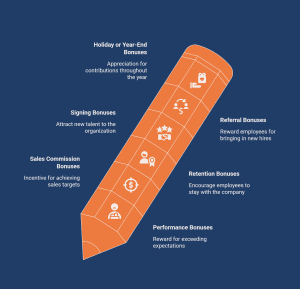
Bonus pay is additional compensation given to employees beyond their regular salary or hourly wages. Employers typically award bonuses as a reward for performance and for achieving business targets.
Unlike base salary, bonuses are usually variable and may depend on performance metrics, company results, employer discretion, and specific performance criteria.
Common types of bonus pay include:
- Performance bonuses
- Sales commission bonuses
- Retention bonuses
- Signing bonuses for new hires
- Referral bonuses
- Holiday or year-end bonuses
Many organizations use bonus structures to encourage productivity while maintaining flexibility in their overall compensation strategy.
Call Direct Payroll Services on 0203 0867670 to get expert support.
What Are the Different Types of Employee Bonuses?
Employers use different bonus structures to reward performance, improve retention, and attract talent. The table below outlines the most common types of employee bonuses and how they are typically used in workplace compensation plans.
| Bonus Type | What It Means | When Employers Use It | Key Benefit |
|---|---|---|---|
| Performance Bonus | A bonus is paid when employees meet specific performance targets such as productivity goals, sales quotas, or project outcomes. | Common in sales, corporate roles, and goal-driven workplaces. | Encourages productivity and measurable results. |
| Annual Bonus | A yearly payment is often based on company performance, employee achievements, or a percentage of salary. | Typically paid at the end of the financial year. | Rewards long-term contributions and overall business success. |
| Signing Bonus | A one-time payment is offered to new hires as an incentive to accept a job offer. | Used when recruiting highly skilled or competitive candidates. | Helps companies attract top talent quickly. |
| Retention Bonus | A financial incentive paid to employees for staying with the company for a specified period. | Often used during mergers, restructuring, or critical projects. | Helps reduce employee turnover. |
| Referral Bonus | A reward given to employees who recommend candidates that the company successfully hires. | Used in recruitment programs to attract qualified candidates. | Reduces hiring costs and improves talent sourcing. |
| Profit-Sharing Bonus | Employees receive a portion of the company’s profits when financial targets are met. | Common organizations that want employees aligned with business performance. | Builds a shared sense of success and ownership. |
| Spot Bonus | A small reward is given immediately after an employee demonstrates exceptional performance or completes an important task. | Often used to recognize outstanding effort quickly. | Boosts morale and immediate motivation. |
| Holiday or Seasonal Bonus | A goodwill payment given during festive seasons or year-end celebrations. | Common in companies that want to reward staff outside of performance metrics. | Improves employee satisfaction and workplace culture. |
| Commission Bonus | A payment earned based on sales results or revenue generated by an employee. | Widely used in sales-driven industries. | Directly incentivizes revenue growth. |
Employee bonuses can be discretionary (given at the employer’s discretion) or non-discretionary (promised based on defined criteria), depending on the employment contract and company compensation policies.
How Does Paying Bonuses Work in UK Payroll?
Paying bonuses in the UK requires employers to process the payment through the PAYE payroll system. Bonuses paid as a single lump sum are treated as employment income and therefore subject to the same payroll deductions as regular salary.
When a bonus is paid, payroll systems typically calculate:
- Income tax deductions
- National Insurance contributions
- Pension contributions, if applicable
It’s important to consider that the payment must be reported to HMRC through Real Time Information (RTI) submissions during the relevant pay period.
For employers managing multiple employees or variable bonus structures, payroll calculations can quickly become complex. This is why many businesses specialize in payroll providers to ensure bonus payments are processed accurately.
What Is the Bonus Pay Tax Rate?
There is no separate bonus pay tax rate in the UK. Bonuses are simply added to employees’ total income and taxed according to the standard income tax bands.
| Income Tax Bands (2025-2026) | Tax Rate |
|---|---|
|
£12,571 – £50,270 |
20% (Basic Rate) |
|
£50,271 – £125,140 |
40% (Higher Rate) |
|
Above £125,140 |
45% (Additional Rate) |
Bonuses are also subject to National Insurance contributions, which are deducted through payroll tax and may also affect any outstanding student loans.
Many employees believe bonuses are taxed more heavily than salary. In reality, the perception often occurs because a large bonus in a single pay period may temporarily push earnings into a higher tax band.
Can Employees Pay Bonus Into Pension Contributions?
Employees may choose to direct a bonus payment into pension contributions through arrangements such as bonus sacrifice or salary sacrifice schemes offered by their employer. This approach can provide several advantages:
- Potential reduction in taxable income
- Increased retirement savings
- Lower National Insurance contributions in some cases
Employers who offer this option must ensure payroll systems correctly record pension deductions and comply with pension scheme rules.
For employees in higher tax bands, directing bonus payments into pension contributions can sometimes provide significant long-term financial benefits.
Does Bonus Pay Affect Holiday Pay?
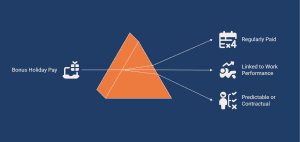
Bonus holiday pay may need to be included in holiday pay calculations if the bonus forms part of an employee’s normalisation.
Under UK employment law, this typically applies when bonuses are:
- Regularly paid
- Linked directly to work performance
- Predictable or contractual
For example, sales commissions or productivity bonuses may be included when calculating holiday pay entitlement.
However, occasional discretionary bonuses, such as one-off company rewards or seasonal bonuses, are usually treated differently.
Because rules around holiday pay can be complex, employers must ensure payroll calculations reflect the correct treatment of bonuses.
Is a Bonus Instead of a Pay Raise a Good Strategy?
Many companies consider offering a bonus instead of a pay raise as part of their compensation structure.
This approach allows businesses to reward employees without permanently increasing salary expenses.
|
Bonus Payments |
Pay Raises |
|---|---|
|
One-off payments |
Permanent salary increase |
| Flexible for employers |
Higher long-term payroll costs |
| Often performance-based |
Guaranteed earnings |
Bonuses: organisatioorganizationizationgnise strong performance recognition while maintaining flexibility in compensation budgets. However, employees may prefer salary increases because they provide more predictable long-term income.
For this reason, some employers combine both approaches by offering moderate salary increases alongside performance bonuses.
Make an appointment with Direct Payroll Services today
What Is the Average Bonus Pay in the UK?
Average bonus pay varies widely depending on industry, seniority, and company performance.
In some sectors, bonuses account for only a small portion of empemployees’rnings. In other roles, particularly in finance, sales, and executive roles, bonuses may constitute a significant part of compensation.
Typical trends include:
- Entry-level roles often receive smaller discretionary bonuses
- Mid-level professionals may receive performance-based bonuses tied to targets
- Senior executives may receive bonuses linked to company profits or long-term incentives
Accordingly, compensation data analysed by National Statistics show that bonus payments can range from a few hundred pounds for entry-level roles to tens of thousands for senior executives, depending on job level and industry.
Because bonus structures vary across organisatioorganizations clearly communicate how bonuses are calculated.
What Payroll Challenges Do Employers Face When Paying Bonuses?
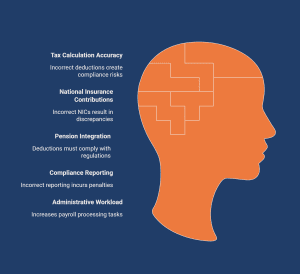
While bonuses are valuable incentives, they also introduce administrative complexity for employers.
Some common payroll challenges include:
1. Tax Calculation Accuracy
Bonus payments are often taxed differently from regular salary because they are processed as supplemental income within the payroll cycle. If the payroll system miscalculates an employee’s tax band, incorrect deductions may result, over- or under-taxing employees and creating confusion and compliance risks.
How to overcome it: Use modern payroll software that automatically calculates tax based on current income brackets and HMRC guidelines. Regular payroll audits and updated tax tables also help ensure accurate deductions when processing bonus payments.
2. National Insurance Contributions
Bonuses are also subject to National Insurance Contributions (NICs). Payroll teams must ensure the correct NI rate is applied based on the employee’s earnings. Incorrect NIC calculations can result in payroll discrepancies, compliance issues, or additional administrative corrections later.
How to overcome it: Configure payroll systems to automatically apply the correct NI thresholds and rates. Employers should also regularly review payroll settings and ensure software updates reflect the latest HMRC contribution limits.
3. Pension Integration
Some employees choose to allocate part or all of their bonus into a workplace pension scheme to increase retirement savings or gain tax efficiency. Payroll systems must correctly handle these deductions while ensuring that pension contributions remain compliant with workplace pension regulations.
How to overcome it: Payrollte payroll with pension provider systems to process deductions automatically. Clear employee instructions and automated contribution calculations can also reduce errors when bonuses are redirected into pension schemes.
4. Compliance Reporting
In the UK, all bonus payments must be reported to HMRC through the Real Time Information (RTI) payroll system. Incorrect reporting or delays can result in compliance penalties or inaccurate employee tax records.
How to overcome it: Ensure payroll teams submit RTI reports immediately after processing payroll runs. Using payroll software with automated HMRC submissions helps maintain compliance and reduces the risk of reporting errors.
5. Administrative Workload
Large bonus cycles, such as annual performance bonuses, commission payouts, or company-wide incentives, can significantly increase payroll processing tasks. Payroll teams may need to verify calculations, adjust tax deductions, and manage employee queries, which can slow down payroll operations.
How to overcome it: Automate bonus calculations using payroll-standardised bonus spayroll-standardized bonus standardizednce, and use batch-processing tools to help payroll teams manage high-volume payments more efficiently.
For growing businesses, managing these calculations internally can require considerable time and expertise.
How Payroll Services Simplify Bonus Payments?
Outsourcing payroll management can significantly reduce the complexity involved in paying bonuses.
Professional payroll providers support employers by:
- Calculating bonus payments accurately
- Ensuring correct tax and National Insurance deductions
- Managing pension contributions
- Reducing internal payroll administration workload
Direct Payroll can employ employers by accurately calculating and administering bonus payments, ensuring correct tax treatment while reducing internal administrative pressure.
With experienced payroll specialists and reliable payroll systems, businesses can ensure employees receive the correct payments while maintaining compliance with UK payroll regulations.
Conclusion
Paying bonuses is an effective way for employers to reward individual performance and motivate employees, aligning workforce incentives with business goals. However, bonus payments also introduce additional payroll considerations, including tax calculations, pension contributions, and holiday pay implications.
Understanding what bonus pay and extra pay are, how bonuses are taxed, and how they interact with payroll systems is essential for employers who want to manage compensation effectively while maintaining compliance with UK regulations.
With the right payroll processes in place, businesses can reward employees confidently while ensuring accurate reporting. For organisations or ororganizatorganizationsizationsine payroll operations, professional payroll support can help ensure bonus payments are processed efficiently, accurately, and in full compliance with HMRC requirements.
Frequently Asked Questions
Are bonuses taxed differently from salary?
No. Most bonuses are treated as employment income and taxed through PAYE. The type of bonus and the payment date determine deductions, especially for short-term incentives paid at the end of the year.
Why does my bonus seem heavily taxed?
A large bonus may temporarily move earnings into a higher tax band for that pay period. Payroll systems estimate annual income for HM Revenue reporting, which can make deductions appear high until adjustments are made across the relevant tax years.
Can employees choose to pay a bonus into a pension?
Yes. Some employers allow pension contributions to be made directly from a bonus payment. This option may depend on the bonus type, bonus year, and bonus payment date, helping employees manage taxable income while building long-term retirement savings.
Are bonuses included in holiday pay?
Certain bonuses must be included in holiday pay if they form part of normal earnings. Under the Employment Rights Act, regular incentive payments linked to performance may count toward an employee’s entitlement if consistently paid within the bonus year.
Can employers replace pay raises with bonuses?
Yes. Employers sometimes offer bonuses instead of permanent pay increases. However, the payment of a discretionary bonus is usually separate from salary terms within the employment contract, meaning it does not permanently increase base pay or guaranteed earnings.
What happens if a bonus is not paid as promised?
If a bonus is stated in an employment contract, failure to pay it may lead to a breach of contract claim. Employees can seek legal advice and potentially file a contract claim through an employment tribunal.
Can bonuses be withheld during leave or termination?
Bonus eligibility can depend on contract terms. Situations such as garden leave, adoption leave, lieu of notice, or dismissal for gross misconduct may affect the employee’s entitlemenemployee’sng on the agreed bonus schemes and whether employers act in good faith.
What types of bonuses do employers typically offer?
Companies use different types of bonuses, including short-term performance rewards, annual incentives paid at year-end, and special awards tied to company results. Each type of bonus may follow its own payment date and eligibility rules.
How do I calculate bonus pay when employees work shifts?
To calculate bonus pay for shift workers, employers typically base the bonus on total hours worked, performance targets, or sales metrics during the bonus year, ensuring that the bonus payment date and calculation method align with the agreed employment contract and company bonus schemes.
What are the legal requirements for paying bonuses to employees?
Employers must comply with the employment contract, act in good faith, and meet the agreed-upon payment date when issuing bonuses. Failure to pay a contractual bonus may result in a breach-of-contract claim brought before an employment tribunal.