Key Highlights
- Payment of subcontractors impacts cash flow, compliance, project timelines, and subcontractor relationships
- Poor payment processes lead to disputes, delays, legal risks, and increased administrative costs
- Clear payment terms prevent misunderstandings and ensure smoother subcontractor payment workflows
- Payment applications must include complete, accurate documentation to avoid rejection or delays
- CIS compliance ensures correct deductions, HMRC reporting, and avoids costly penalties
- Payment notices, retention, and approval delays often cause major subcontractor payment issues
- Broken payment systems show warning signs like disputes, walkouts, and admin overload
- Structured workflows and digital tools improve efficiency, compliance, and payment accuracy
Introduction
Every delayed subcontractor payment costs more than you might think. Beyond the immediate cash flow pressure, payment bottlenecks can lead to project delays, strained subcontractor relationships, compliance risks, and hours of wasted administrative work for UK businesses.
Fortunately, many of these challenges can be sorted with clear payment procedures, better documentation, and streamlined processes. A structured approach helps ensure payments are accurate, compliant, and made on time.
In this blog, you’ll learn about subcontractor payment challenges, ways to avoid costly delays, and practical tips to improve efficiency, compliance, and cash flow.
Why Is the Payment of Subcontractors Process So Critical?
Problems with subcontractor payments rarely stay isolated. What starts as a delayed approval or missing document can quickly affect project delivery, workforce availability, and legal compliance.
1. Cash Flow Disruption
Late approvals, payment delays, and processing errors can disrupt cash flow for subcontractors. When payments arrive later than expected, businesses may struggle to cover wages, materials, equipment costs, and other operating expenses.
2. Labour Shortages
Reliable subcontractors often prioritise contractors who pay consistently and on time. Repeated payment issues can damage working relationships, making it harder to retain skilled labour or secure subcontractors for future projects.
3. Project Delays
Payment disputes can slow progress on site. Work may be paused while issues are resolved, approvals may be delayed, and project schedules can slip when subcontractors are unwilling to continue without payment certainty.
4. Legal Risk
Incorrect payment notices, missing pay less notices, or failure to comply with contractual payment requirements can lead to formal disputes regarding the original application. In some cases, subcontractors may pursue adjudication, interest claims, or other legal remedies to recover unpaid amounts.
A structured payment process helps reduce these risks by ensuring payments are processed accurately, consistently, and in line with contractual requirements.
Real-World Payment Delays: How Long Does It Really Take?
Many businesses assume that once a subcontractor submits an invoice or progress payment application, payment follows quickly at regular intervals. In practice, friction points accumulate at every stage of the process and often compound, creating delays that affect both contractors and subcontractors.
- Wrong Format, Wrong Portal: Applications submitted through the wrong portal, using an incorrect template, or without the required supporting documents may be rejected or left unprocessed. Some contracts also require specific reference numbers, cover sheets, or submission procedures that can easily be overlooked.
- Disputed or Unverifiable Work: Payment approval often depends on confirming that the claimed work has been completed. Delays can occur when progress photographs, sign-off sheets, or site records are missing, or when there is a disagreement over the amount of work completed.
- Multi-Party Approval Chains: On larger projects, payment applications may require approval from multiple stakeholders, such as project managers, commercial teams, and clients. If one approval is delayed, the entire payment process can stall.
- CIS Verification Errors: Incorrect or incomplete CIS verification details can result in the wrong deduction rate being applied. Resolving these errors often requires payment records to be reviewed and reprocessed before funds can be released.
- Pay-When-Paid Clauses: Even after approval, payment may be delayed if the contract includes a pay-when-paid provision. In these situations, subcontractors may need to wait until the contractor receives payment from the client. Banking processes and scheduled payment runs can extend timelines further.
Even when everything runs smoothly, payments can take 30 days or more from submission to settlement. Delays often occur when documentation is incomplete, approvals are missed, work valuations are disputed, or payment applications fail to meet contract requirements.
Understanding these timelines helps businesses plan cash flow more effectively and identify opportunities to streamline approvals, reduce delays, and improve the overall payment experience for subcontractors.
How Poor Subcontractor Payment Processes Cost Businesses Money
Payment issues do more than create administrative headaches. When subcontractor payment processes are inefficient, the financial impact can spread across the entire project and organisation.
1. Increased Admin Costs
Manual payment processes often require staff to spend significant time chasing invoices, correcting errors, responding to payment queries, and reconciling records. These administrative tasks increase overheads and reduce productivity.
2. Project Delays
Payment disputes and approval bottlenecks can slow work on site. When subcontractors are waiting for payment clarification, labour and equipment may sit idle, affecting project schedules and increasing costs.
3. Legal Costs
Incorrect payment notices, disputed valuations, and non-compliance with contractual requirements can lead to adjudication, legal fees, interest charges, and dispute resolution expenses.
4. Lost Subcontractors
Reliable subcontractors are less likely to prioritise businesses with a history of payment problems. Replacing experienced subcontractors often results in higher recruitment costs, reduced productivity, and potential quality issues.
5. Cash Flow Problems
Poor payment visibility makes forecasting more difficult. Inaccurate records, delayed approvals, and unexpected payment liabilities can create cash flow pressures and reduce financial control.
For many businesses, the true cost of poor subcontractor payment management is not a single late payment but the cumulative effect of delays, disputes, administrative effort, and lost productivity.
What Should Your Payment Terms for Subcontractors Actually Cover?
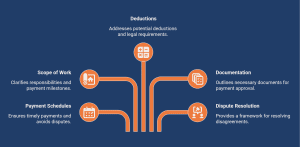
Clear payment terms for subcontractors help establish expectations, reduce disputes, and keep projects running smoothly. By defining how, when, and under what conditions interim payments, which often require a written request, will be made, businesses can improve cash flow management and strengthen relationships with subcontractors.
1. Payment Schedules and Deadlines
One of the most important parts of any subcontract agreement is defining when payment provisions and expected payments are to be made. Unclear timelines can lead to delayed payments, administrative confusion, and strained working relationships.
Key elements to include are:
- Payment frequency (weekly, monthly, or milestone-based)
- Payment application submission dates
- Due dates and payment processing periods
- Final payment deadlines
Setting clear schedules is only the first step. Businesses should also ensure that payment milestones are linked to clearly defined work requirements.
Quick Note: Due Date vs Final Date for Payment
Due Date: The date when payment becomes payable after a payment application is assessed.
Final Date for Payment: The latest contractual or legal date by which payment must be made.
Missing the final date for payment may result in late payment disputes, interest charges, or other contractual consequences.
2. Scope of Work and Payment Milestones
Payment terms should specify exactly what work is covered by each payment and how progress will be measured in the context of a schedule of values. This helps avoid disagreements over whether work has been completed to the required standard.
Common approaches include:
- Stage-based payments
- Monthly valuations
- Percentage completion payments
- Project milestone payments
Once payment amounts are agreed, businesses must also account for any deductions that could affect the final amount received.
3. Deductions, Retentions, and CIS Requirements
Payment terms should clearly explain any deductions that may apply before payment is released. This includes the amount of retainage, retention amounts, and CIS payments to subcontractors, both of which can have a significant impact on cash flow.
Areas to define include:
- Retention percentages and release conditions
- CIS deduction rates
- VAT treatment where applicable
- Any contractual deductions or adjustments
In addition to payment calculations, subcontractors should understand what information and evidence must be provided before payments can be approved.
4. Documentation and Approval Requirements
Missing paperwork is one of the most common reasons for payment delays. Clearly outlining documentation requirements helps speed up approvals and reduces unnecessary back-and-forth between parties.
Required documents may include:
- Payment applications or invoices
- Timesheets and work records
- Proof of completed work
- Insurance and compliance certificates
Even with strong payment procedures, disagreements can still arise, making it important to establish a clear process for resolving them.
5. Dispute Resolution Procedures
A clear dispute resolution process helps prevent payment issues from escalating into costly legal or contractual conflicts. It also gives both parties confidence that concerns will be addressed fairly and promptly.
Payment terms should cover:
- How payment disputes should be raised
- Response and review timeframes
- Escalation procedures
- Communication requirements between parties
With these key elements in place, subcontractor payment terms become far more effective at protecting cash flow, reducing delays, and ensuring smoother project delivery. Even the best payment terms cannot prevent delays if payment applications are submitted incorrectly, making accuracy essential from the start.
How To Submit A Subcontractor Payment Application Correctly?
Submitting a payment application correctly improves the likelihood of timely approval and reduces the risk of payment delays. Following a consistent process helps ensure contractors have all the information required to assess and process your claim.
Step 1: Complete the Payment Application
Start by completing the payment application form in full. Include all required project information, contract references, payment periods, previous payments received, retention amounts, CIS deductions, and the net amount being claimed for partial payment. Incomplete applications are one of the most common reasons for payment delays.
Step 2: Attach Supporting Evidence
Provide evidence that supports the value of the work being claimed. This may include timesheets, delivery notes, progress reports, photographs, inspection records, purchase invoices, or any other documents required under the contract. Clear supporting evidence helps reduce queries and speeds up approval.
Step 3: Check CIS Calculations
Before submission, verify that CIS deductions, retention amounts, and payment calculations are accurate. Errors in calculations can result in disputes, rejected applications, or delays while corrections are made. Taking time to review figures helps ensure the amount claimed matches the work completed.
Step 4: Submit Before the Deadline
Submit the application using the method specified in the contract, whether through an online portal, accounting system, or email process. Ensure it is submitted as a formal request before the payment application deadline, as late submissions may be excluded from the current payment cycle and delay payment until the next period.
Following these four steps helps create a consistent, compliant payment application process and improves the chances of receiving payment on time.
Can a Contractor Withhold Payment to a Subcontractor and What Can You Do About It?
Payment withholding is one of the most frustrating issues subcontractors face, especially when work has already been completed. While it can sometimes be legally justified, it can also signal disputes, missing documentation, or contractual misunderstandings. Knowing when it is allowed and how to respond helps protect cash flow and avoid escalation.
1. Payment Notices and Pay Less Notices
In UK construction contracts, payment withholding is often communicated through formal notices rather than informal delays. Two key documents, including interim applications against the total contract value, are payment notices and pay less notices, both of which play a crucial role in determining what is paid and when.
A payment notice confirms what the payer believes is due, while a pay less notice reduces the amount with justification before the final payment date.
Points to understand:
- A contractor cannot reduce your payment whenever they want.
- They must clearly explain why the payment is being reduced.
- Without a valid notice, full payment may still be required.
- Subcontractors can challenge incorrect or missing notices.
Responding quickly and formally to these notices is essential to protecting your payment rights.
2. What Happens If No Valid Pay Less Notice Is Issued?
A pay less notice must be issued correctly and within the contractual timeframe if a contractor intends to reduce the full amount due. If no valid notice is served, the contractor may lose the right to withhold part of the payment, even if there is a dispute about the work.
Potential consequences include:
- The full notified amount may become payable, regardless of any disagreement over valuation.
- The subcontractor may pursue adjudication to recover unpaid sums through a fast-track dispute resolution process.
- Interest and recovery costs may be added to the amount owed, depending on the contract terms.
- The contractor may face legal and reputational risks if payment obligations are not met.
Because payment notice requirements are strictly regulated, both contractors and subcontractors should ensure notices are issued correctly and within the required deadlines. This helps avoid unnecessary disputes and protects payment rights on both sides.
3. Legal Grounds for Withholding Payment
Contractors cannot arbitrarily withhold payment; there must be a valid contractual or legal reason. Payment withholding is typically allowed only under specific conditions defined in the contract or construction law framework.
Common lawful reasons include:
- Disputed or incomplete work.
- Failure to meet contractual obligations.
- Valid pay less notice issued on time.
- Defective work requiring correction.
- Non-compliance with documentation requirements.
Outside these conditions, withholding payment may be considered a breach of contract and could lead to disputes, interest claims, or adjudication.
What Can Subcontractors Do If Payment Is Not Made?
Late or unpaid invoices can create serious cash flow pressure for subcontractors. When payment is not received on time, there are several steps that may help resolve the simple invoice issue before it escalates.
1. Raise a Formal Dispute
If there is a disagreement over the amount due, submit a formal dispute in writing. Clearly identify the payment application, the amount outstanding, and the contractual basis for the claim. Maintaining a documented record helps support any future action.
2. Request a Payment Explanation
Ask the contractor to explain why payment has been withheld or reduced. In many cases, delays result from missing documents, valuation disagreements, or administrative errors that can be resolved quickly once identified.
3. Adjudication
Construction contracts often allow disputes to be referred to adjudication. This is a relatively fast dispute-resolution process that can provide a binding decision on payment matters without the time and expense of full court proceedings.
4. Legal Recovery Options
Where payment remains outstanding, subcontractors may have the option to pursue debt recovery, contractual claims, or other legal remedies. Professional legal advice can help determine the most appropriate course of action.
5. Interest on Late Payments
Depending on the contract terms and applicable legislation, subcontractors may be entitled to claim interest on overdue payments. This can increase the total amount recoverable and encourage prompt settlement.
Example: Calculating a CIS Deduction
A subcontractor submits a payment application for £10,000.
- Materials: £3,000
- Labour: £7,000
- CIS deduction rate: 20%
CIS applies only to the labour element:
- £7,000 × 20% = £1,400 deduction
Payment calculation:
- Gross application: £10,000
- Less CIS deduction: £1,400
- Net payment: £8,600
This example illustrates how labour and material costs are treated differently when calculating CIS deductions.
Taking action early often improves the chances of resolving payment issues before they affect cash flow, project delivery, or business relationships.
How Do CIS Payments to Subcontractors Work and Are You Doing Them Right?
The Construction Industry Scheme (CIS) is a UK tax system that applies to contractors and subcontractors in construction work. Under CIS, contractors deduct money from subcontractor payments and pass it to HMRC as advance tax. It applies to most construction work, such as building, repairs, demolition, and site preparation.
CIS is mainly used when:
- A contractor hires subcontractors for construction work.
- Payments are made for labour or construction services.
- Both parties are registered under the CIS scheme (in most cases).
Getting CIS wrong can lead to penalties, incorrect tax deductions, and cash flow issues.
How to Calculate CIS Deductions and Issue Compliant Payment Statements?
CIS deductions must be calculated correctly before paying subcontractors. The rate depends on the subcontractor’s registration status with HMRC.
Typical CIS deduction rates:
- 20% for registered subcontractors
- 30% for unregistered subcontractors
- 0% if they qualify for gross payment status
Steps involved:
- Verify subcontractor CIS status with HMRC
- Calculate deduction on labour portion (not materials)
- Deduct CIS before making payment
- Issue a CIS statement showing gross amount, deductions, and net pay
- Submit monthly CIS returns to HMRC
Accurate calculation and reporting ensure compliance and prevent costly errors.
How To Record CIS Payments In Accounting Software
Accurately recording CIS payments in accounting software helps maintain compliant records, track subcontractor costs, and simplify HMRC reporting. While the process varies slightly between platforms, the key steps include setting up subcontractors, applying CIS deduction rates, recording invoices, and tracking payments.
1. QuickBooks
When learning how to record subcontractor payments in QuickBooks, start by setting subcontractors up as CIS vendors and entering their verification details.
Record invoices with separate labour and material costs, then apply the correct CIS deduction during payment processing. QuickBooks can also generate CIS reports, helping businesses maintain accurate records, reconcile accounts, and prepare information for HMRC submissions.
2. Xero
Xero allows businesses to manage CIS payments by creating subcontractor contacts, recording invoices, and tracking deductions separately from standard supplier payments.
Labour and material costs can be categorised for accurate reporting, while CIS deductions are reflected in payment records. Keeping subcontractor information updated in Xero helps improve financial visibility and simplifies month-end reconciliations and compliance tasks.
3. Sage
Sage supports CIS management by enabling businesses to record subcontractor details, verification statuses, and deduction rates within the accounting system.
Payments can be processed with CIS deductions applied automatically where configured. Sage also provides reporting features that help track subcontractor payments, monitor liabilities, and maintain the records required for accurate financial management and HMRC compliance.
CIS payments are a key part of managing the payment of subcontractors in the UK construction industry, ensuring correct tax deductions and HMRC compliance. When done properly, they improve transparency and help maintain steady cash flow across projects. However, even small errors can lead to penalties and delays, so a structured and right process is essential.
What Are the Warning Signs Your Subcontractor Payment Process Is Broken and How Do You Fix It?
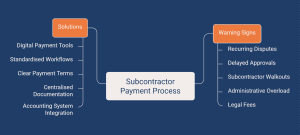
When the payment of subcontractors process is not properly controlled, issues rarely appear all at once. Instead, they show up as repeated patterns that signal something in the workflow is failing, such as a missing default payment notice, and costing the business time and money.
| Warning Sign | What It Means | How to Fix It |
|---|---|---|
| Invoice disputes | Unclear payment terms, scope of work, or valuation methods create disagreements over amounts due. | Standardise payment workflows, templates, and valuation procedures. Set clear payment terms from the outset. |
| Approval delays | Inefficient workflows, missing documents, or approval bottlenecks slow payment cycles. | Implement digital payment tools and establish clear approval processes and timelines. |
| Subcontractor walkouts | Late or inconsistent payments reduce trust and disrupt project delivery. | Define payment schedules, approval rules, and payment expectations upfront. |
| Admin overload | Excessive time spent chasing paperwork, correcting errors, and reconciling payments signals an inefficient process. | Automate payment workflows, centralise documentation, and use CIS software to reduce manual tasks. |
| Legal disputes | Escalating payment issues can lead to adjudication, reputational damage, and reduced competitiveness. | Maintain accurate records, improve compliance processes, and integrate payment systems with accounting software. |
When these fixes are applied consistently, subcontractor payments become more predictable, compliant, significantly lower administrative and legal costs.
How Do Direct Payroll Services Help You Stay Compliant and On Time?
At Direct Payroll Services, we provide a fully managed solution that simplifies subcontractor payments, ensures accuracy, and keeps you fully compliant with HMRC rules.
We handle everything from CIS calculations and verification to payment processing and reporting, helping you reduce admin workload and improve cash flow control. Our structured approach ensures subcontractors are paid correctly and on time, without unnecessary stress for your team.
Here’s what we provide you:
- CIS expertise: End-to-end subcontractor payment and compliance support
- Accurate processing: Correct deductions and timely HMRC submissions
- Faster workflows: Reduced delays through streamlined payment systems
- Clear reporting: Transparent records and full audit visibility
Ready to simplify your subcontractor payments? Contact Direct Payroll Services today for a free consultation.
Conclusion
Improving the payment of subcontractors requires getting the basics right: clear payment terms, accurate documentation, structured approval processes, and strong CIS compliance. When these elements are properly managed, businesses can reduce payment delays, avoid disputes, and improve subcontractor relationships while maintaining better control over cash flow.
If your current subcontractor payment process is causing delays, errors, or unnecessary admin pressure, now is the right time to review how it is structured and identify gaps. Start by mapping your payment workflow, standardising processes, and addressing compliance risks. For further insight, explore related topics such as CIS compliance, subcontractor payment workflows, and managing construction cash flow to build a more efficient and reliable system.
Frequently Asked Questions
What information should always be included in a subcontractor payment application?
A subcontractor payment application should include project details, application number, valuation period, schedule of work, total completed value, previous payments, retention withheld, net amount due, and all supporting documents to ensure accurate processing that meets the specific requirements for transparent processing, including the use of a payment application template.
How can subcontractors ensure their payment application is legally compliant in the UK?
Compliance requires following contract terms and the UK Construction Act. Applications must be correctly timed, fully documented, and aligned with payment notice requirements to protect the subcontractor’s right to timely and enforceable payment.
How often should subcontractor payment applications be submitted during a project?
Submission frequency is defined in contract terms, typically monthly or milestone-based. Regular applications aligned with project progress improve cash flow, reduce delays, and ensure a consistent and efficient payment process for all parties.
What are common mistakes when submitting a subcontractor payment application?
Common mistakes include missing payment notice requirements under the Construction Act, failing to meet contract deadlines, and submitting incomplete or inaccurate information regarding their own payment notice. Poor documentation or non-compliance with legal requirements can delay approvals and negatively impact subcontractor cash flow and timely payments.
Is there any downloadable subcontractor payment application template?
Yes. Many payroll, accounting, and construction industry providers offer downloadable subcontractor payment application templates. These templates typically include work completed, payment amounts, deductions, retention, and supporting documentation.