
Key Highlights
- A payroll disaster recovery plan is essential for ensuring your payroll function continues during any disruption.
- Business continuity is protected by identifying risks to your payroll system and having a solid plan.
- Safeguarding your payroll data through backup systems is a critical component of any payroll continuity plan.
- Consequences of payroll failure include legal penalties, damaged reputation, and loss of employee trust.
- Regularly testing and updating your plan ensures it remains effective when you need it most.
Let’s be honest, a delayed or missed payday is more than just a minor inconvenience. It can seriously affect employee morale and harm your company’s reputation.
While you might think of simple issues like unexpected team absences, major events like severe weather, IT outages, or even a pandemic can throw your payroll function into chaos. That’s why having a solid plan is so important.
When disaster strikes, you need to be prepared to keep your payroll system running smoothly and ensure your team gets paid on time, no matter what.
What Is a Payroll Disaster Recovery Plan?
If payroll fails, people do not get paid, and that quickly affects trust, morale, and day-to-day stability. A payroll disaster recovery plan sets out what to do if systems go down, staff are unavailable, or disruptions occur, ensuring employees are still paid accurately and on time.
Key elements of a payroll disaster recovery plan include:
- Clear procedures for maintaining payroll processing during emergencies.
- Defined backup systems for payroll data and software access.
- Assigned roles and responsibilities if key payroll staff are unavailable.
- Prepared responses for technology failures, cyber incidents, or power outages.
- Regular testing and updates to ensure the plan remains effective.
A well-defined payroll disaster recovery plan prevents disruptions, safeguards employee payments, and strengthens organisational resilience during crises.
Why Is Payroll Disaster Recovery Crucial for UK Businesses?
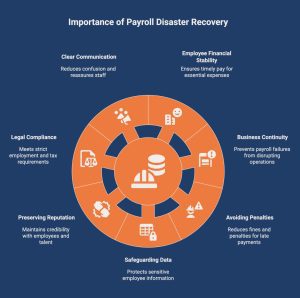
Payroll is one of the most time-sensitive functions in any organisation. When systems fail or disruptions occur, the impact is felt quickly by employees and operations alike. This is why many organisations plan in advance for how payroll will be handled during unexpected events.
1. Protecting Employee Financial Stability
Employees rely on timely pay to meet essential expenses. Payroll disruptions can cause financial stress and erode trust. A recovery plan ensures salaries are processed accurately and on time, even during system failures or emergencies.
2. Maintaining Business Continuity
Payroll is a core operational function. When it fails, wider business processes are disrupted. A disaster recovery plan enables fast response and continuity, preventing payroll issues from escalating into broader operational shutdowns.
3. Avoiding Financial Penalties and Fines
Late salary payments or missed payroll submissions can result in fines and penalties. A recovery strategy helps ensure payroll obligations are met despite disruptions, reducing exposure to avoidable financial losses.
4. Safeguarding Payroll Data and Privacy
Payroll systems store sensitive employee information. Disaster recovery planning ensures data is protected during cyber incidents, system failures, or access loss, supporting GDPR compliance and preventing data breaches.
5. Preserving Employer Reputation
Payroll failures damage credibility with employees and prospective talent. A clear recovery plan demonstrates reliability and preparedness, helping protect the employer brand and long-term workforce retention.
6. Supporting Legal and Regulatory Compliance
UK businesses must meet strict employment, tax, and reporting requirements. Disaster recovery plans define how compliance is maintained during disruptions, including timely HMRC reporting and secure handling of payroll records.
7. Enabling Clear Communication During Crises
A recovery plan outlines how and when to communicate with employees, payroll teams, and external providers. Clear communication reduces confusion, reassures staff, and supports coordinated recovery actions.
For UK employers, the priority is knowing who runs payroll, how it will be processed, and what data is needed if normal systems are unavailable.
What Are the Core Elements of a Payroll Disaster Recovery Plan?
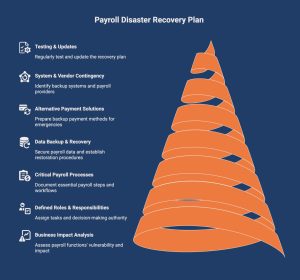
A strong payroll disaster recovery plan defines how payroll continues during disruptions by prioritising critical processes, securing data, and preparing backup solutions. It documents roles, systems, and actions so payroll can be processed accurately and on time, even during emergencies.
1. Business Impact Analysis and Risk Prioritisation
Begin by assessing which payroll functions are most time-sensitive and vulnerable. A business impact analysis helps identify where disruptions would cause the greatest financial or employee impact, allowing you to prioritise recovery actions and allocate resources effectively.
2. Clearly Defined Roles and Responsibilities
A recovery plan must clearly state who is responsible for each payroll task during a disruption. Defined ownership ensures approvals, data access, communications, and decision-making continue smoothly even if key payroll staff are unavailable.
3. Identifying Critical Payroll Processes
Document every essential payroll step, from timesheet collection to payment processing. Mapping workflows ensures continuity if staff changes occur and reduces reliance on individual knowledge, helping prevent errors caused by system failures or human disruption.
4. Payroll Data Backup and Recovery Procedures
Establish regular, secure backups of payroll data and document how information can be restored quickly. Clear recovery procedures minimise downtime, protect sensitive employee data, and ensure payroll can resume without loss or corruption.
5. Establishing Alternative Payment Solutions
Prepare backup payment methods in advance to handle banking or system failures. Having alternative options ensures employees are paid on time even if primary payroll channels become unavailable during a crisis.
6. System and Vendor Contingency Planning
Identify backup systems, payroll providers, or manual processes that can temporarily support payroll operations. Keeping access details and escalation contacts readily available enables faster response during emergencies.
7. Testing, Review, and Continuous Updates
Regularly test your payroll disaster recovery plan to confirm it works under real conditions. Update the plan whenever systems, regulations, or staffing change to ensure ongoing reliability and effectiveness.
Maintaining these core elements ensures your payroll disaster recovery plan is practical, resilient, and capable of protecting both employees and business continuity during unexpected events.
How Do You Develop an Effective Payroll Disaster Recovery Strategy?
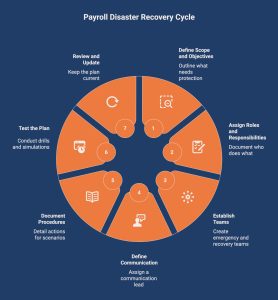
An effective payroll disaster recovery strategy focuses on preparation, not reaction. It ensures payroll operations continue during disruptions by defining clear actions, ownership, and testing routines. A structured approach helps teams respond quickly, protect employee pay, and maintain compliance under any unexpected scenario.
Step 1: Define the Scope and Objectives of the Recovery Strategy
Start by outlining what the payroll disaster recovery plan must protect, including pay accuracy, timing, data security, and compliance. Clear objectives ensure the strategy focuses on critical payroll outcomes rather than generic crisis responses.
Step 2: Assign Clear Roles and Responsibilities
Identify everyone involved in payroll recovery and document their responsibilities in detail. This includes who activates the plan, who restores systems, and who approves payments. Clear ownership removes confusion and enables fast, coordinated action during a disruption.
Step 3: Establish Emergency and Recovery Teams
Create designated teams for immediate response and system recovery. Emergency teams handle urgent decisions and continuity actions, while recovery teams focus on restoring payroll systems, data, and services as quickly and safely as possible.
Step 4: Define Communication Responsibilities
Assign a communications lead responsible for updating employees, leadership, and external bodies. Clear communication during payroll disruptions reassures employees, reduces uncertainty, and maintains trust while recovery actions are underway.
Step 5: Document Recovery Procedures and Escalation Paths
Detail step-by-step actions for different disruption scenarios, including system failures, staff unavailability, or data issues. Clear escalation paths ensure issues are addressed at the right level without delays.
Step 6: Test the Payroll Disaster Recovery Plan Regularly
Conduct routine testing through drills or simulated incidents to validate that the plan works in real conditions. Testing highlights gaps, improves response times, and builds team confidence in executing recovery procedures.
Step 7: Review and Update the Plan Continuously
Update the recovery strategy whenever payroll systems, regulations, vendors, or team structures change. Regular reviews ensure the plan remains accurate, relevant, and effective as the organisation evolves.
Developing a payroll disaster recovery strategy using these steps ensures preparedness, protects employees, and strengthens payroll resilience during any operational disruption.
What Payroll Disaster Scenarios Should Your Business Prepare For?
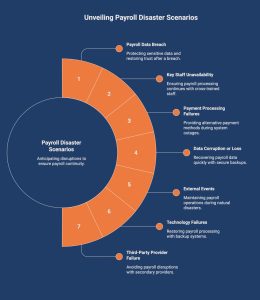
A resilient payroll disaster recovery plan starts with anticipating real-world disruptions. Payroll failures can stem from technology, people, or external events, and each scenario requires a prepared response. Understanding these risks helps protect payroll data, maintain continuity, and reduce the impact on employees and operations.
Scenario 1: A Payroll Data Breach Occurs
A data breach exposes sensitive employee information and can halt payroll operations entirely. Your recovery plan must outline immediate containment, legal notifications, data restoration from secure backups, and strengthened security controls to minimise damage and restore trust quickly.
Scenario 2: Key HR or Finance Staff Become Unavailable
When payroll knowledge is concentrated in one person, an unexpected absence can stop payroll processing. A strong plan includes cross-training, clear documentation, and shared system access so other team members can step in without disrupting pay cycles.
Scenario 3: Employee Payments Cannot Be Processed
Bank outages, software failures, or internal errors can prevent salary payments. Your continuity plan should define alternative payment methods and emergency options so employees are paid on time even when primary systems fail.
Scenario 4: Payroll Data Becomes Corrupted or Lost
Data corruption from system or hardware failure can make payroll unusable. Regular secure backups and a defined restoration process ensure payroll data can be recovered quickly, verified for accuracy, and reused without prolonged downtime.
Scenario 5: Major External Events Disrupt Operations
Natural disasters, severe weather, or public emergencies can block office access and system availability. A recovery plan should support remote payroll access, cloud-based systems, and flexible workflows to keep payroll running under extreme conditions.
Scenario 6: Technology or Infrastructure Failures
Power outages, server crashes, or network failures can interrupt payroll processing. Backup systems, remote access capabilities, and vendor escalation paths help restore operations without delaying payroll deadlines.
Scenario 7: Third-Party Provider or Vendor Failure
If a payroll or banking provider experiences downtime, payroll continuity is at risk. Your plan should include secondary providers, manual processes, or emergency service agreements to avoid dependency on a single vendor.
Preparing for these payroll disaster scenarios strengthens your overall payroll continuity strategy, ensuring employees are paid accurately and on time even during unexpected disruptions.
How Can Your Business Prepare for Payroll Disaster Scenarios?
Payroll continuity depends on planning for real-world disruptions before they happen. Payroll failures can result from data breaches, staff unavailability, system outages, or external events, and each situation requires a clear, practical response. Understanding these risks helps safeguard employee data, maintain trust, and keep operations running without interruption.
Direct Payroll Services UK supports businesses with secure, cloud-based payroll systems, regular data backups, and expert-led processes designed for continuity. From protecting sensitive payroll data and reducing reliance on single staff members to ensuring employees are paid on time during system or vendor failures, a well-structured payroll recovery approach reduces downtime and operational risk.
With the right payroll partner, your business can stay resilient, compliant, and prepared for unexpected payroll disruptions. Contact us today for a reliable, stress-free payroll solution you can trust.
Conclusion
Implementing a Payroll Disaster Recovery Plan is essential for safeguarding your business against unforeseen payroll disruptions and data loss. By understanding the key elements and following a structured approach to develop your strategy, you can mitigate risks and ensure continuity in paying your employees. From identifying critical payroll processes to establishing alternative payment solutions, every step is crucial in creating a robust plan. Remember, regular testing and updates will keep your recovery strategy effective and relevant.
Frequently Asked Questions
Who should be involved in creating and maintaining a payroll disaster recovery plan?
Payroll disaster recovery planning should involve payroll specialists, HR, IT, and senior leadership. This ensures operational and compliance risks are covered, responsibilities are clear, and decisions can be made quickly when disruptions affect systems, availability, or payment schedules.
What are the most important risks a payroll disaster recovery plan should address?
A payroll disaster recovery plan should address cyber attacks, data breaches, system outages, human error, supplier failure, and external events. These risks threaten employee pay accuracy, HMRC compliance, and stability, making preparation essential for maintaining continuity during disruption.
How do alternative payment systems help ensure payroll continuity?
Alternative payment systems, such as Faster Payments or third-party providers, allow payroll to continue if primary processes fail. They provide backup payment routes, reduce disruption, and ensure employees are paid on time while standard payroll systems are restored.
What should be included in a payroll continuity checklist?
A payroll continuity checklist should include key contacts, system access details, backup data locations, alternative payment methods, HMRC deadlines, approval processes, and communication steps. This ensures payroll can proceed during disruption without delays, confusion, or missed statutory obligations.
Can you provide a simple payroll disaster recovery plan template?
A simple template outlines responsibilities, backup systems, data access, alternative payment methods, and escalation steps. It documents who acts, how payroll runs during disruption, and how HMRC reporting continues until normal payroll operations resume safely, accurately, and compliantly.
How does a payroll disaster recovery plan differ from a payroll continuity plan?
A payroll disaster recovery plan focuses on restoring systems after failure, while a payroll continuity plan ensures employees are paid during disruption. Recovery addresses rebuilding processes; continuity prioritises temporary methods to keep payroll running without interruption for employees.